
By Museum of the Mountain Man Staff
April 23, 2026
Each May, just as the Museum of the Mountain Man opens for a new season, Living History Days—one of our most hectic and rewarding events—arrives along with more than 1,000 students from across southwestern Wyoming.
For three mornings, the Museum grounds come alive with the sights, sounds, and smells of the fur trade era as hundreds of students experience history in a way that goes far beyond the classroom. Imagine 400-500 students at the Museum for several hours each day—asking questions, trying new skills, and engaging with the past.
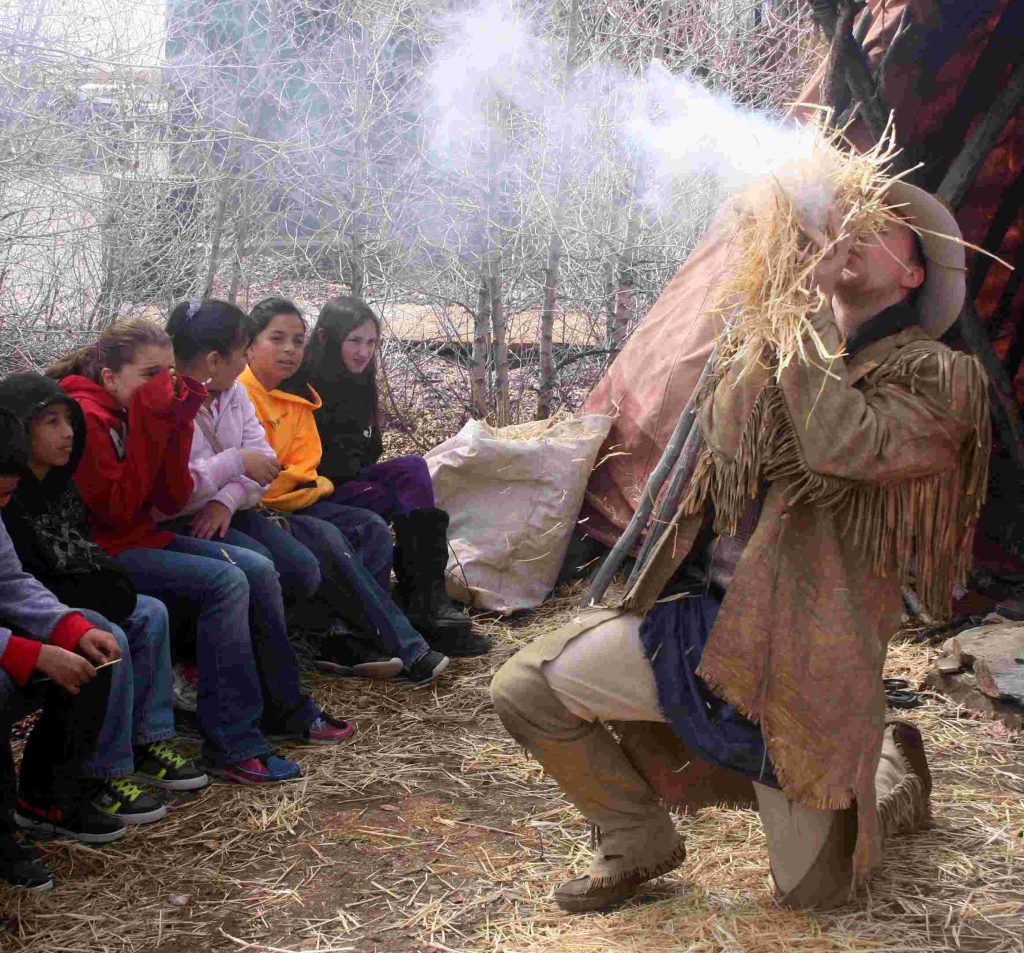
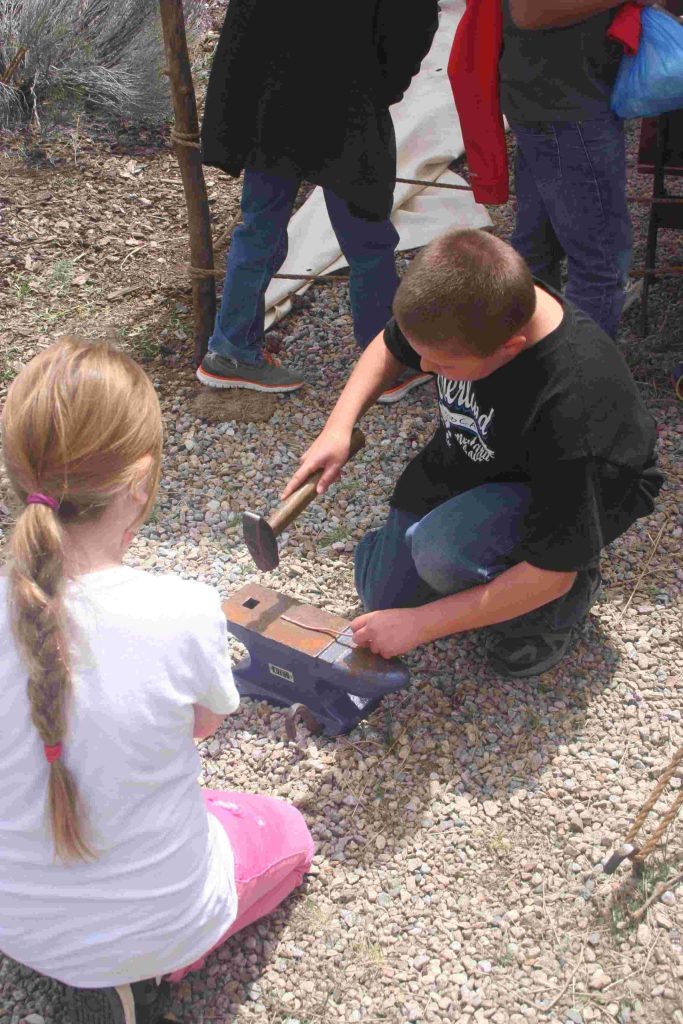
Students move from station to station—watching the careful art of fire-making, experiencing blacksmithing firsthand, and discovering the importance of beaver trapping. They see sparks fly and hear the crack of a flintlock rifle, learn sign language once used in the fur trade, and take in the sights, sounds, and smells of a mountain man camp. Along the way, they step inside a tipi to learn the rules of tipi living. It’s lively, a bit chaotic at times, and entirely unforgettable—for Museum staff and participants alike.
During the early 19th century, our area played a central role in the Rocky Mountain fur trade, drawing trappers, traders, and Native communities together through travel, trade, and shared knowledge of the land. The experiences demonstrated during Living History Days are based on the skills and ways of life that developed during this time.
So many students in one place might raise the question: is it worth it?
It is. Without question.
But what makes living history so important?
What is Living History?
Living history goes beyond telling the story of the past—it allows people to experience it by recreating daily life, activities and skills from a specific historic period. Through hands-on demonstrations, conversations, and participation, history becomes something you can see, hear, do, and even smell rather than simply read about.
Unlike traditional museum visits, living history transforms the passive viewing of artifacts in glass cases into active, educational and participatory experiences.
For more than 25 years, the Museum of the Mountain Man has partnered with the American Mountain Men (AMM) to present Living History Days each May. The AMM recreates a historically accurate 1820–1840 fur trade experience, offering students—and visitors of all ages—a rare opportunity to step into the world of the mountain men.
Participants rotate through seven interactive stations, spending about 20 minutes at each. These stations introduce a range of skills and experiences from the fur trade era—from fire-making and blacksmithing to communication, trade, and daily camp life. Each is designed to be hands-on and engaging, allowing visitors to actively participate rather than simply observe.
This kind of immersive learning is at the heart of why living history matters. Instead of reading about the past, students experience it—seeing how tools were used, understanding the challenges of daily life, and gaining a deeper appreciation for the skills required to survive in the Rocky Mountain West nearly 200 years ago—all while taking in the smells of gunpowder, campfire smoke, and brain-tanned leather. But that kind of experience doesn’t happen on its own—it depends on the people who bring it to life.
Who Brings Living History to Life
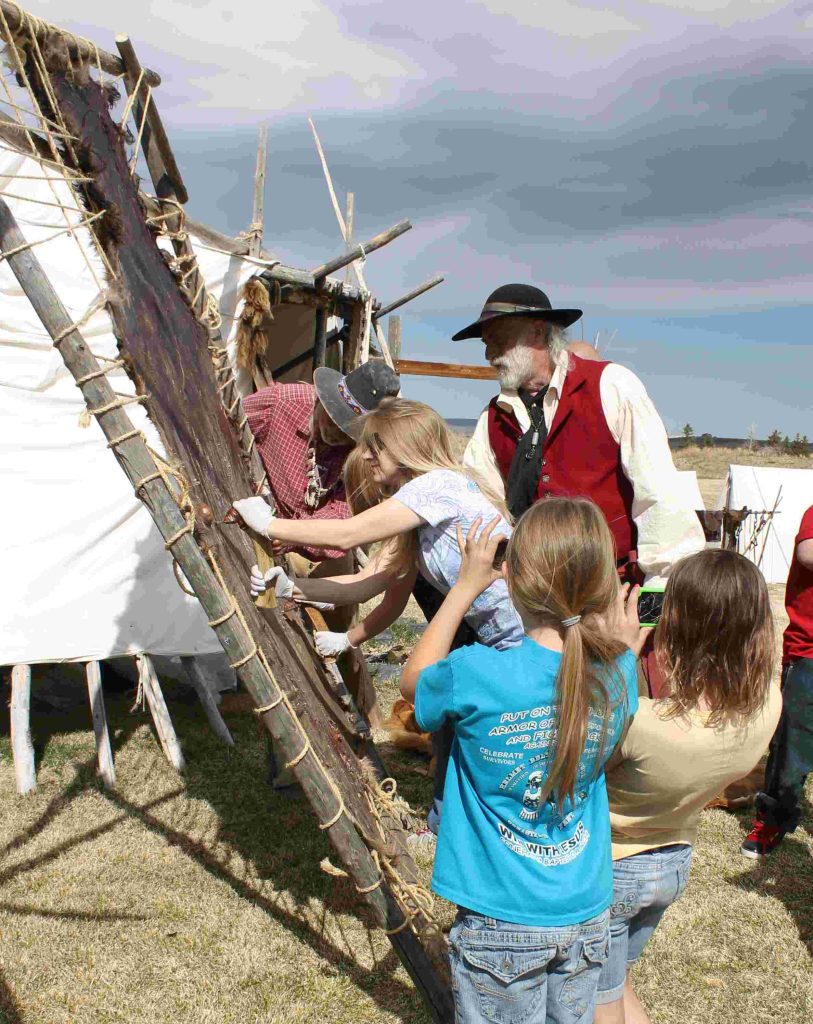
The success of Living History Days depends in large part on the experience and dedication of the American Mountain Men (AMM), who do far more than study the past—they actively live it. Members regularly participate in primitive camping experiences throughout the year, in both summer and winter conditions, using only the tools, clothing, and techniques available prior to 1840. These extended stays in the wilderness require participants to rely on traditional skills such as fire starting, trapping, tracking, and food preparation, giving them a practical, firsthand understanding of the daily realities faced by the original mountain men.
Equally important is the organization’s commitment to historical accuracy and shared knowledge. AMM members conduct extensive research and engage in ongoing peer review, ensuring that their clothing, equipment, and demonstrated skills are authentic to the pre-1840 fur trade era. This collaborative approach—learning, practicing, and evaluating together—creates a high standard of interpretation and reinforces a culture of accountability within the group. Members are not only expected to master these skills, but also to share their knowledge with others, helping preserve and pass on traditional lifeways to new generations.
It is this depth of experience and commitment to authenticity that allows AMM members to create meaningful, hands-on learning moments for every student who participates in Living History Days.
Learning by Doing
Because of this depth of knowledge and authenticity, these are not passive experiences. Students ask questions, handle tools, and try skills for themselves. In doing so, they begin to understand not just what life looked like, but what it felt like—the effort it took to start a fire, the challenges of working with unfamiliar materials, and the resourcefulness required to survive.
They also encounter the realities of daily living in a mountain man camp. Students see the primitive shelters used during the fur trade era, from simple log lean-tos to basic oilskin tarp setups designed for mobility and survival. Some have the opportunity to engage more directly—feeling the weight and texture of a bedroll made from blankets and buffalo hides, or trying on coats and hats to understand how mountain men adapted their clothing while living far from stores and settlements. These experiences help students grasp the ingenuity and resilience required to live on the frontier.
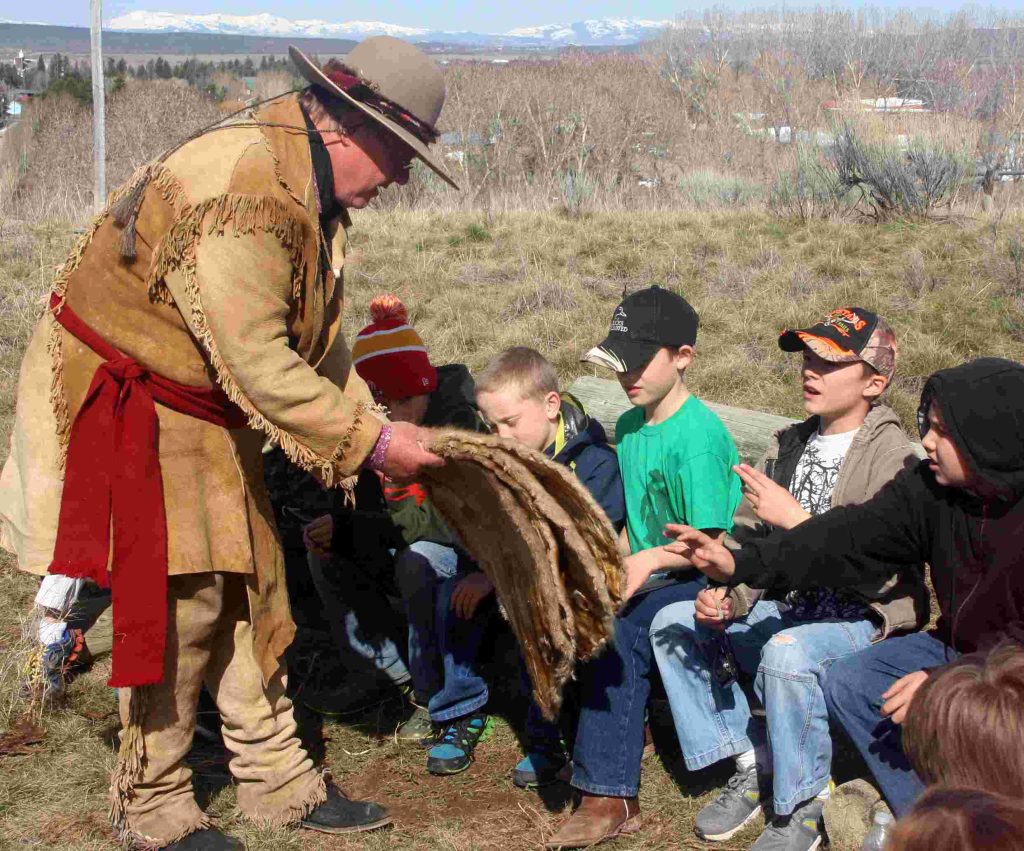
The activities they experience reflect real practices from the fur trade era. Trapping, for example, was central to trapper life, particularly for beaver pelts that were in high demand in international markets. Communication methods such as sign language allowed individuals from different backgrounds to trade and interact. Even the design of shelters like the tipi reflects adaptation, mobility, and knowledge of the environment.
It is this kind of learning that stays with participants.
A Story Rooted in Place
One of the most meaningful aspects of the program is its connection to place. The history being shared during Living History Days did not happen somewhere far away – it happened here, in the Green River Valley.
That connection gives participants a meaningful and personal link to the past, helping them understand that history is not distant, but here in the landscape around them. The rivers, valleys, and passes that shaped the fur trade were part of the same network used for travel, trade, and seasonal rendezvous gatherings nearly two centuries ago and still today.
It becomes not just history, but their history.
While Living History Days is designed to complement Wyoming’s fourth-grade curriculum, it is not limited to students. Homeschool groups, families, and adult visitors often join in, drawn by the opportunity to experience history in a more direct and engaging way.
Looking Ahead
The goal of Living History Days is simple: to bring early Wyoming history to life by connecting people to the experiences of those who lived it. Through interactive demonstrations and personal engagement, the program links the past to the present while preserving the cultural heritage of the Rocky Mountain fur trade and rendezvous era.
Looking ahead, the program will continue to grow. The addition of Fort Sublette will provide an even more immersive setting for student learning, while expanded living history programming during our annual Rendezvous will further enhance the visitor experience.
Living history reminds us that the past was once someone’s present—full of challenges, skills, relationships, and daily routines not so different from our own. By stepping into that world, even briefly, visitors gain a deeper understanding of the people who shaped this region and the history we share.
We invite you to join us this season and experience it for yourself.