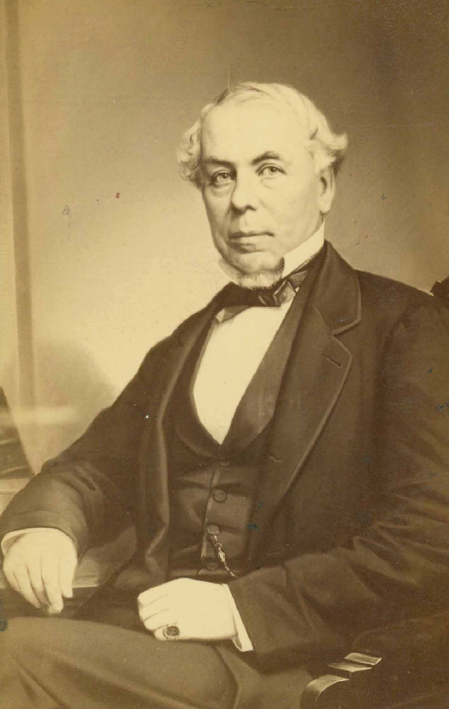
Robert Campbell (1804-1879) was an entrepreneur and leader in the Rocky Mountain fur trade during its peak years. He began his career as a clerk and brigade leader, providing the business acumen and logistical support that kept these ventures competitive.
Campbell’s first trip to the Rockies was in 1826. At that time, he was employed by the partnership of William Ashley and Jedediah Smith. When Ashley sold his share of the business to Smith and his two new cohorts, William Sublette and David Jackson (SJ&S), Campbell transferred his allegiance to the new company. This trio oversaw the bulk of the mountain trade until 1830, and were, in turn, bought out by the Rocky Mountain Fur Company, an alliance of five experienced trappers.
Though Campbell started his fur trade career working primarily as a clerk, it was not long before he was appointed as a brigade leader. One of his first parties included the Iroquois trappers who had deserted from the Hudson’s Bay Company in 1825. Over the next few seasons, he led men on trapping forays into Flathead and Crow territories, among others. Campbell’s acumen for leadership and trustworthiness caused SJ&S to put him in charge of transporting the fur back to St. Louis following the 1829 rendezvous.
In 1831, William Sublette and Campbell decided to form their own partnership to supply mountaineers in the West. To accomplish this, Campbell bought his own stock of trade goods to the 1832 rendezvous, held that summer in Pierre’s Hole, today’s Teton Valley, Idaho. Campbell was successful in peddling his wares and earned enough profit to add his financial stake to the new firm. Their primary role was acquiring supplies and transporting them to the rendezvous site where they traded those goods for the furs of the trappers in attendance. This peltry was then carried back to St. Louis and arrangements made for its sale.
During the 1832 rendezvous, Campbell gained notoriety for his role in the battle that occurred near the end of the summer’s trade fair. He and William Sublette led a charge against a group of Gros Ventre Indians. After Sublette was wounded in the fight, Campbell is often credited with saving Sublette’s life.
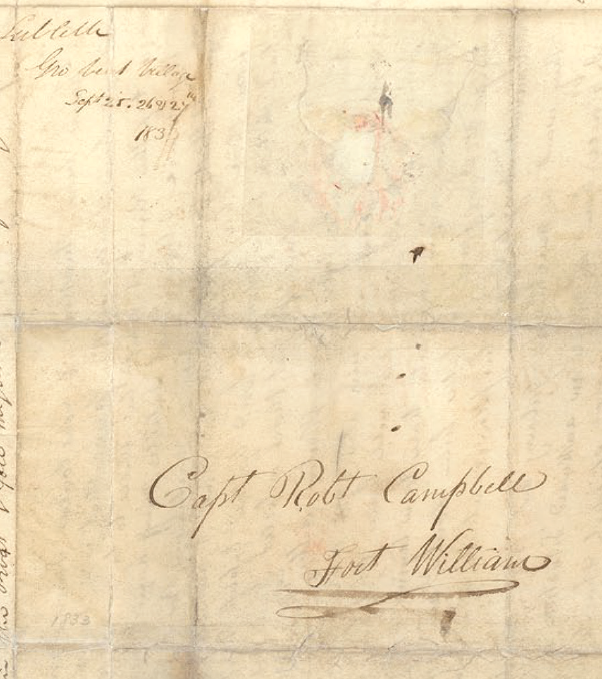
The American Fur Company had started bringing their own supply caravan to the rendezvous, so Sublette and Campbell devised a plan to beat John Jacob Astor’s grip on the fur trade. Campbell brought equipment to the 1833 rendezvous on Green River, then conveyed the goods overland to the confluence of the Yellowstone and Missouri Rivers. Sublette met him there and the two men built a series of trading posts extending down the Missouri. This level of competition essentially convinced Astor to buy out the two partners in 1834.
That same year, 1834, this pair of savvy collaborators built one of the most significant trading sites in the American West. Initially christened Fort William, it would become better known as Fort Laramie, eventually being taken over by the US Army.
Campbell left the fur trade in 1835 as a rich man. He and Sublette maintained their business association until 1842, investing in banking, real estate, and other ventures. In 1851, Campbell attended the treaty negotiations held on Horse Creek and during that trip, dictated a reminiscence of his time in the Rocky Mountains. This book, along with his many extant letters, ledgers, and other records, provides historians with important data regarding the fur trade.
RECOMMENDED READING
William R. Nester, From Mountain Man to Millionaire, The ‘Bold and Dashing Life’ of Robert Campbell (Columbia, MO: University of Missouri Press, 1999). Buy now.
William Fayel, A Narrative of Colonel Robert Campbell’s Experiences in the Rocky Mountain Fur Trade from 1825 to 1835, Drew Alan Holloway, ed. (Fairfield, WA: Ye Galleon Press, 1991).