
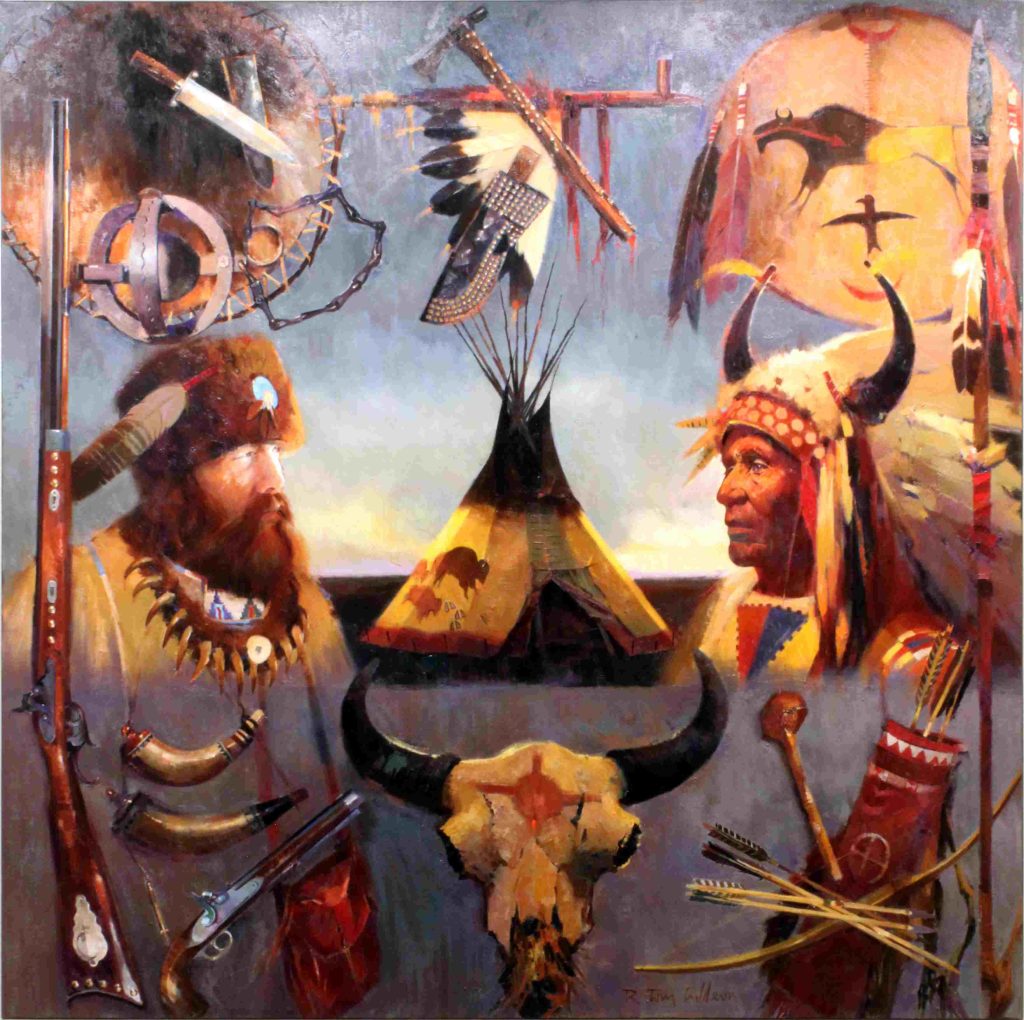
Vues Contradictoires (Confluence of Cultures)
Oil on canvas
Confluence of Cultures is a spectacular exhibition exploring the meeting of Plains Indian and Mountain Man cultures in the Rocky Mountains during the 1820s and 1830s through the work of leading contemporary Western artists. On display during the 2026 and 2027 museum seasons, the exhibition features 87 original works by 45 artists from the Peterson Family Collection.
Few visual images survive from the fur trade era, which predates photography and was witnessed by only a handful of artists. Drawing on historical research and creative imagination, today’s foremost Western artists help bring this remarkable period to life through paintings, bronzes, watercolors, and mixed-media works.
The works in this exhibition are presented in their original form, allowing visitors to experience the scale, detail, and craftsmanship intended by the artists. Together, they form a visual narrative of cultural interaction—one that reflects both the differences and the connections between the peoples who shaped the early Rocky Mountain West.
Curated by Tim Peterson, the exhibition explores the relationships, exchanges, and tensions that shaped the Rocky Mountain fur trade. Featured artists include James Bama, Paul Calle, Bev Doolittle, Tom Gilleon, Michael Haynes, Frank McCarthy, David Wright, and many others.
Mountain Men & Plains Indians
In the 1820s and 1830s, small groups of Euro-American trappers and traders entered the Rocky Mountains in search of beaver pelts for the expanding fur trade. Though their numbers were never large—at any one time only a few hundred Mountain Men were active in the region—they moved through a landscape already home to dozens Indian nations made of more than 100,000 individuals.
The meeting of these two worlds marked the beginning of a complex and often fluid period of interaction in the American West. Mountain Men depended heavily on Native American knowledge to survive in unfamiliar terrain. Tribal nations, in turn, encountered new trade goods and shifting economic relationships that connected them to distant markets.
Rather than a single unified experience, these encounters varied widely across time and place. Some were cooperative and mutually beneficial, built on exchange, guidance, and shared use of the land. Others reflected misunderstanding, competition, or conflict as both groups navigated changing pressures and competing interests.
Within this dynamic environment, the Rocky Mountains became a shared space—one shaped by movement, trade, adaptation, and cultural exchange. The works in this exhibition reflect that complexity, offering contemporary interpretations of a historical moment defined not by a single narrative, but by many overlapping stories.
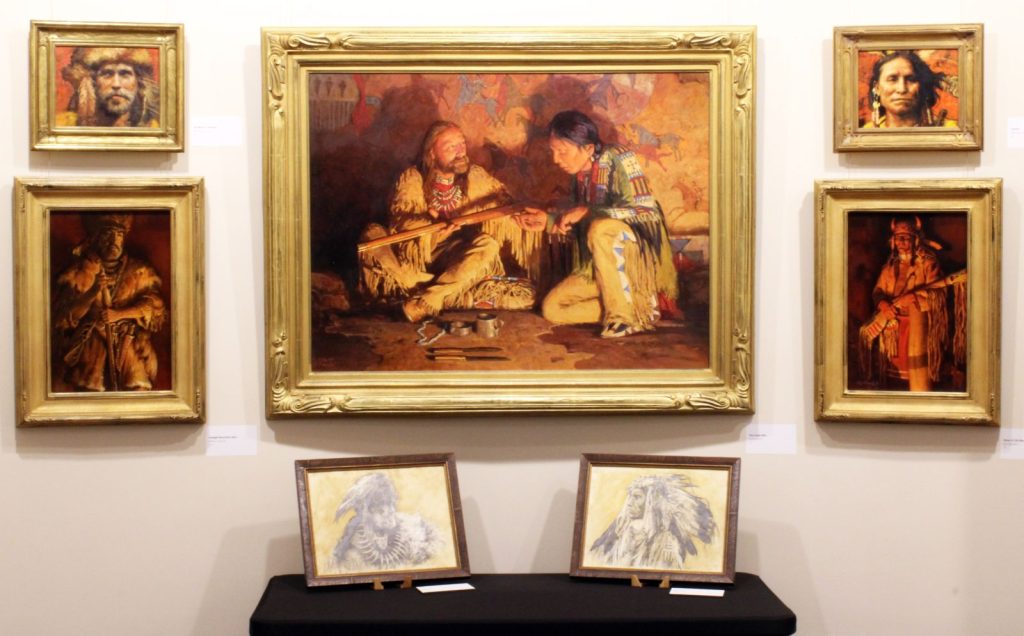
Top Center – David Mann, The Trade Rifle, Oil
Top Right – Michael Dudash, Lakota, Oil
Center Left – William Ahrendt, Firelight Mountain Man, Oil
Center Right – Roy Grinnell, Glow of Old Memories, Oil
Bottom Left – Chris Calle, Friends, Mixed
Bottom Right – Chris Calle, Friends II, Mixed
Mutual Benefit
For both Mountain Men and Plains Indian nations, the early fur trade created a period of practical exchange shaped by necessity, opportunity, and mutual advantage. Each group brought resources and knowledge the other used in order to navigate the economic and environmental landscape of the Rocky Mountain West.
For Mountain Men, survival depended on access to food, shelter, horses, and guidance through unfamiliar terrain. Indigenous nations provided essential knowledge of the land, seasonal patterns, and travel routes, along with supplies such as horses, clothing, and provisions that made long-term travel in the mountains possible.
In return, Native communities gained access to a growing network of trade goods introduced by Euro-American commerce. These included metal tools, firearms, knives, kettles, cloth, beads, and other manufactured goods that became integrated into daily life and existing trade systems. Far from a one-way exchange, these relationships were shaped by negotiation and adaptation on both sides.
Trade was not only economic but also social. Exchanges often took place through personal relationships, alliances, and established trading practices that varied among tribes and individuals. In many cases, trust and reciprocity were essential to maintaining access to goods and safe passage through territory.
This period of mutual dependence helped define the early fur trade era as one of connection and adaptation—where two very different cultural systems intersected in ways that were at once practical, complex, and deeply influential to the history of the American West.
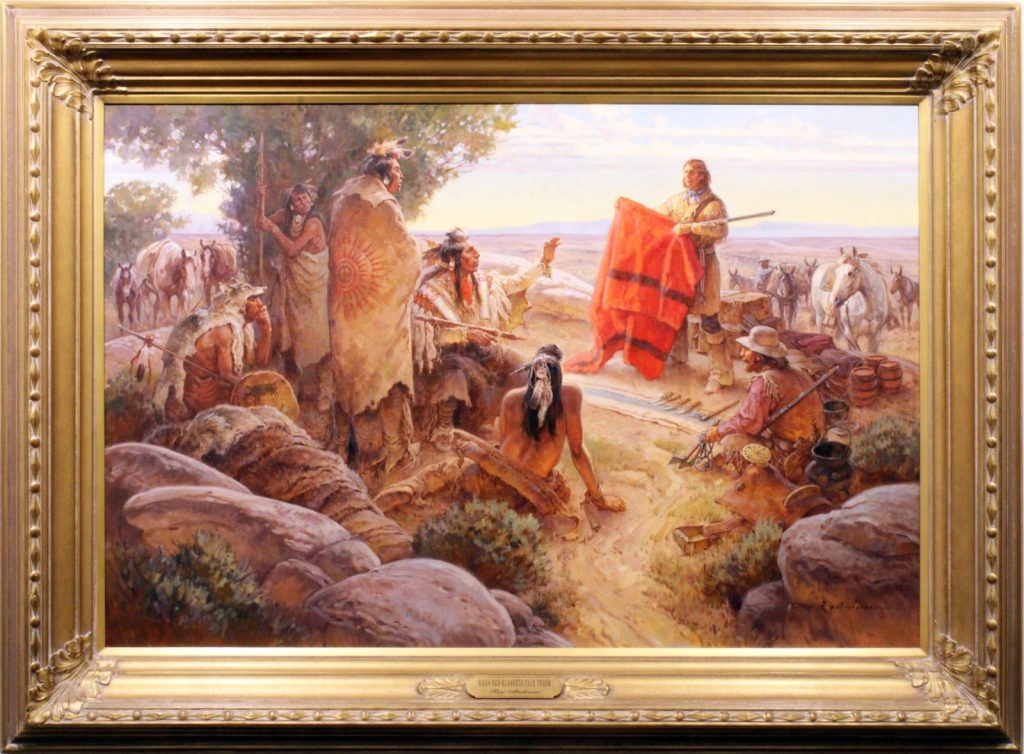
When Red Blankets Talk Trade
Oil
A Shared Way of Life
Life in the Rocky Mountain West required constant adaptation. Mountain Men, though few in number, often adopted aspects of Plains Indian lifeways in order to survive in a demanding and unfamiliar environment.
Over time, some trappers moved fluidly between cultural worlds, adopting clothing, travel methods, and survival strategies that reflected Indigenous knowledge of the land. This blending of practices created a unique frontier culture often referred to by historians as the “mountaineer” lifestyle.
Rather than fixed boundaries between cultures, this period was defined by movement, exchange, and adaptation in response to the demands of the landscape.
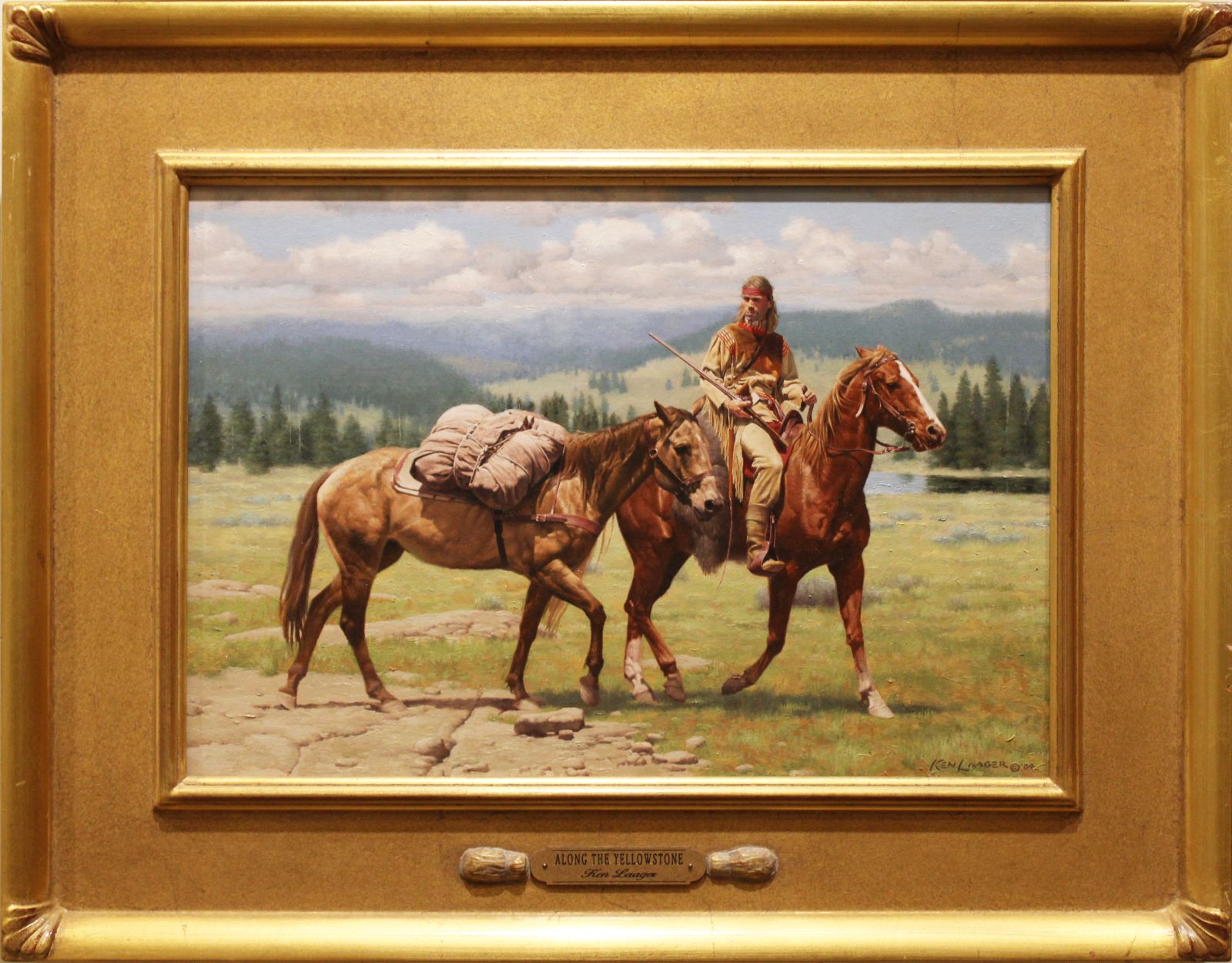
Along the Yellowstone
Oil
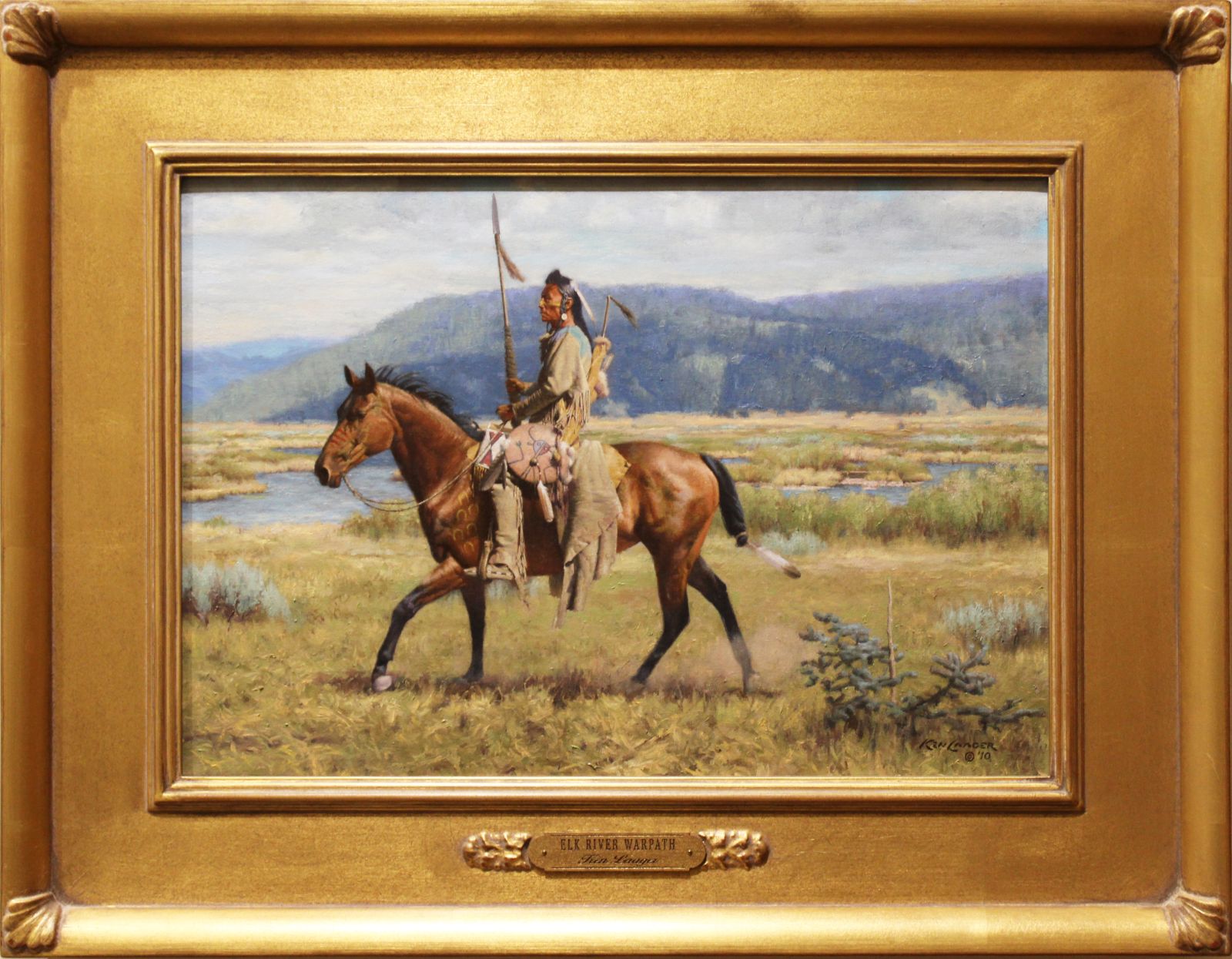
Elk River Warpath
Oil
Friendship
Alongside trade and survival, relationships developed between individuals from different cultural backgrounds. These connections ranged from practical alliances to enduring personal friendships.
In some cases, Mountain Men formed close bonds with members of Plains Indian communities, learning languages, participating in daily life, and in some instances forming family ties through marriage.
While these relationships did not define every encounter, they represent an important dimension of the fur trade era—one shaped not only by exchange, but also by cooperation and shared human experience.
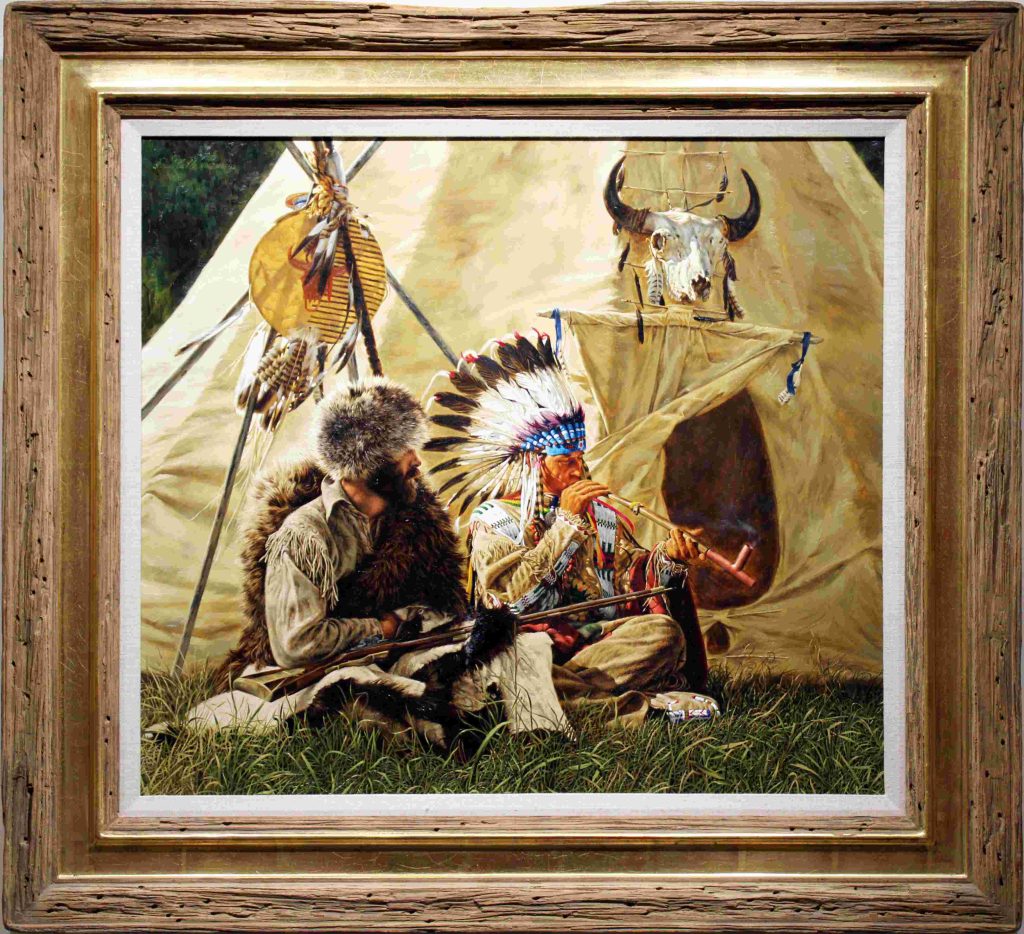
A Breath of Friendship
Oil
Tension
The fur trade era was not without conflict. Competition for resources, territorial pressures, and misunderstandings sometimes led to tension between Mountain Men and Plains Indian nations, as well as between different Indigenous groups.
The Plains were already a complex political landscape shaped by alliances, rivalries, and shifting power dynamics. The arrival of foreign traders added new pressures to existing systems of trade and territorial balance.
While periods of cooperation were common, moments of conflict reflect the broader realities of a changing West—one in which multiple cultures were adapting to rapid economic and environmental transformation.
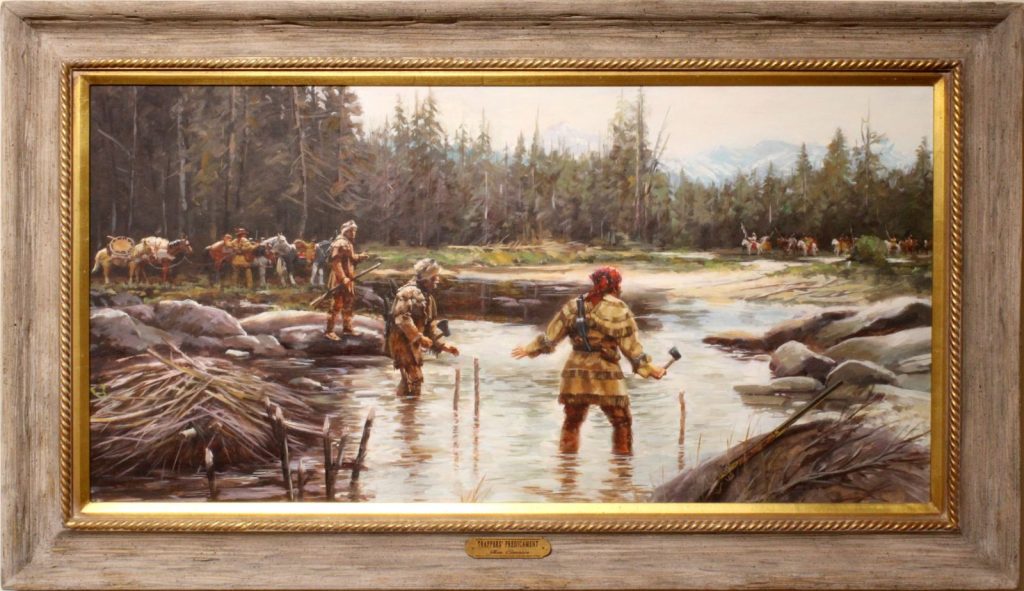
Trappers Predicament
Oil
Collection Highlights
The following selection highlights works from the exhibition that further explore the themes of cultural interaction, adaptation, and the fur trade experience. These works represent only a portion of the 87 pieces on display.
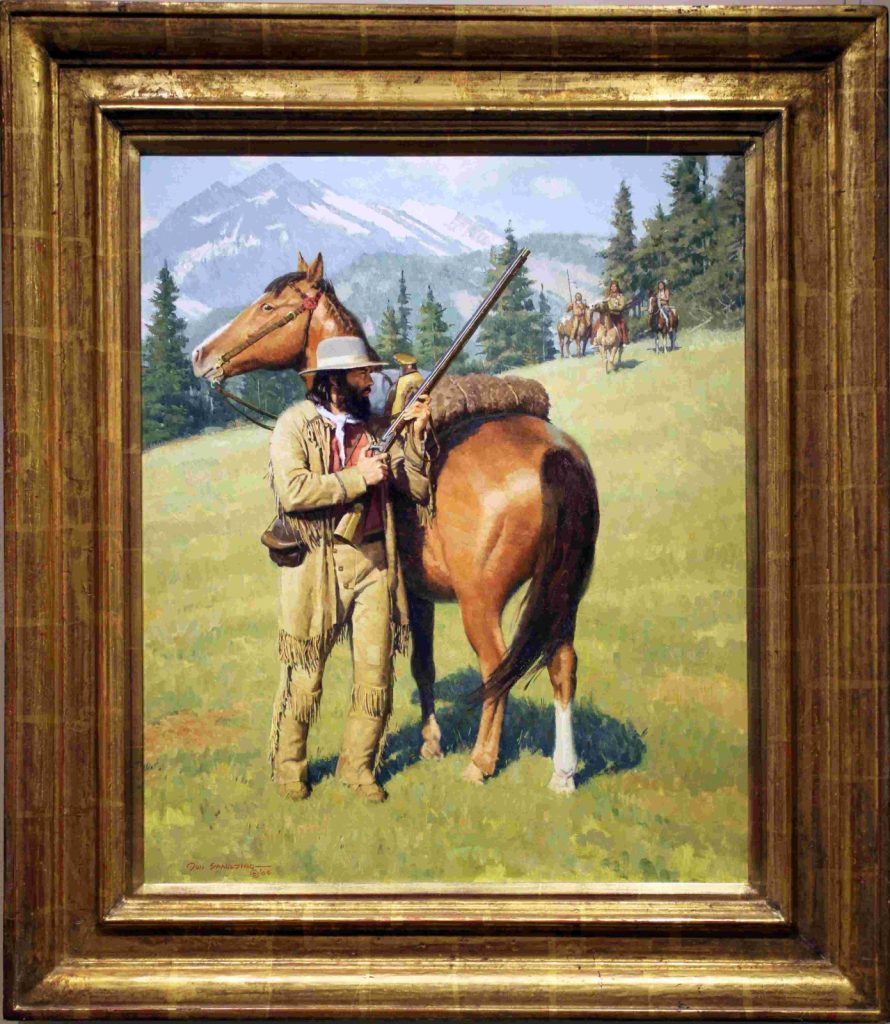
Danger in Paradise
Oil
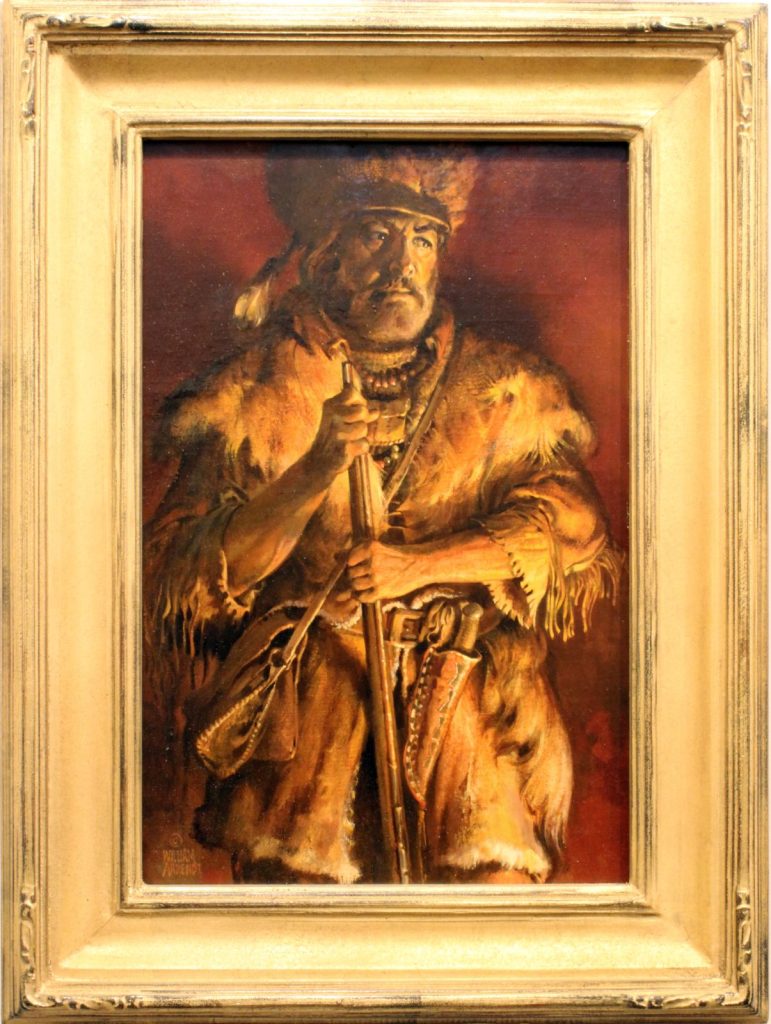
Firelight Mountain Man
Oil
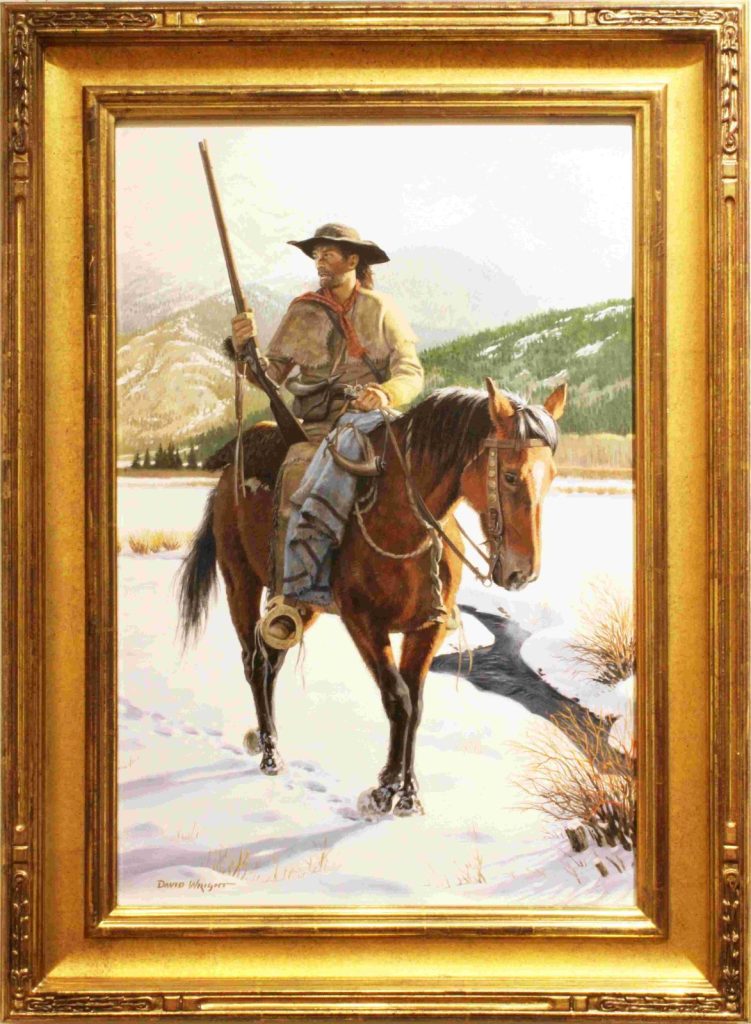
Crossing the Snow Covered Flats
Oil
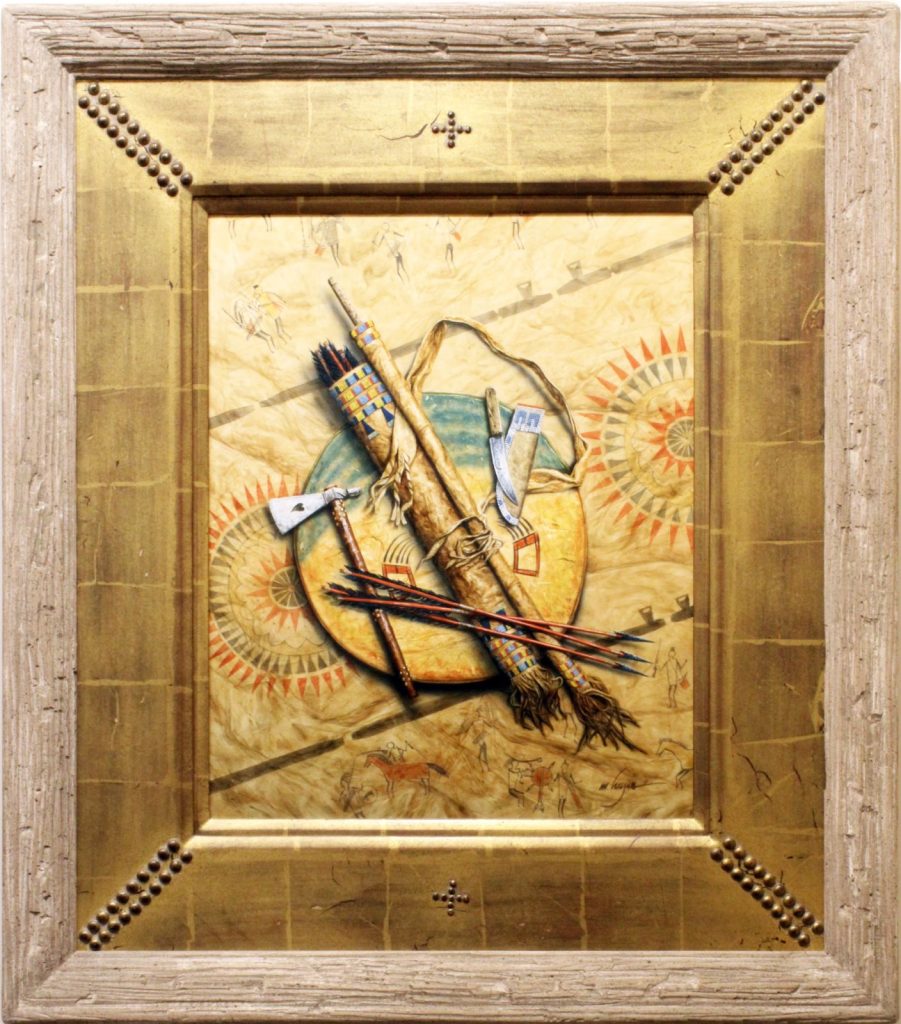
Crow Still Life
Watercolor and Oil
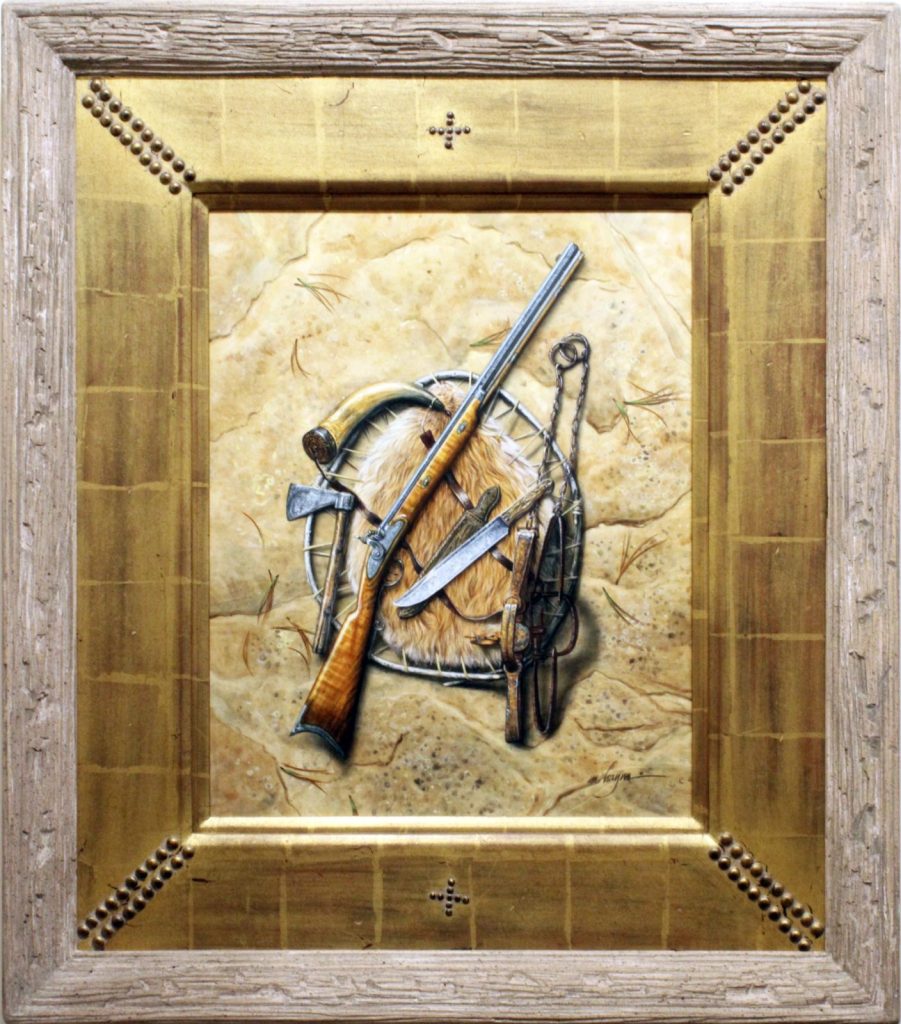
Hawken Still Life
Watercolor and Oil
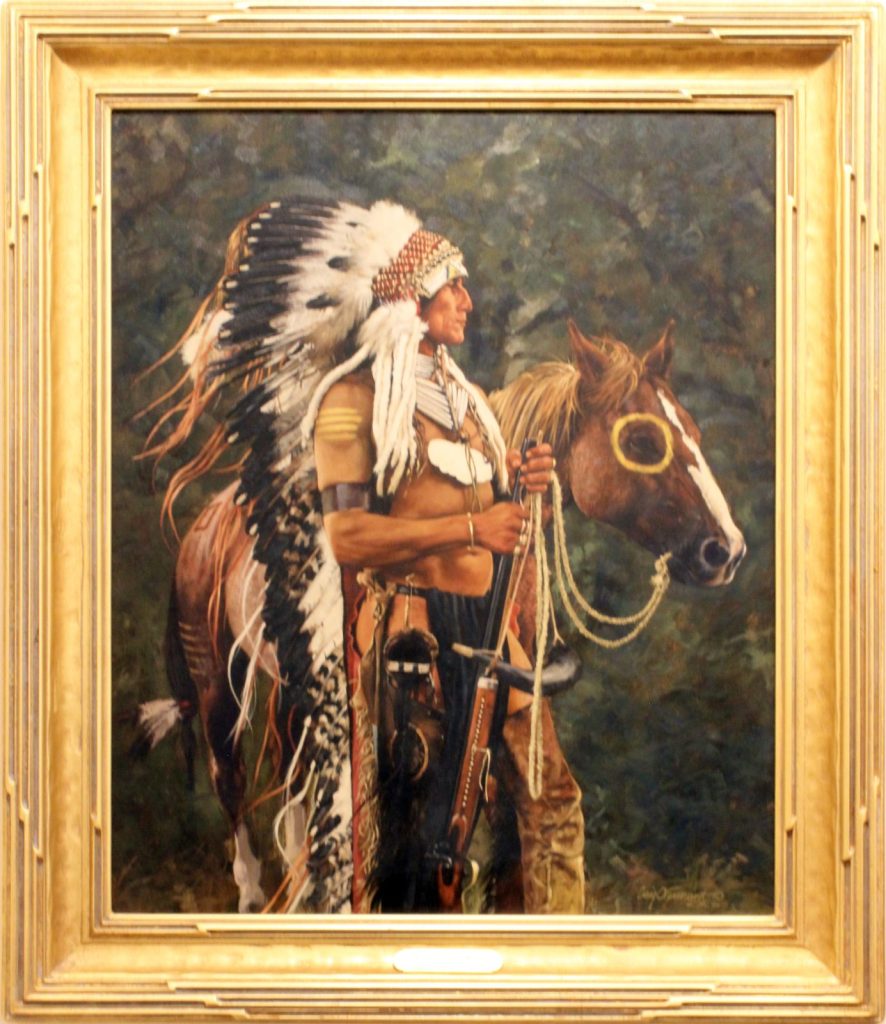
Painted and Proud
Oil
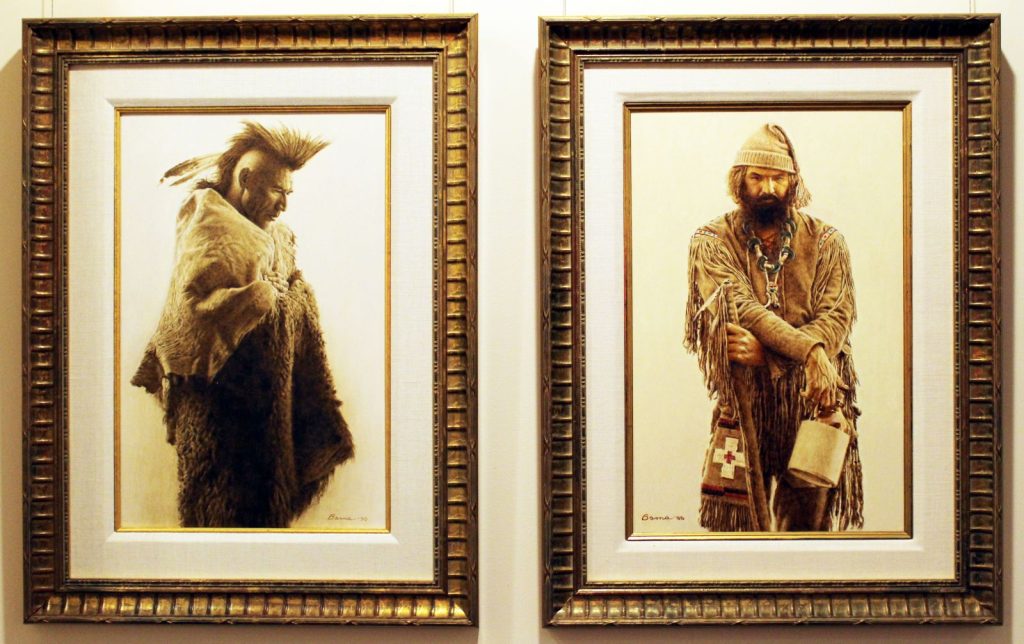
Sepia Study, Pawnee Indian & Mountain Man with Jug
Oil & Oil
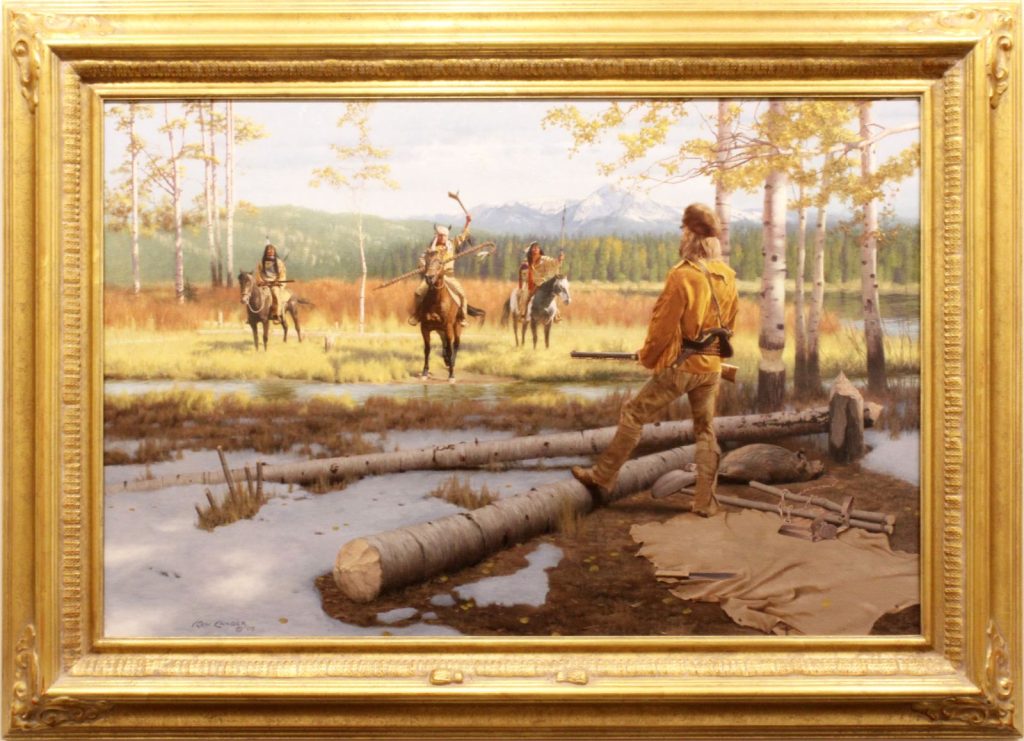
When a Fight is a Flinch Away
Oil
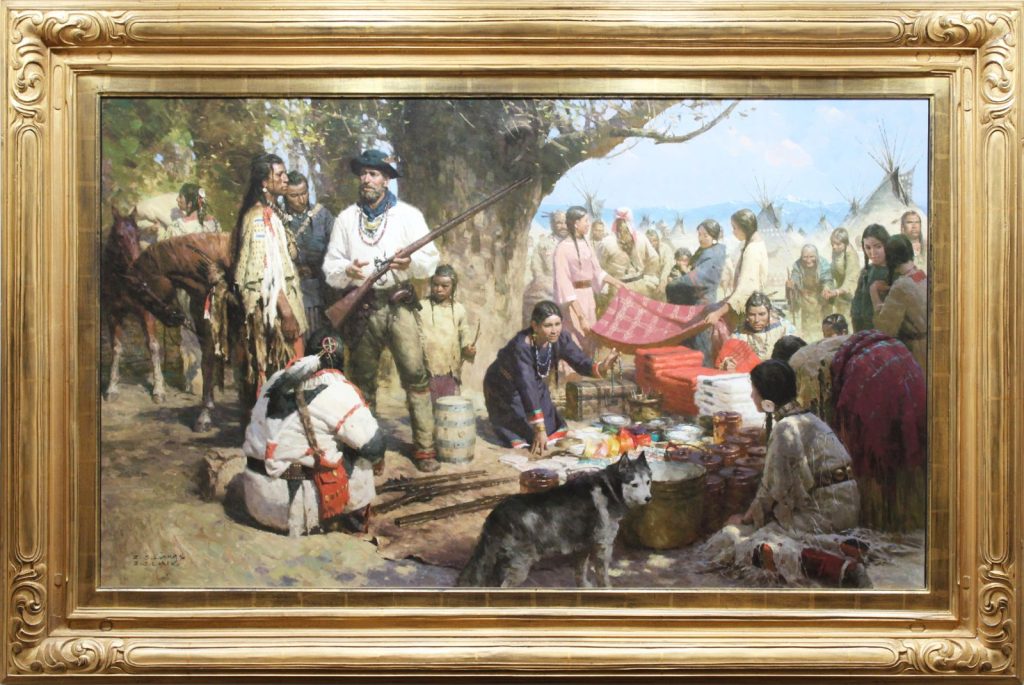
Trading With Blackfeet, Montana Territory, 1860
Giclee (Original oil also on Display)
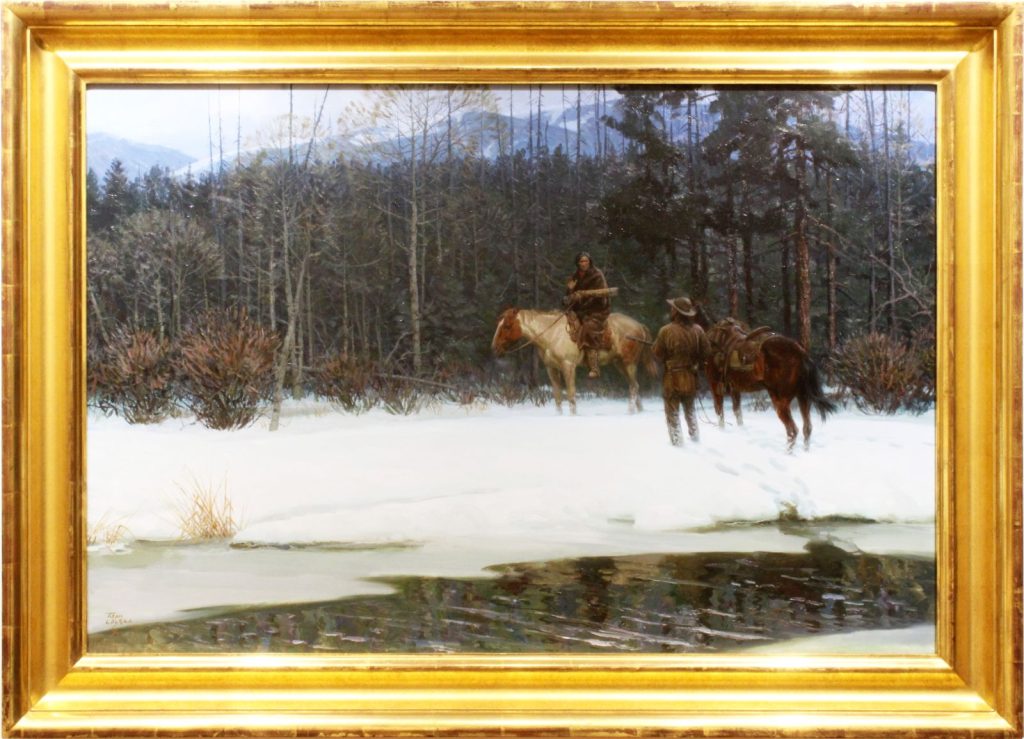
The Thaw
Acrylic on Board
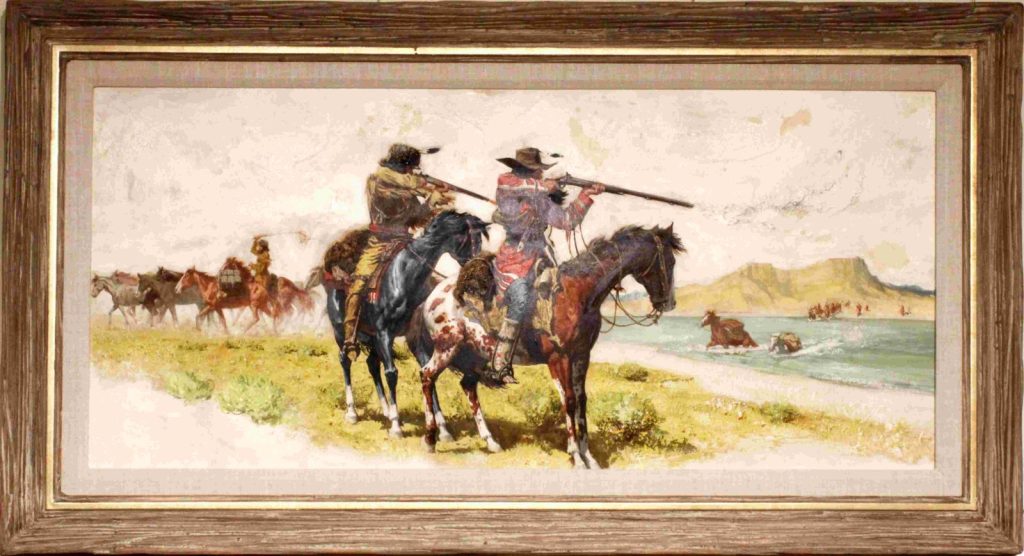
River Crossing
Oil
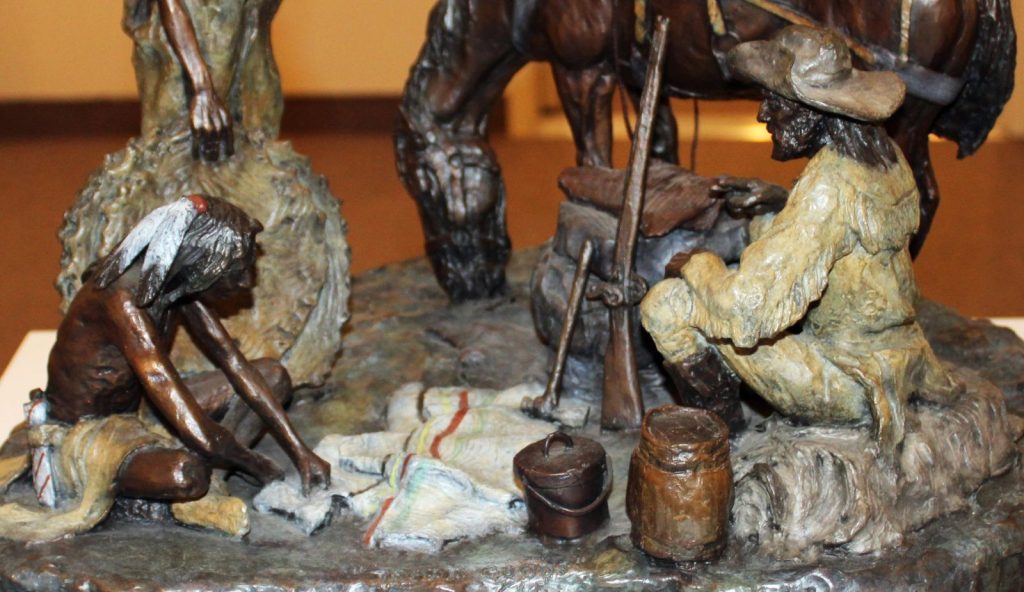
Trade Goods
Bronze
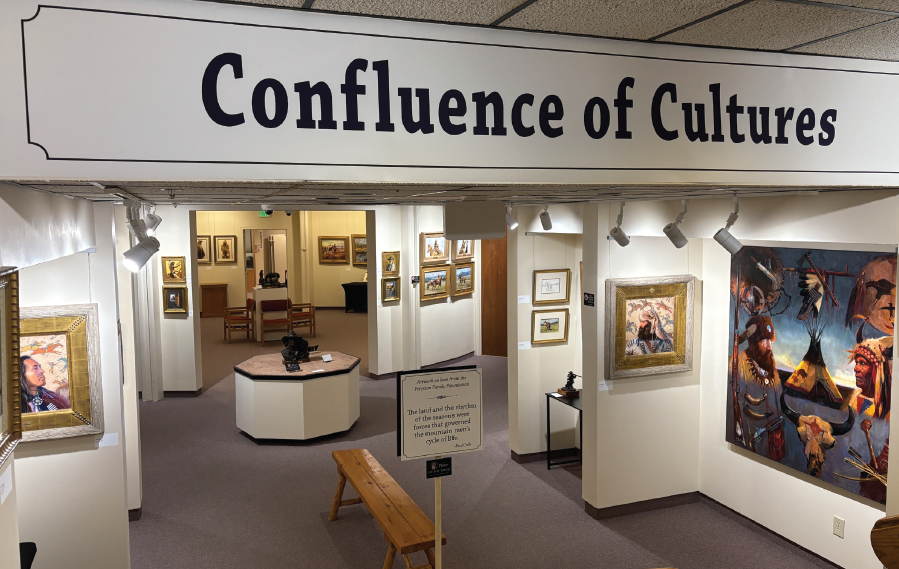
Inside the Exhibition
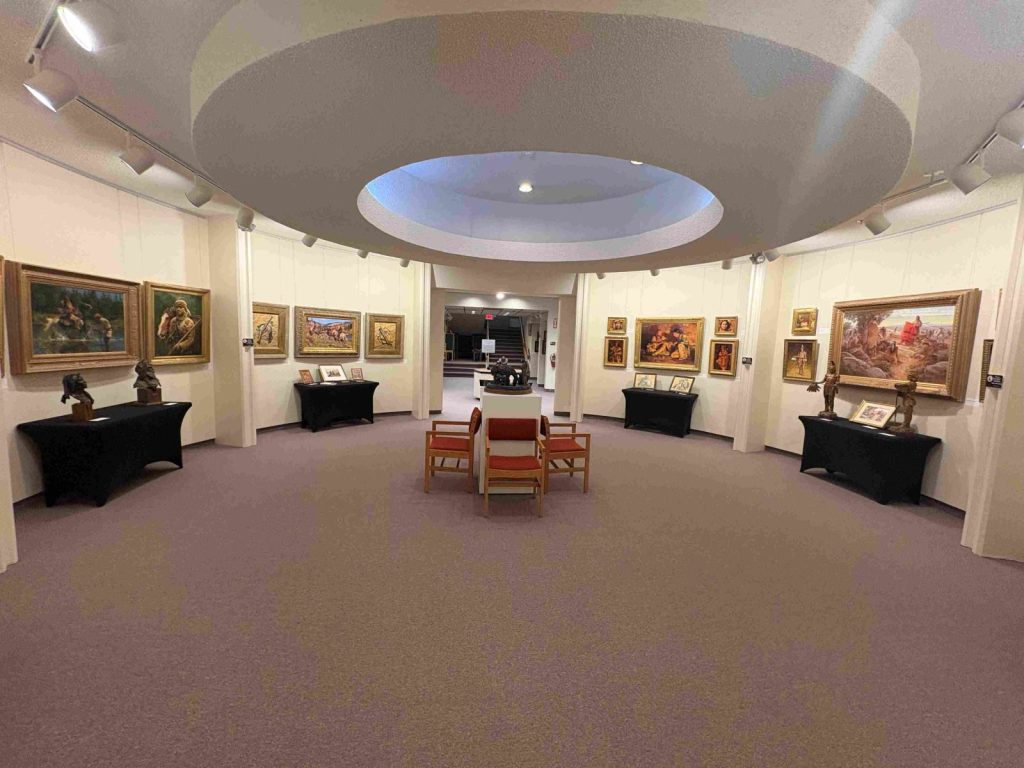
Confluence of Cultures is best experienced in person, where the scale, detail, and material presence of each work can be fully appreciated. The exhibition brings together paintings, bronzes, and works on paper in a carefully curated installation that reflects both the diversity and cohesion of the collection.
Visitors are invited to explore the ways in which contemporary artists interpret the complex history of the Rocky Mountain fur trade.
Acknowledgments
Artwork on loan from the Peterson Family Collection.
Curated by Tim Peterson.

This exhibition is supported in part by the Wyoming Arts Council, the National Endowment for the Arts, and the Wyoming State Legislature.
Artists and Works on View
- The Scout — Oil
- The Trapper — Oil
- Firelight Mountain Man — Oil
- Trading — Oil
- Davey Jackson Trapper — Oil
- Indian Brave — Oil
- His Kind of Freedom — Oil
- Study for “When Red Blankets Talk Trade” — Watercolor
- When Red Blankets Talk Trade — Oil
- Along the Gros Ventre — Oil
- Scouting the Morning — Oil
- Mountain Man with Jug — Oil
- Sepia Study, Pawnee Indian — Oil
- The Meeting — Pen/Ink
- The Shooter — Oil
- In the Beginning Friends — Giclee
- Paul Pierre — Oil
- A Breath of Friendship — Oil
- Friends — Mixed
- Friends II — Mixed
- Trappers Predicament — Oil
- A Piece of the Rock — Oil on Masonite
- Untitled — Oil
- On the Alert — Oil, with Pencil Study
- Mountain Man — Bronze
- Unknown Presence — Watercolor
- Lakota — Oil
- He Wore a Feather — Oil
- Winter Hat — Bronze
- Bear Ghost — Bronze
- Legacy — Oil
- Legacy — Bronze
- The Long Rifle — Oil
- The Long Rifle — Bronze
- Buffalo Hunter — Bronze
- Crow — Bronze
- Fort Manuel – Summer 1809 — Oil
- Storyteller — Oil
- Mountain Man — Oil
- Vues Contradictoires (Confluence of Culture) — Oil
- Glow of Old Memories — Oil
- Doin’ Trade — Watercolor
- Hawken Still Life — Water Color/ Oil
- Crow Still Life — Water Color/ Oil
- Along the Yellowstone — Oil
- Elk River Warpath — Oil
- When a Fight Is a Flinch Away — Oil
- The Beaver Trapper — Oil
- The War Chief — Oil
- Study for “When a Fight Is a Flinch Away” — Oil
- Study for “Welcome to the Cautious Mountain Man” — Pencil
- John Colter (Trapper with Pipe) — Oil
- Indian with Fur Around Arm — Oil
- Trading with the Blackfeet, Montana Territory, 1860 — Oil
- Trading with the Blackfeet 1860 — Giclee
- Joe Kipp, Trader, Missouri River 1879 — Oil
- Memories Past — Oil
- The Thaw — Oil
- The Thaw — Acrylic on Board
- The New Trade Gun — Oil
- The Strategist — Oil
- The Trade Rifle — Oil
- Bow Maker — Oil
- Windswept — Oil
- Colorado High Country — Oil
- River Crossing — Oil
- A Lapse of Vigilance — Oil
- Trappers Demise on the Blacks Fork — Oil
- Always Alert — Oil
- War Horse — Oil
- Coming to Trade – Fort Union — Watercolor
- Coming to Trade – Fort Union — Pen/Ink
- Winter Haven — Oil
- Not Even a Whisper — Bronze
- Trade Goods — Bronze
- In a Friendly Camp — Oil
- On the Safe Side — Pencil
- On the Safe Side — Oil
- Danger in Paradise — Oil
- Memories of St. Louis — Oil
- The Squaw Man — Bronze
- Painted and Proud — Oil
- As the Wind Blows Free — Oil
- Safety of the River — Oil
- Indian Hunter — Bronze
- Crossing the Snow Covered Flats — Oil
- Trapper with Quirt — Oil
- Young Frontiersman — Oil
- Trapper — Etching