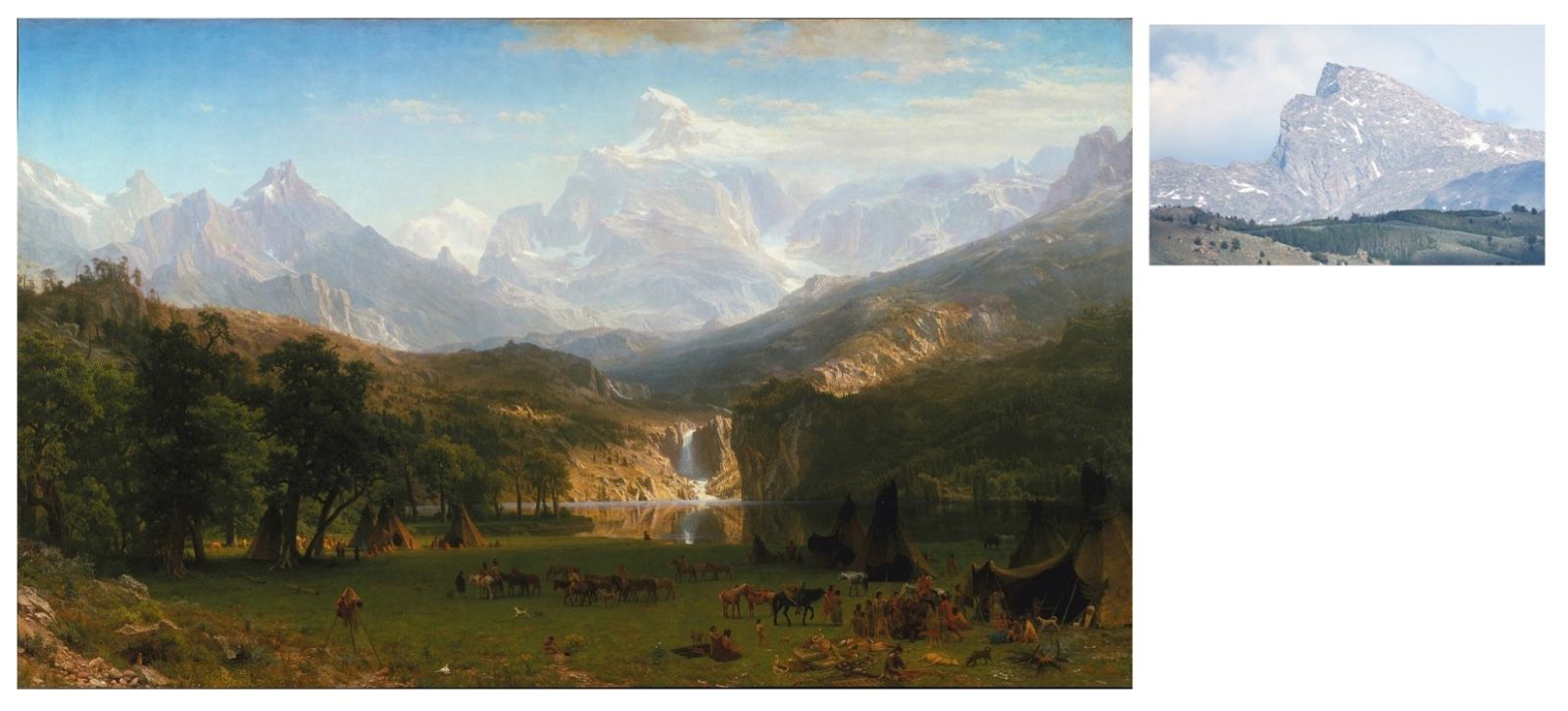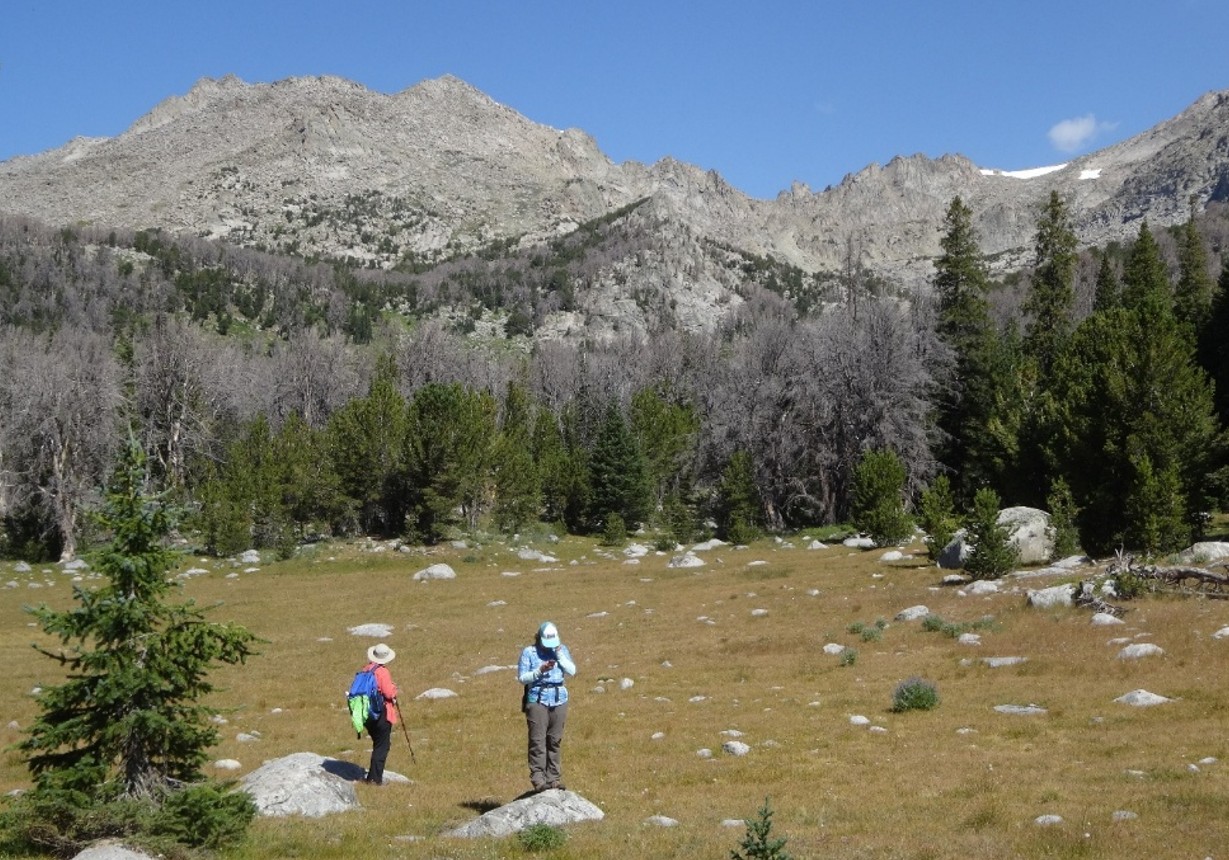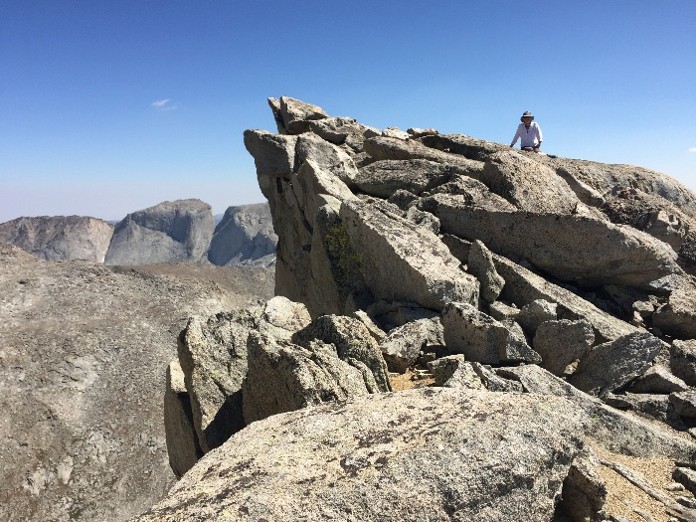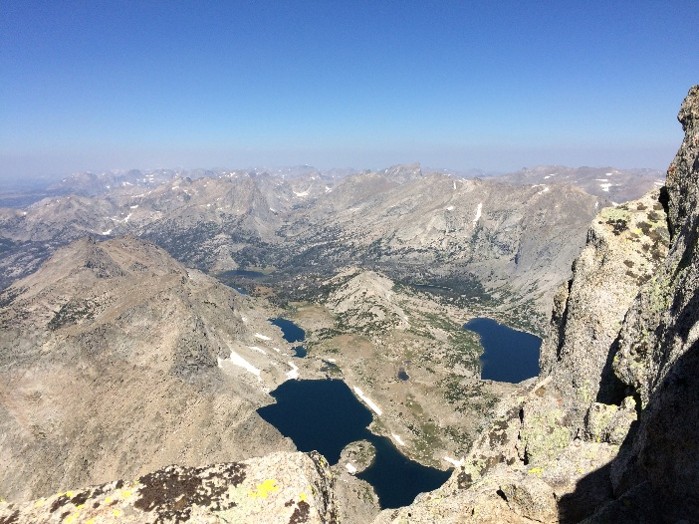
Tag Archives: rocky mountain fur trade

1826 Rocky Mountain Rendezvous

By Rick Williams
July 24, 2026

The 1826 Rocky Mountain Rendezvous marked a turning point in the western fur trade. During this gathering, William H. Ashley began withdrawing from the mountain trade, the partnership of Smith, Jackson & Sublette emerged, and the organizational structure of the Rocky Mountain trapping enterprise underwent significant change. Although contemporary accounts differ on the exact location and duration of the rendezvous, historians generally agree that it occurred in present-day Cache Valley, Utah.

Historical Summary

Location: Willow/Cache Valley (known historically by both names).  Either on Cub Creek (near present-day Cove, Utah, as described in a letter by Daniel Potts to his brother and also the site of John H. Weber’s winter camp of 1824-1825) or on the Blacksmith Fork River (near present-day Hyrum, Utah, as proposed by Dale L. Morgan in The West of William H. Ashley).

Duration: William H. Ashley wrote that he “arrived May 25” and remained on the Bear River until at least July 18. Jedediah Smith, however, suggested they “arrived sometime in June.”  Robert Campbell’s journal indicates a duration of only two weeks, while Daniel Potts’s letter states the celebration of Independence Day (July 4) at the rendezvous.

Significant events

Supplying Expedition from St. Louis

Less than four weeks after the arrival of Ashley and Smith in St. Louis on October 4, 1825 with the furs from the 1825 rendezvous, Ashley’s partner Jedediah Smith set out on October 29 to resupply the men who had remained in the Rockies.  It is interesting to note that he starts out on the route that will become the great Fur Trade Road, also known as the Oregon, Mormon, and California Trail.  He is accompanied by approximately 60 new men, 160 horses and mules and $20,000 worth of supplies.  (See Bicentennial Moments – April 1826)

Wintering in Cache Valley

It appears that Bill Sublette is left in charge of at least a party of men, if not all the men remaining in the mountains.  His party initially wintered near the confluence of Cub Creek and the Bear River (near present day Cove, Utah).  They later moved to the Great Salt Lake Valley near the mouths of the Bear and Weber Rivers (near present day Brigham City and Ogden, Utah).  Whether this move was prompted by a colder winter or diminishing resources such as firewood, buffalo, or cottonwood bark to feed their horses is unknown.

Approximately 200 Snake Indians wintered with the group at the mouth of Bear River and are believed to have joined the men at rendezvous that summer.  

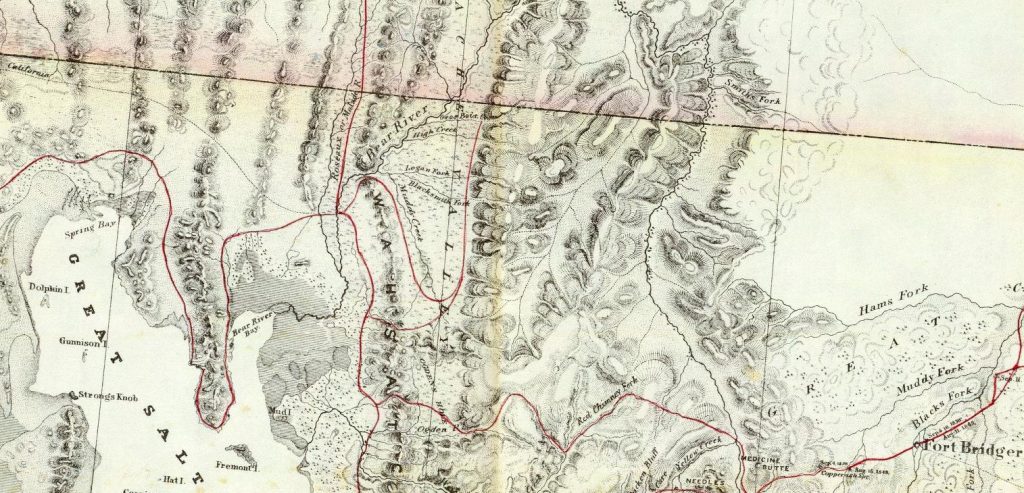
“Map of a Reconnaissance between Fort Leavenworth on the Missouri River, and the Great Salt Lake in the Territory of Utah,” was created in 1852 by Howard Stansbury, with assistance from J.W. Gunnison and Albert Carrington. Map courtesy of David Rumsey Map Collection – Cartography Associates.

Exploration of the Great Salt Lake

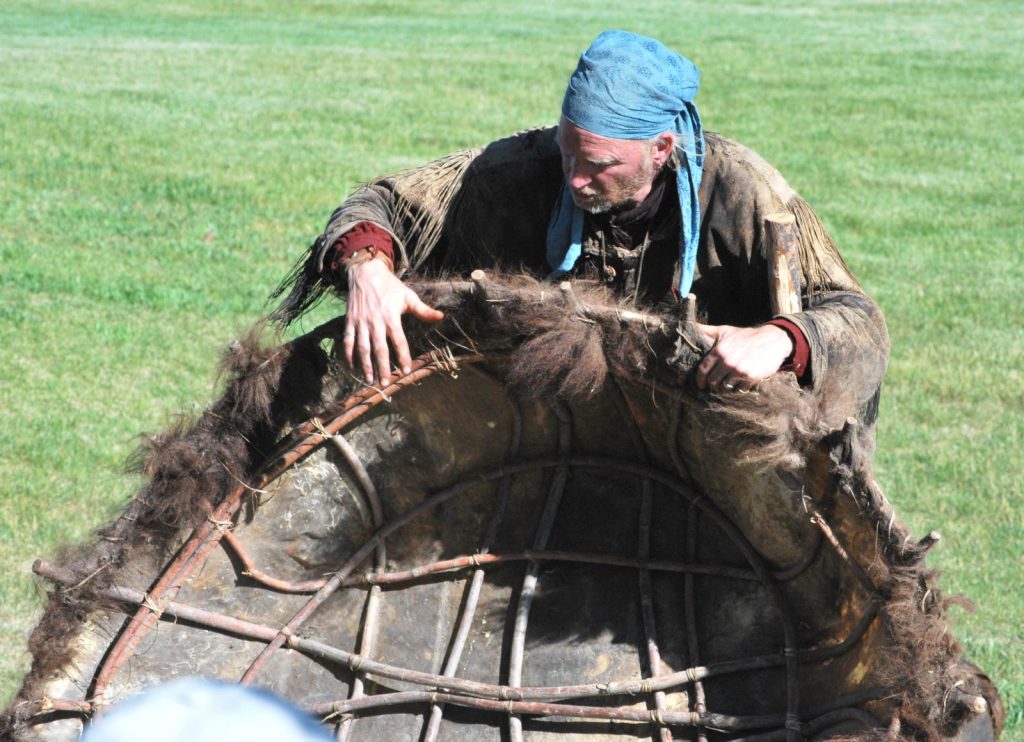
During the following spring, four of the mountaineers constructed bullboats (a boat fashioned of a framework of willow and covered by one or two hides of a bull buffalo – thus the name) they then endeavored to circumnavigate the Great Salt Lake and discover the purported headwaters of the Columbia. This notion had long been held by both British and Americans alike.  Although they did not discover such a place, they speculated on a few places it might exist.  Almost all other great lakes we thought to have one or more inlets as well as an outlet.  A major exception is the Great Salt Lake, which has no outlet.

The 1825-1826 Beaver Hunt

The Fall ‘25 and Spring ‘26 hunts resulted in 123 packs of beaver which Ashley returned upon the pack mules that had brought out the supplies to rendezvous.  The predominant drainages trapped were the Green, Bear, Snake and Weber. It is also probable that Davey Jackson had led a trapping brigade into the Jackson Hole region thus giving it its name and making us aware, for the first time, of his presence and acute leadership in the mountains.

Formation of Smith, Jackson & Sublette

Smith, Jackson and Sublette (SJS) formed their partnership sometime during or shortly after rendezvous to buy out Ashley’s interests in the mountains.  A note was issued to Ashley of $7,821, suggesting that Ashley received approximately $11,000 for his share of the business.  Ashley pays Smith approximately $5,000 for Smith’s portion, leaving Ashley with control of the goods needed to supply the following year’s rendezvous.  The new partnership paid Ashley $3,000 from the proceeds of some of that year’s hunt, with the remaining balance to be from the proceeds of the 1827 season.

Competition Emerges

Upon his return to St. Louis, Ashley attempts to engage B. Pratte and Co. (an alliance of the old French families of Berthold, Pratte and Chouteau of St. Louis) in the creation of a new company. Under this proposed agreement, the company would deliver goods to the 1827 rendezvous, and the men of the supply train would then form a trapping brigade in direct competition to SJ&S. 

However the company of B. Pratte and Co. was negotiating something completely different.  The company instead formed an alliance with John Jacob Astor to create the American Fur Company (AFCo), which would become the competition that Ashley was trying to establish.  In the years that followed, AFCo would become the predominant competition to Ashley’s men, who eventually form the Rocky Mountain Fur Company.

Looking Ahead

Of note, it was from this rendezvous that Jedediah Smith begins his two year odyssey to find new trapping grounds the first year and then rescue his men who remained in California during the second.  It is near the end of the second year that Smith loses most of his men to an Indian attack and returns without furs, thus leaving him dependent upon Jackson and Sublette’s hunts to provide payment on their obligation to Ashley.

Jackson and Sublette each lead their parties to trap that fall and return to winter in Willow/Cache valley the next winter.

Another important result of the 1826 rendezvous was Bill Sublette’s emergence as a leader on the business side of the fur trade. Although still an active trapper, this marked the beginning of a decade in which Sublette would play a central role in shaping the Rocky Mountain Rendezvous into the commercial institution that sustained the fur trade throughout the hear of the heart of the mountains

Although the exact location and duration of the 1826 Rocky Mountain Rendezvous remain subjects of historical debate, its importance is unquestioned. The gathering marked a pivotal transition in the Rocky Mountain fur trade as William H. Ashley began withdrawing from the mountain trade and the partnership of Smith, Jackson & Sublette emerged. At the same time, continued exploration, successful trapping expeditions, and new business alliances shaped the future of the rendezvous system and the western fur trade. The events of 1826 laid the groundwork for the years that followed, making this rendezvous one of the most consequential in Rocky Mountain fur trade history.

Selected References

  • Berry, Don. A Majority of Scoundrels. 1961.
  • Dale, Harrison Clifford, ed. The Explorations of William H. Ashley and Jedediah Smith, 1822–1829. 1941.
  • Gowans, Fred R. Rocky Mountain Rendezvous. 1985.
  • Morgan, Dale L. Jedediah Smith and the Opening of the West. 1953.
  • Morgan, Dale L. The West of William H. Ashley. 1964.

Albert Bierstadt in the Wind River Range: 1859

How Art from Our Mountains Changed America

Part Two

By Sue Sommers
July 20, 2026

How Art from Our Mountains Changed America
Part One Part Two | Part Three (coming soon)

As an artist myself, and someone who has photographed, sketched and painted the Wind River Mountains, I think I understand some of the challenges Albert Bierstadt faced during his summer here in 1859.
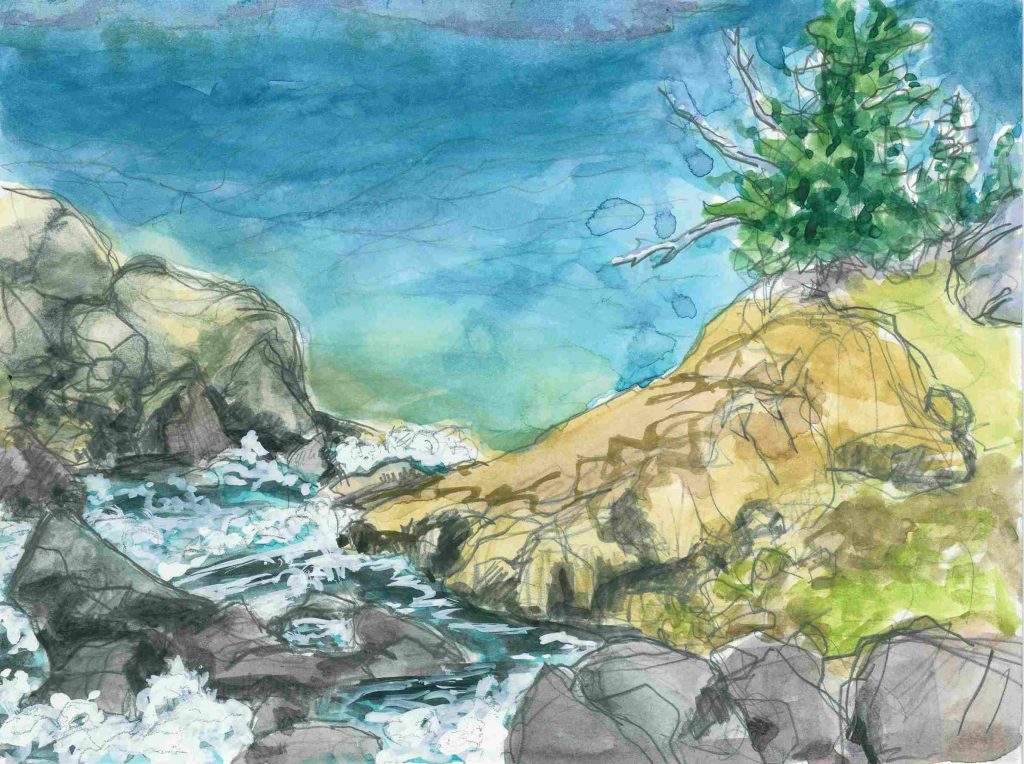
In 2019, I sketched the waterfall dropping into Island Lake from the same viewpoint as my photograph in the previous blog post:

Island Lake Waterfall. Sketch by Sue Sommers.

I wanted to see – and feel – how this location compared to the waterfall in Bierstadt’s painting of Island Lake.

Practically speaking, a multitude of conditions hamper careful, patient artmaking at altitude. There can be low clouds obscuring the views, hordes of biting insects, wind, frightening storms, wildfire smoke fading all colors, and sunlight as harsh and searing as a brass gong, to name just a few. Frustrations may include scattered tools, constantly shifting light, intense physical discomfort, and a lot of wasted paper. I never did make the waterfall appear to drop a great distance into the lake, because I was trying to paint what I saw. As Bierstadt knew well, sometimes you have to paint what isn’t there in order to give the viewer the actual sensations of space and depth.
Just as we share the same challenging conditions Bierstadt likely did while sketching in 1859, we travel into the Winds in much the same way he did: with pack animals and a guide, riding or on foot. Space, weight, and time are at a premium today, just as they were for Bierstadt 167 years ago. Except when he left the mountains, Bierstadt would keep riding and walking all the way to St. Louis, and beyond.

But in my opinion, the biggest challenge for artists among the peaks is scale. Everything up high in the Wind River Range is very close, and unbelievably massive.

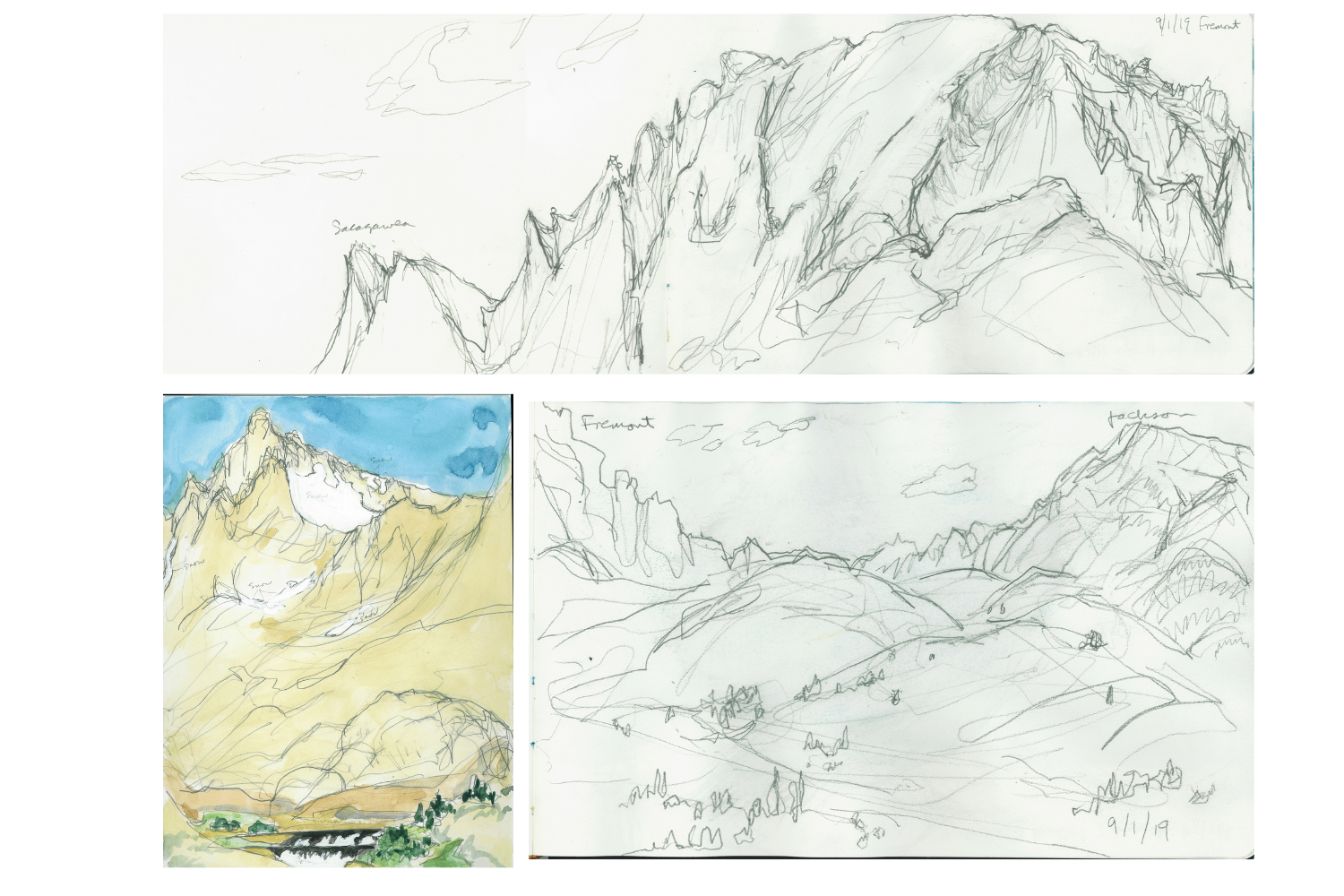
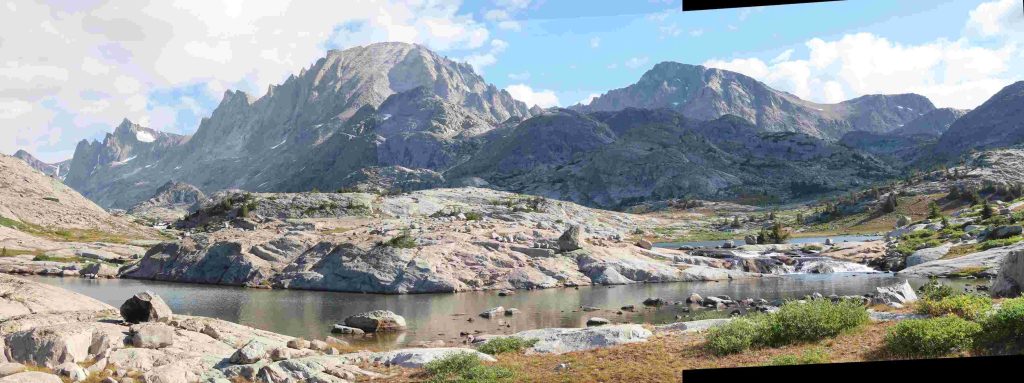
Seven years ago, when I turned away from Island Lake and faced the opposite direction, I saw and photographed part of the spine of the Winds. First, I drew and painted studies of what I saw. I felt the sketches were successful, but my hand and the paper weren’t compatible with the scale of the actual place:

Clockwise from top: Fremont and Sacagawea peaks; Fremont and Jackson peaks; Mount Helen. Sketches by Sue Sommers.

Much later, I was able to make a collage of two photographs to successfully bring the scene together, but this pushed the mountains farther away. Everything got smaller than I felt it to be. Collage by Sue Sommers

In fact, it’s nearly impossible to fit the three-dimensional reality (and our five senses) of the Rocky Mountains into a single painting or photograph. Bierstadt’s awe and amazement is apparent in a lengthy July 10 letter (The Crayon 1859, p.287) in which he describes “the mighty perpendicular cliffs that rise hundreds of feet aloft, all capped with snow … we are among a different class of mountains.” Although Bierstadt wrote that the Rocky Mountains compared with the Swiss Alps he had visited, up to that point on the Oregon Trail, he would have experienced nothing quite like the Wind River Range.

In the same letter, Bierstadt mentioned difficulty with his photographic equipment: “We have taken many stereoscopic views, but not so many of mountain scenery as I could wish, owing to various obstacles attached to the process.” While he succeeded in photographing people, animals, and middle-distance scenes, the Rocky Mountains themselves defied his camera.

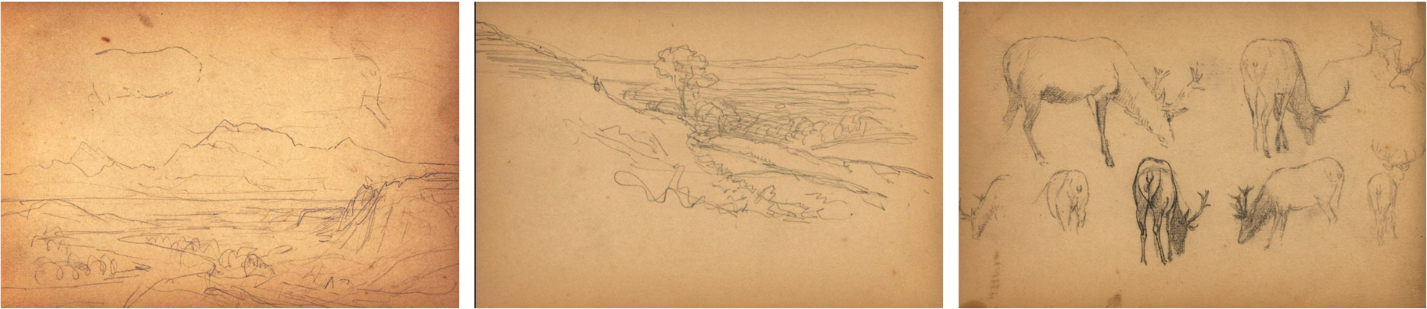
This suggests that Bierstadt, like many of us with cameras or brushes, would have relied on the details he captured in smaller scenes to concentrate beauty and spark memory: perhaps sunlight on part of a peak, an animal in a meadow, or wildflowers after a summer storm.

Sketches from an 1859 sketchbook belonging to Bierstadt. Images Courtesy of Special Collections and University Archives, Rutgers University Libraries, New Brunswick, NJ

In the next blog post, we’ll consider Bierstadt’s version of another iconic Wind River peak.

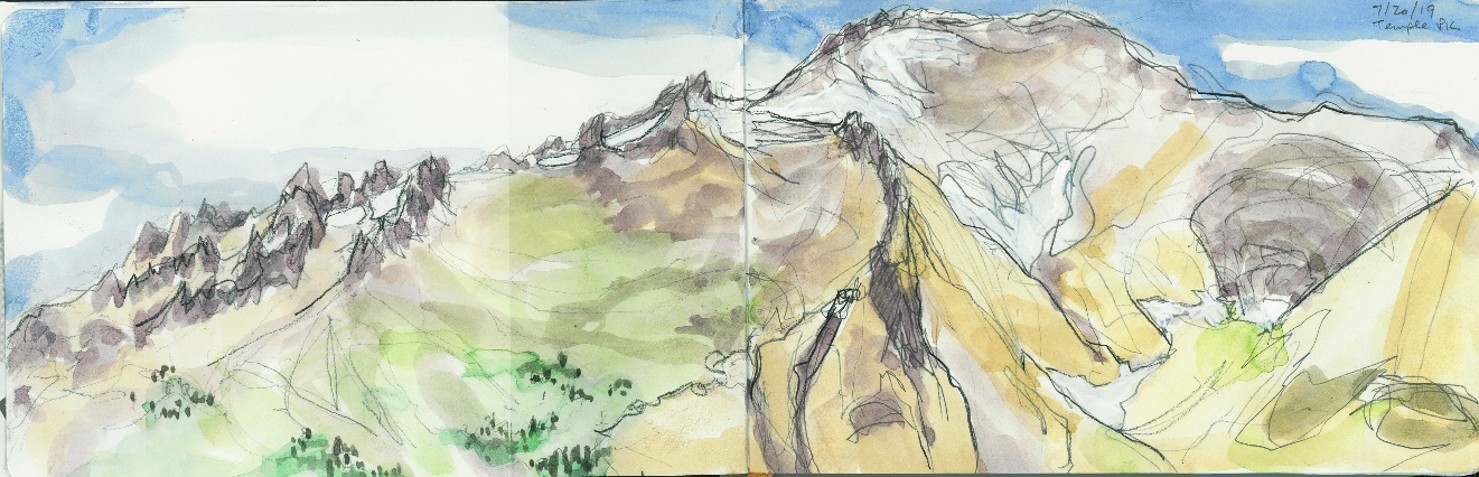
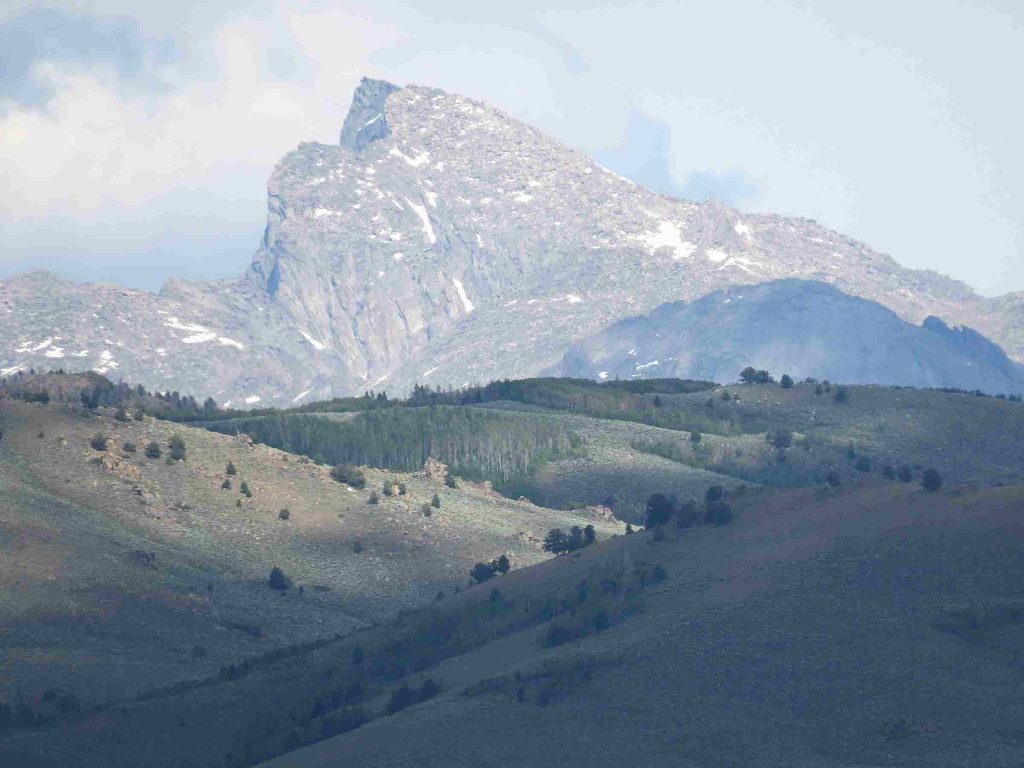
Temple Peak from the Boulder Highway, looking east-southeast. Sublette County, Wyoming. Photo by Sue Sommers

Continue Reading the Series

Part One: Albert Bierstadt in the Wind River Range: 1859
Part Three: Albert Bierstadt in the Wind River Range: 1859 (Coming Soon)


Interested in learning more about Albert Bierstadt and the Wind River Range? Join us August 20, 2026 for a presentation on
Albert Bierstadt and his time in the Wind River Range by Sue Sommers at the Museum of the Mountain Man.
More details coming soon.

Albert Bierstadt in the Wind River Range: 1859

How Art from Our Mountains Changed America

Part One

By Sue Sommers
June 18, 2026

How Art from Our Mountains Changed America
Part One | Part Two | Part Three (coming soon)

If you’ve spent much time in the northern Wind River Mountains of Wyoming, you might have visited Island Lake. The area is very popular with backpackers and climbers, providing access to Titcomb Basin, Fremont Peak, Indian Pass, and countless high elevation lakes.

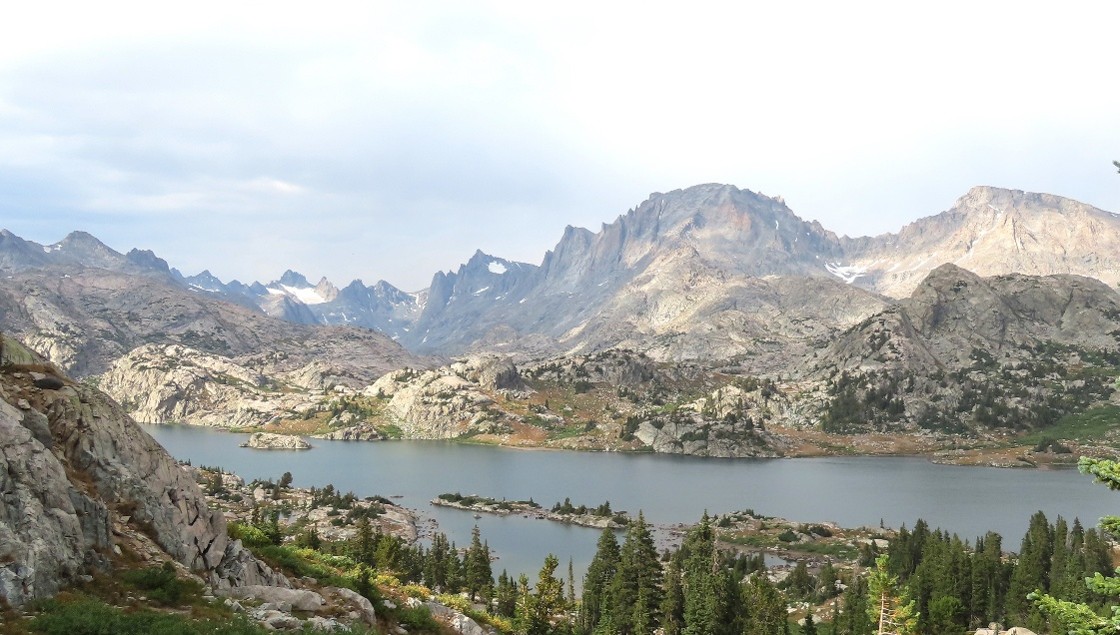
Photo by Sue Sommers

This is the view of Island Lake from the main trail leading from Seneca Lake. On the other side of Island Lake, at the extreme left end of the lake, is the rocky island that gives the lake its name. And nearly hidden by the rocky island is a dramatic waterfall.

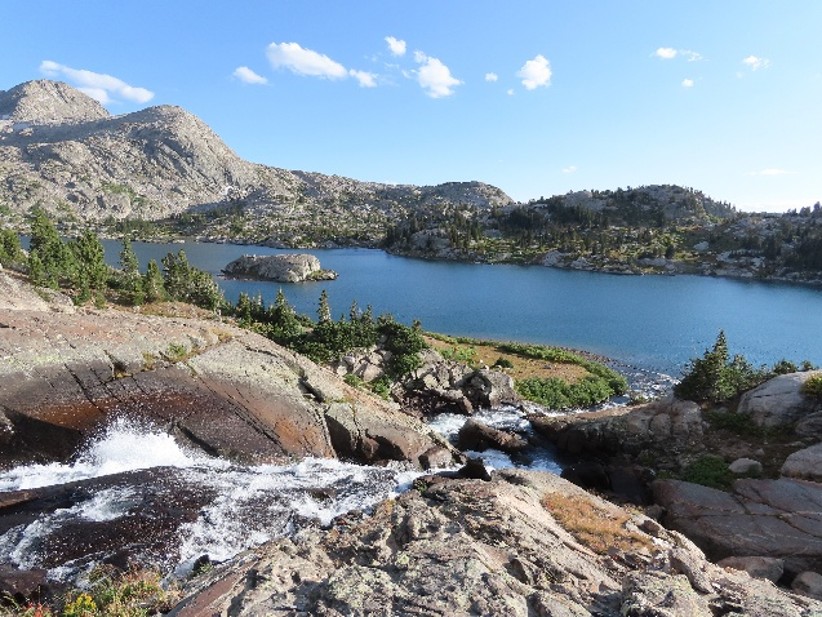
Photo by Sue Sommers

This is the view from the top of the waterfall on the opposite side of the lake, looking back at the trail.

Who was Albert Bierstadt, and what was his connection to the Wind River Mountains?

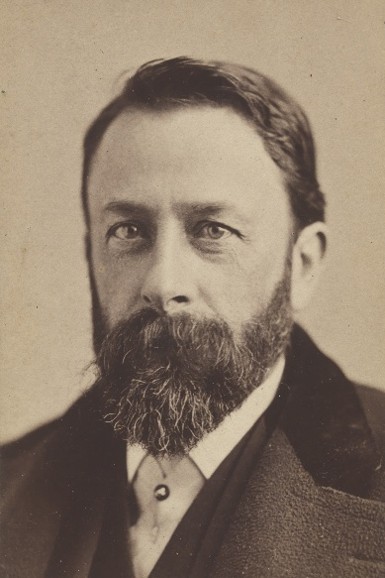
National Portrait Gallery, Smithsonian Institution

In 1859, German-American painter Albert Bierstadt (1830-1902) had returned from artistic training in Europe and was rising to prominence among the Hudson River School of painters. He decided to join a few other artists tasked with documenting a US Army expedition to the Far West led by Col. Frederick Lander. The purpose of the expedition was to survey and improve the Oregon Trail for the many thousands of people – and their wagons and livestock – heading west. Bierstadt made many sketches and photographs along the trail. His surviving oil and pencil sketches and glass plate negatives capture Native and Euro-American people, encampments, wildlife, and landscapes from the journey.

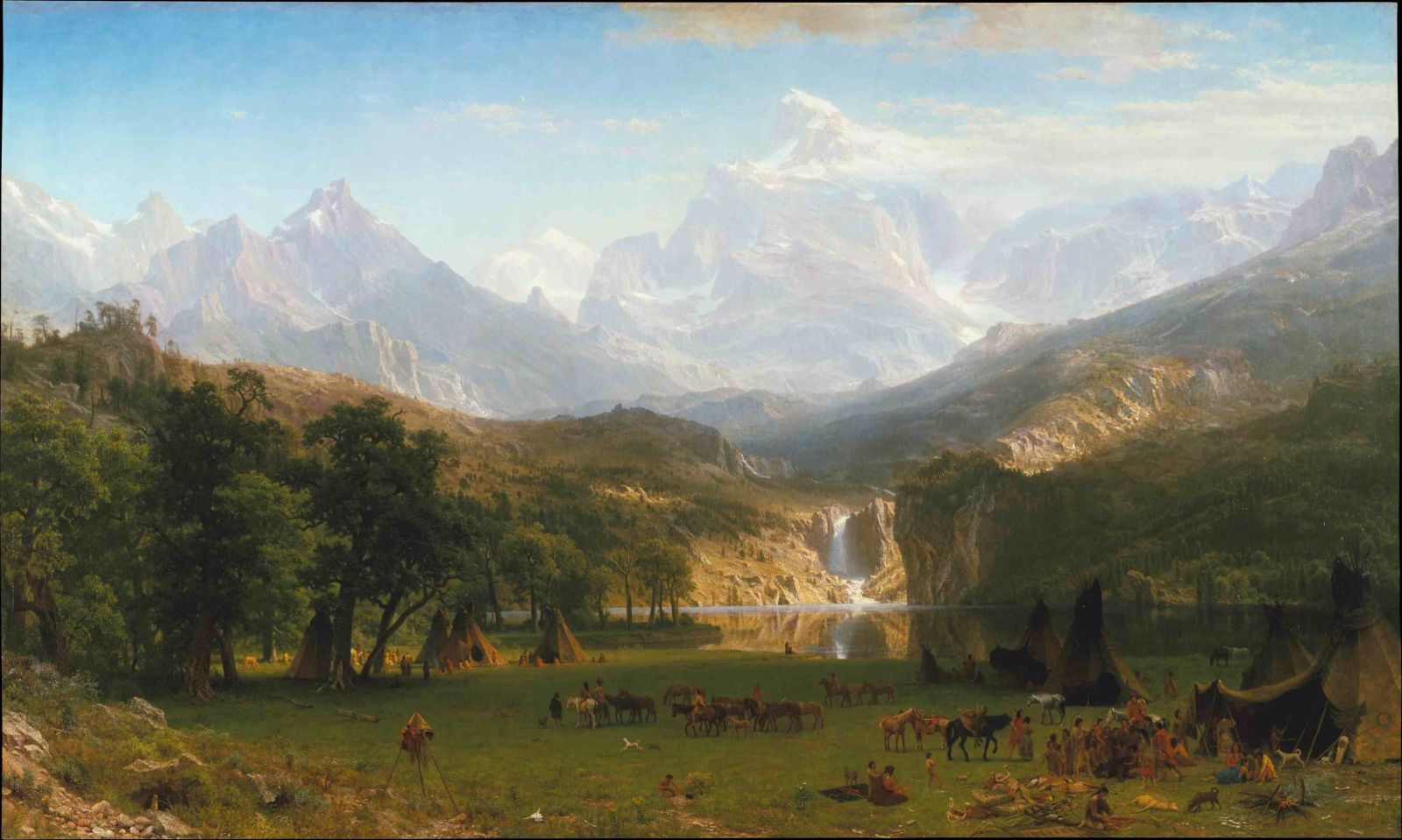
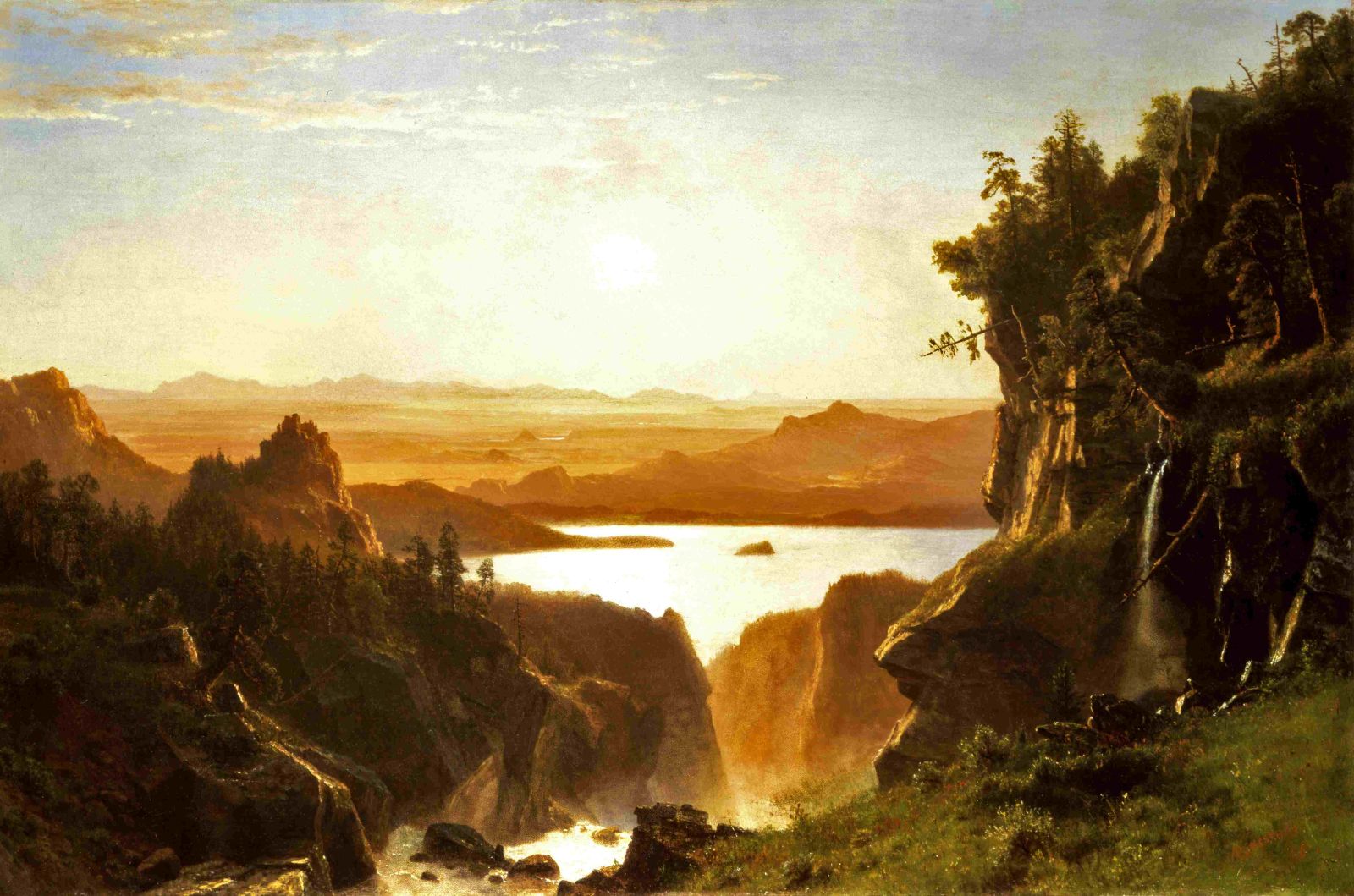
After he returned to his studio in New York, Bierstadt made this painting of a view high in the Wind River Mountains:

Island Lake, Wind River Range, Wyoming, 1861. Oil on canvas, 27.1875 x 41.25 inches. Buffalo Bill Center of the West. Museum Purchase. 5.79

No one knows for sure how, with whom, or at what point in the expedition Bierstadt might have trekked from the valley floor to this site above 10,000 feet. Some don’t believe that he ever saw Island Lake, and suspect the scene in the painting is a complete invention.

Nor do any of Bierstadt’s existing Lander Survey photographs appear to be from high-elevation sites like Island Lake.  One reason for this could have been the fragile and complex photographic process available to him at that time. By contrast, Bierstadt’s sketching materials, including pencils, paints, and small panels, would have been durable and easy for him to carry or pack on a mule. In any case,  over the months and years that followed, Bierstadt would use his sketches and photographs to help him compose many paintings. Island Lake could have been one of them.

It’s also crucial to keep in mind that artistic conventions during Bierstadt’s time dictated that composition and drama were more important than exact replication.  What similarities and differences do you notice compared to the recent photographs? How do the differences change your experience of the scene?  

Sources and Further Reading

This blog post relies heavily on a landmark article on this subject:

Houston, Jourdan, and Fraser Houston. “The 1859 Lander Expedition Revisited: ‘Worthy Relics’ Tell New Tales of a Wind River Wagon Road.” Montana: The Magazine of Western History 49, no. 2 (Summer 1999): 50–72.

Additional sources consulted include:

  • Anderson, Nancy K., and Linda S. Ferber. Albert Bierstadt: Art & Enterprise. New York: Hudson Hills Press in association with the Brooklyn Museum, 1990.
  • Fischer, Diane P., ed. Primal Visions: Albert Bierstadt “Discovers” America. Montclair, NJ: Montclair Art Museum, 2001.
  • Hassrick, Peter H., et al. Albert Bierstadt: Witness to a Changing West. Norman, OK: University of Oklahoma Press in cooperation with the Buffalo Bill Center of the West, 2018.
  • Hendricks, Gordon. Albert Bierstadt: Painter of the American West. New York: Harry N. Abrams and the Amon Carter Museum of Art, Fort Worth, 1974.
  • Houston, Jourdan Moore, and Alan Fraser Houston. “Henry Hitchings: Educator and ‘Early Devotee of Landscape Art.'” Imprint: Journal of the American Historical Print Collectors Society 26, no. 2 (Autumn 2001).
  • Lindquist-Cock, Elizabeth. “Stereoscopic Photography and the Western Paintings of Albert Bierstadt.” Art Quarterly 33, no. 4 (1970): 363–64, note 55.
  • Novak, Barbara. American Painting of the Nineteenth Century: Realism, Idealism, and the American Experience. Oxford: Oxford University Press, 2007.
  • Novak, Barbara. Nature and Culture: American Landscape Painting, 1825–1875. Oxford: Oxford University Press, 2007.
  • Trenton, Patricia, and Peter H. Hassrick. The Rocky Mountains: A Vision for Artists in the Nineteenth Century. Norman: University of Oklahoma Press, 1983.
  • The Crayon (1859): 26, 161, 287.
  • University of Texas Rio Grande Valley Libraries, “Stereographs.” https://utrgv.libguides.com/earlyphotographs/stereograph
  • University of Texas Rio Grande Valley Libraries, “Glass Plate Photography.” https://utrgv.libguides.com/earlyphotographs/glassplate

Continue Reading the Series
Part Two: Albert Bierstadt in the Wind River Range: 1859
How Art from Our Mountains Changed America


Interested in learning more about Albert Bierstadt and the Wind River Range? Join us August 20, 2026 for a presentation on Albert Bierstadt and his time in the Wind River Range by Sue Sommers at the Museum of the Mountain Man.
More details coming soon.

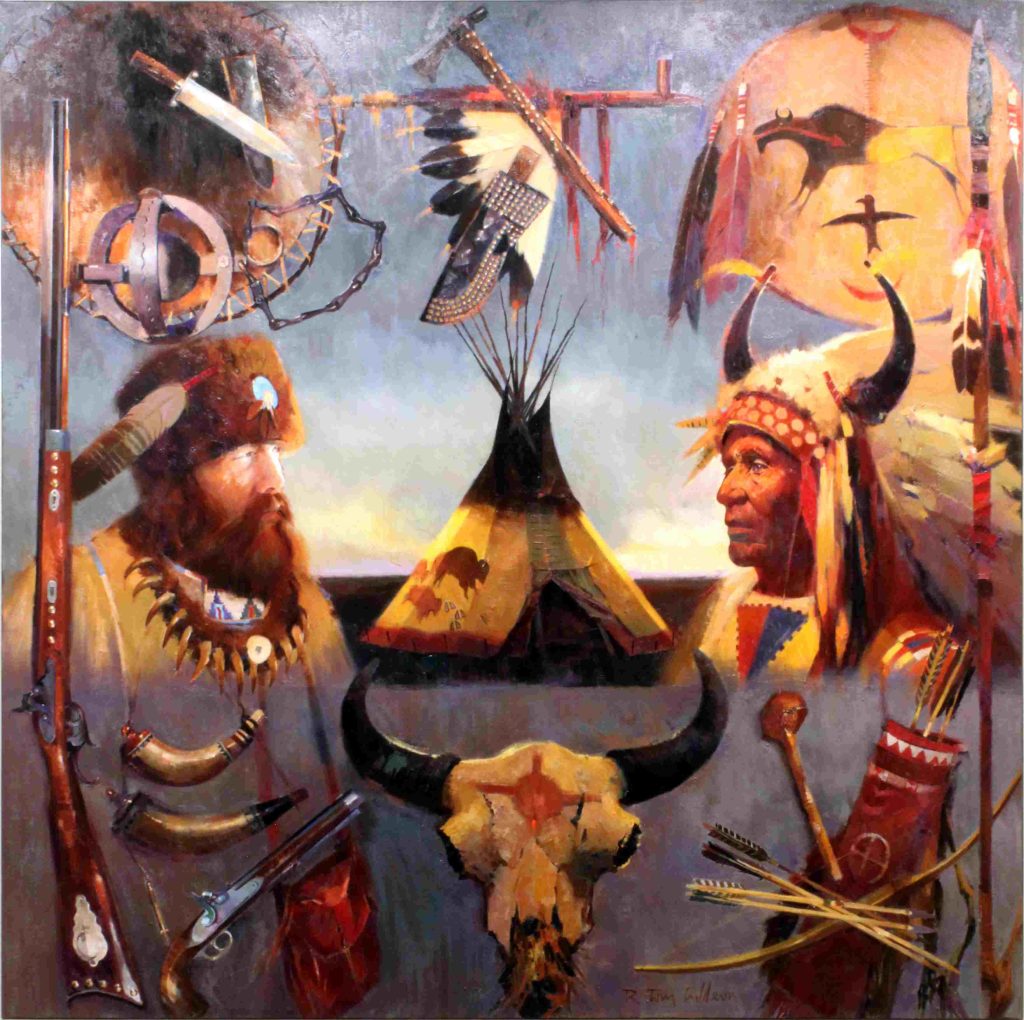
CONFLUENCE OF CULTURES

Tom Gilleon
Vues Contradictoires (Confluence of Cultures)
Oil on canvas

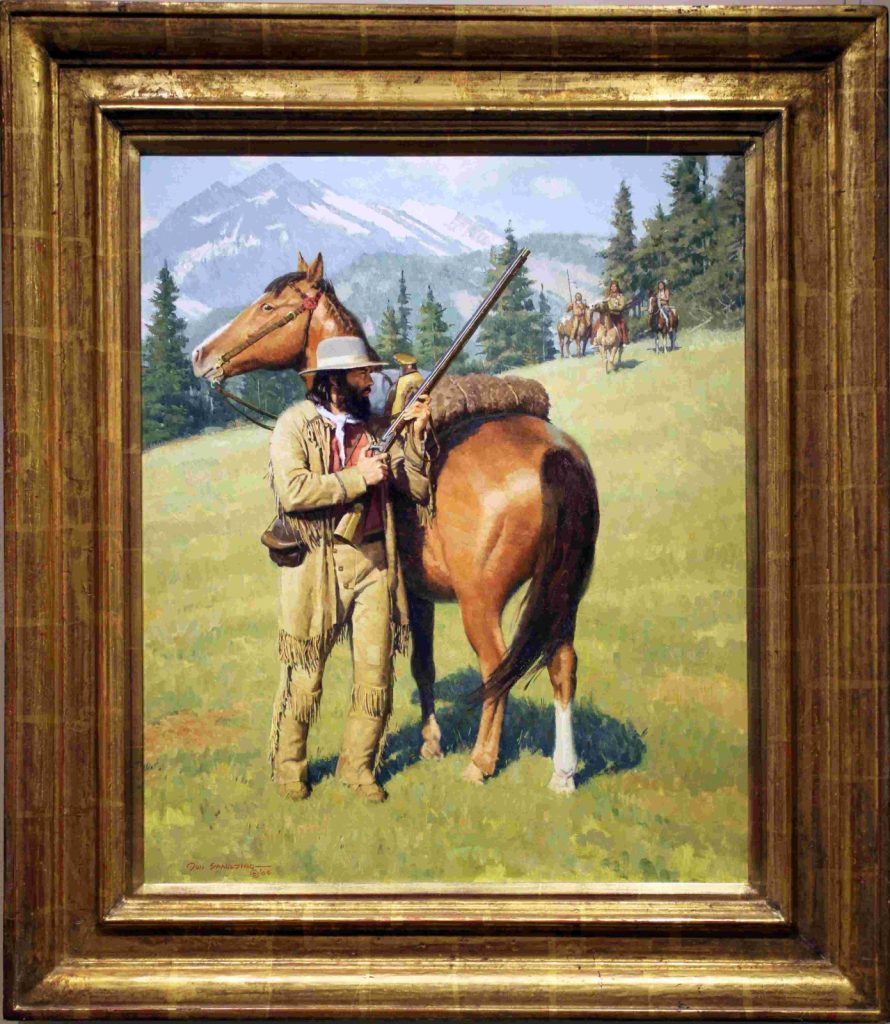
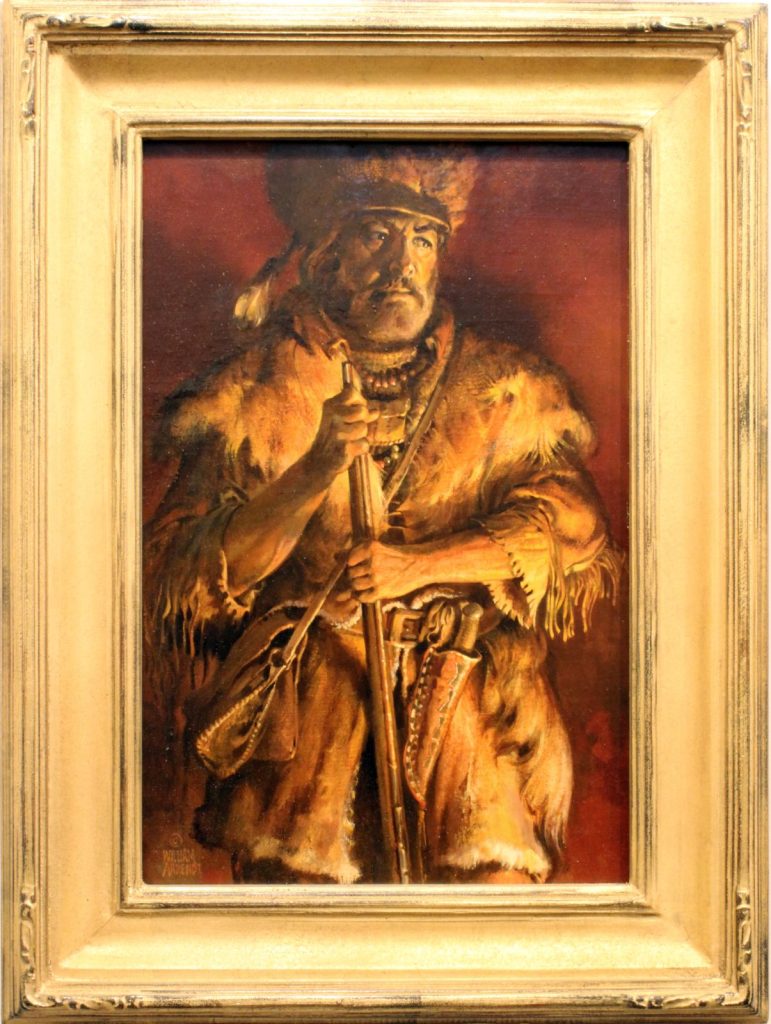
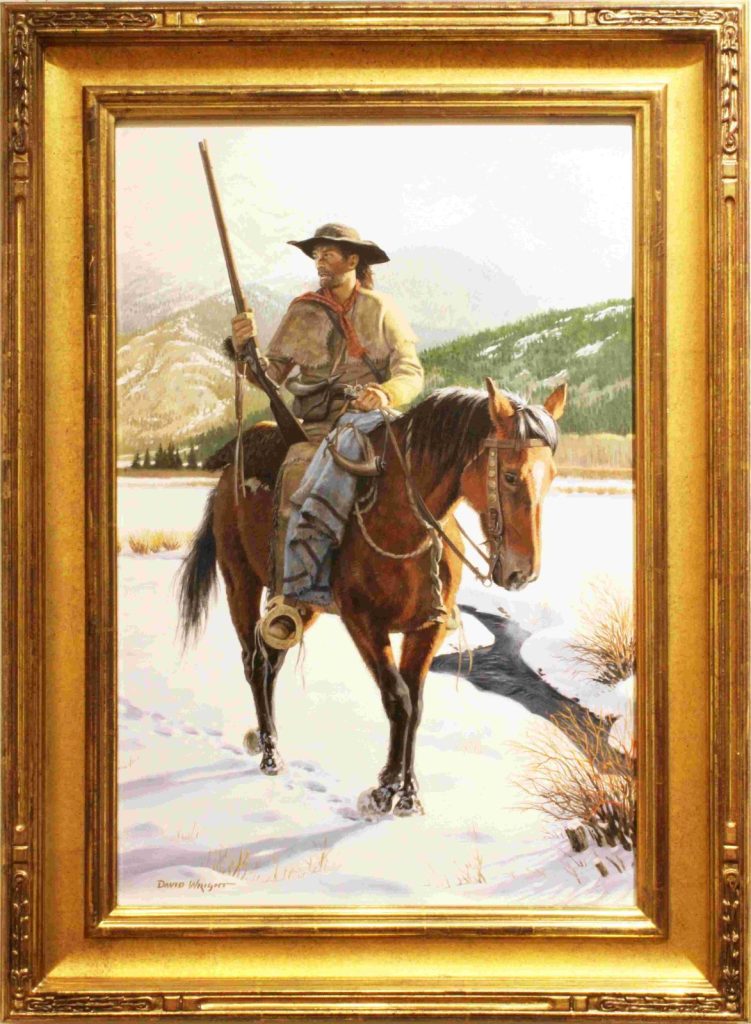
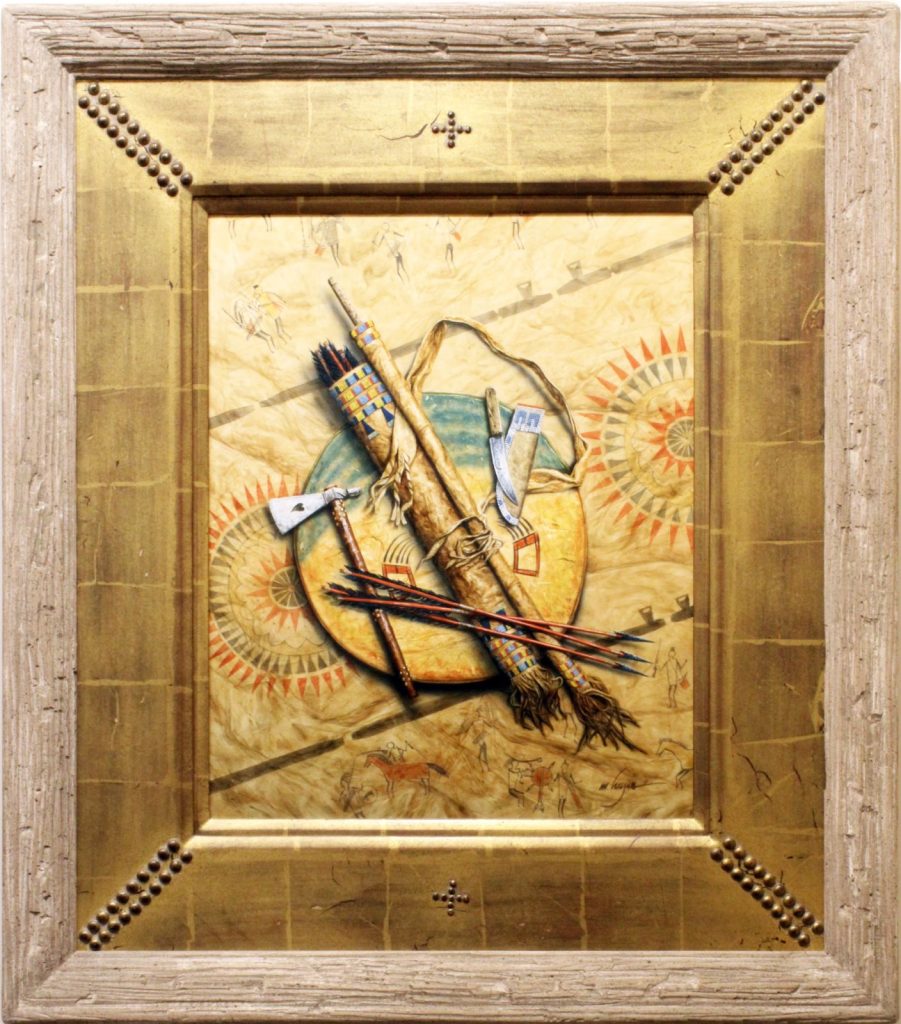
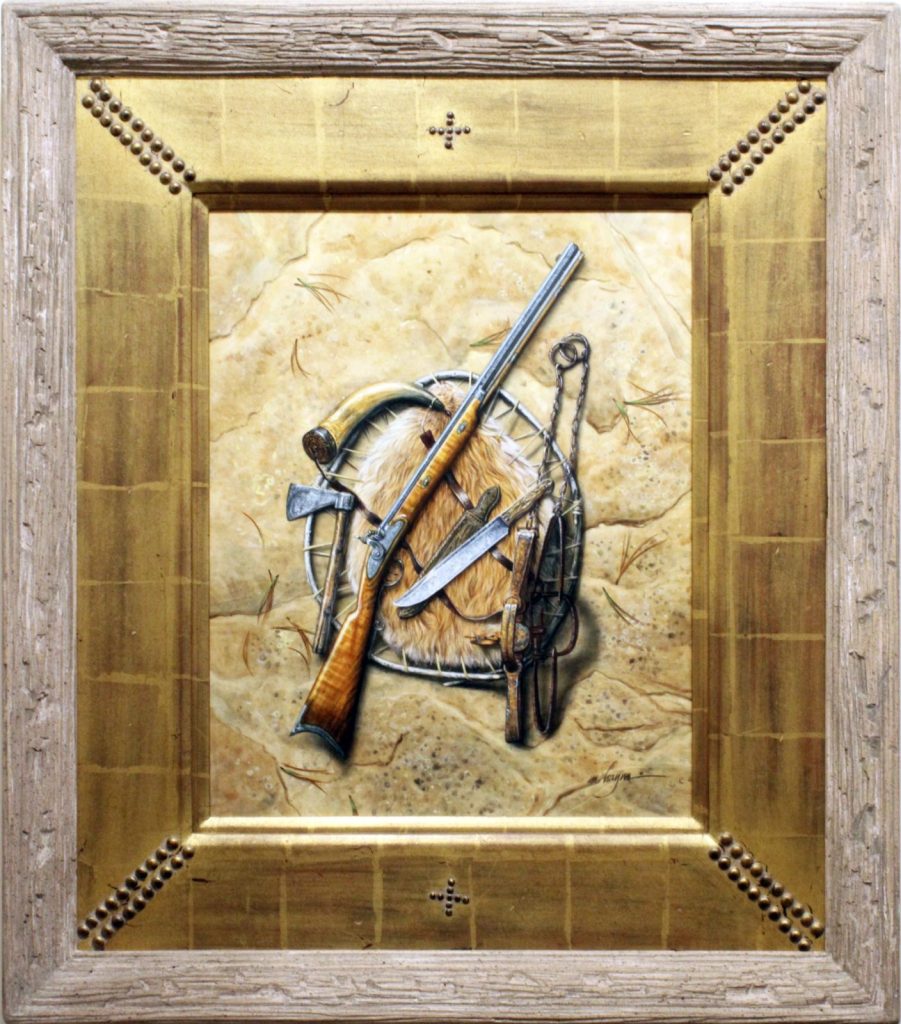
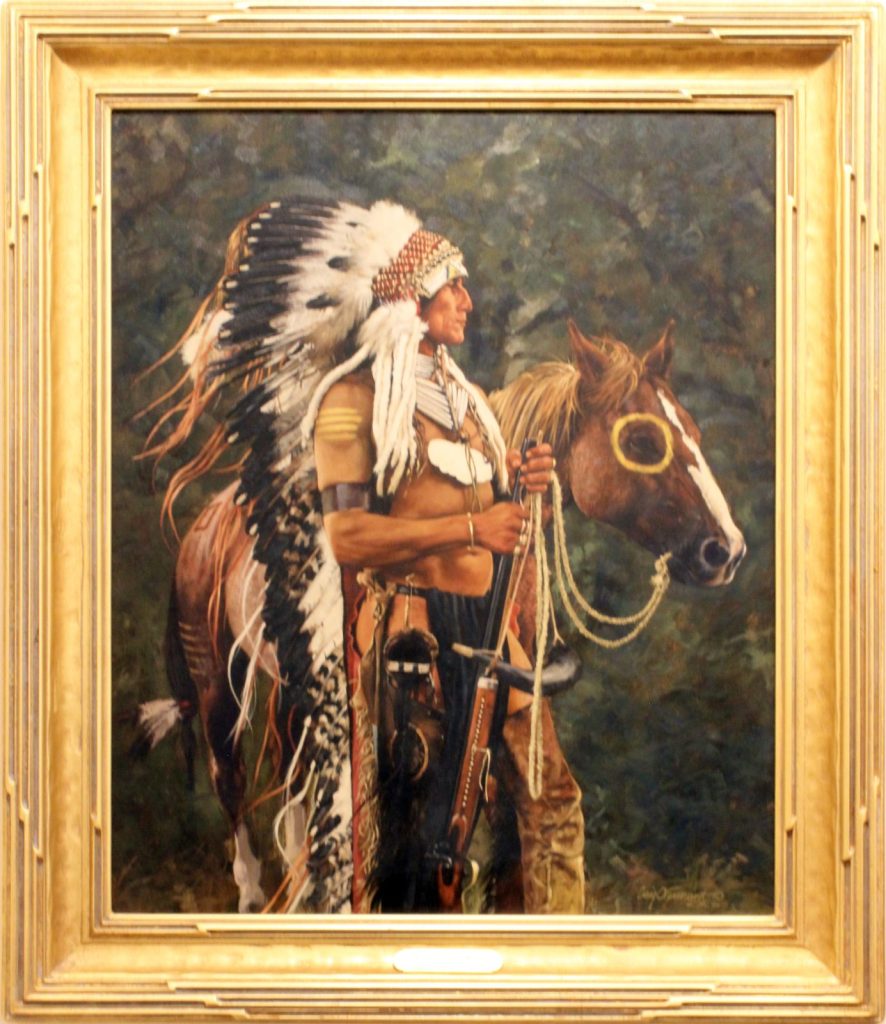
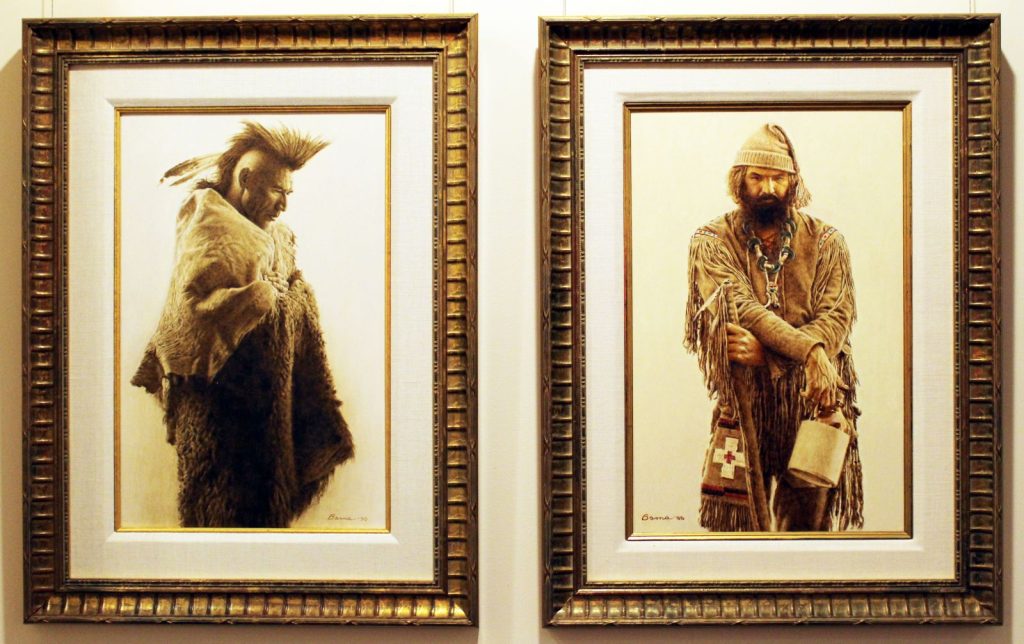
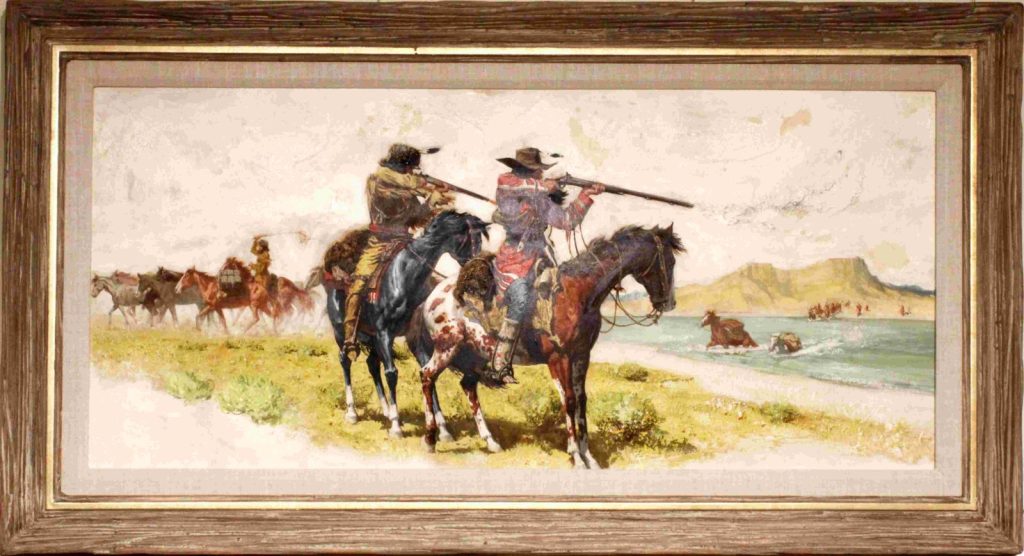
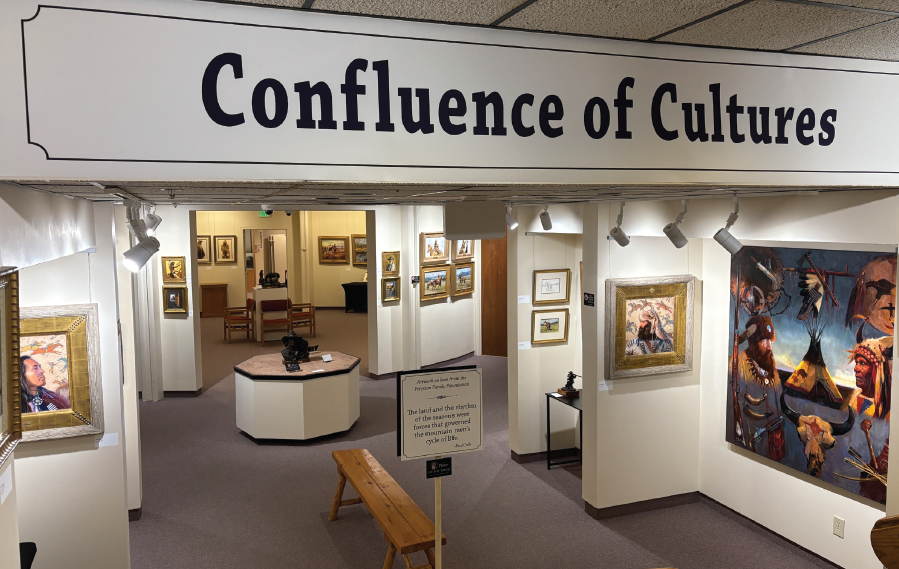
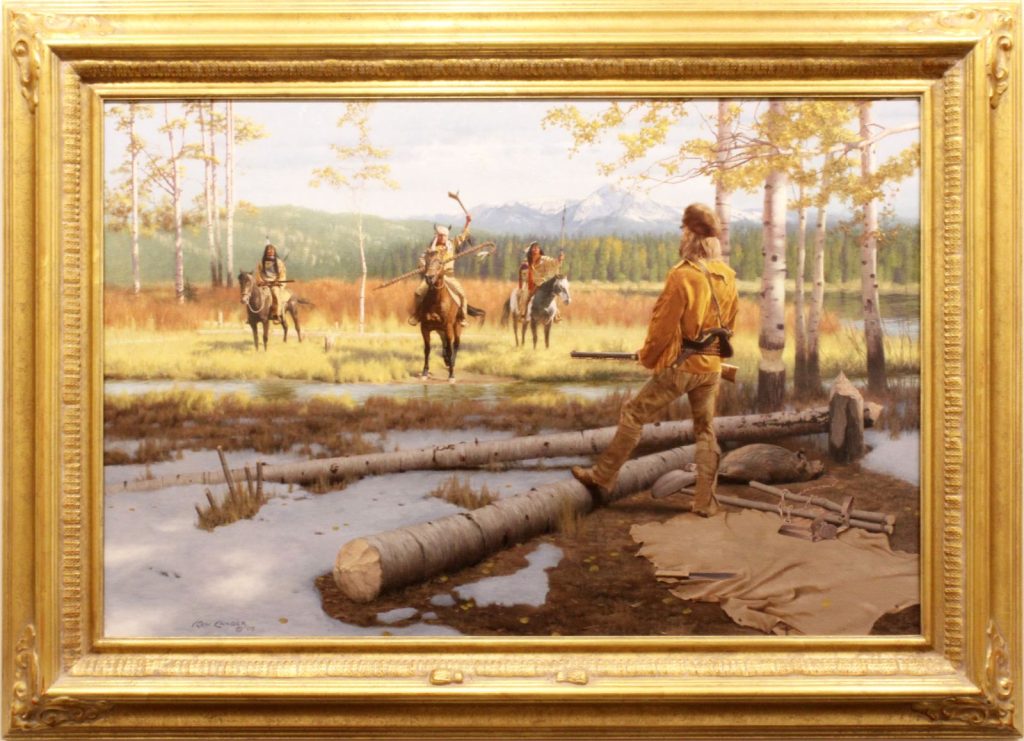
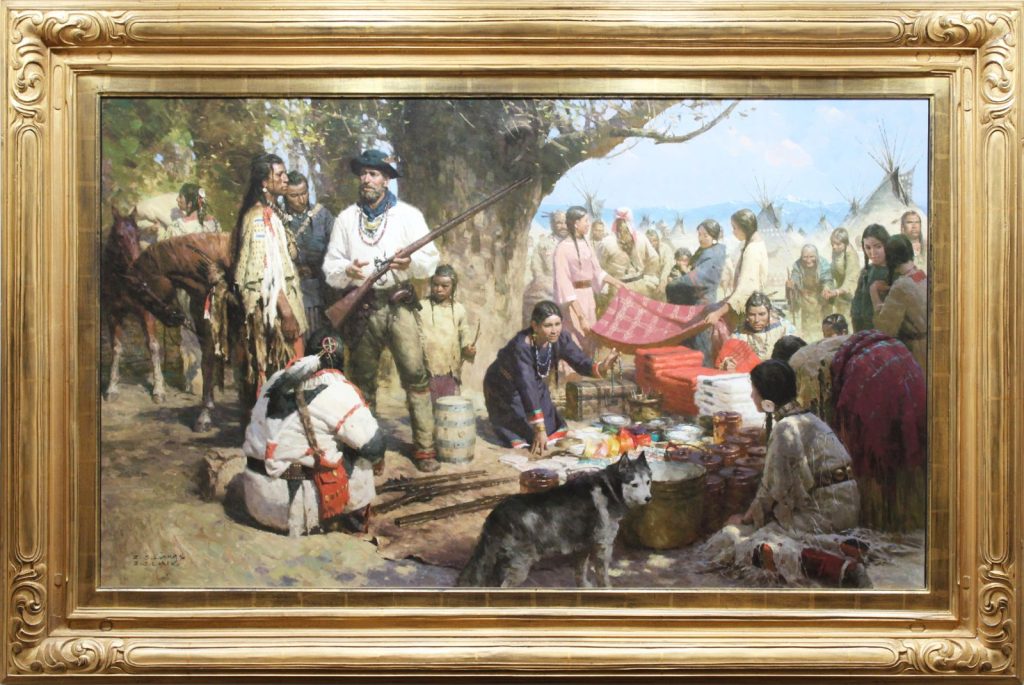
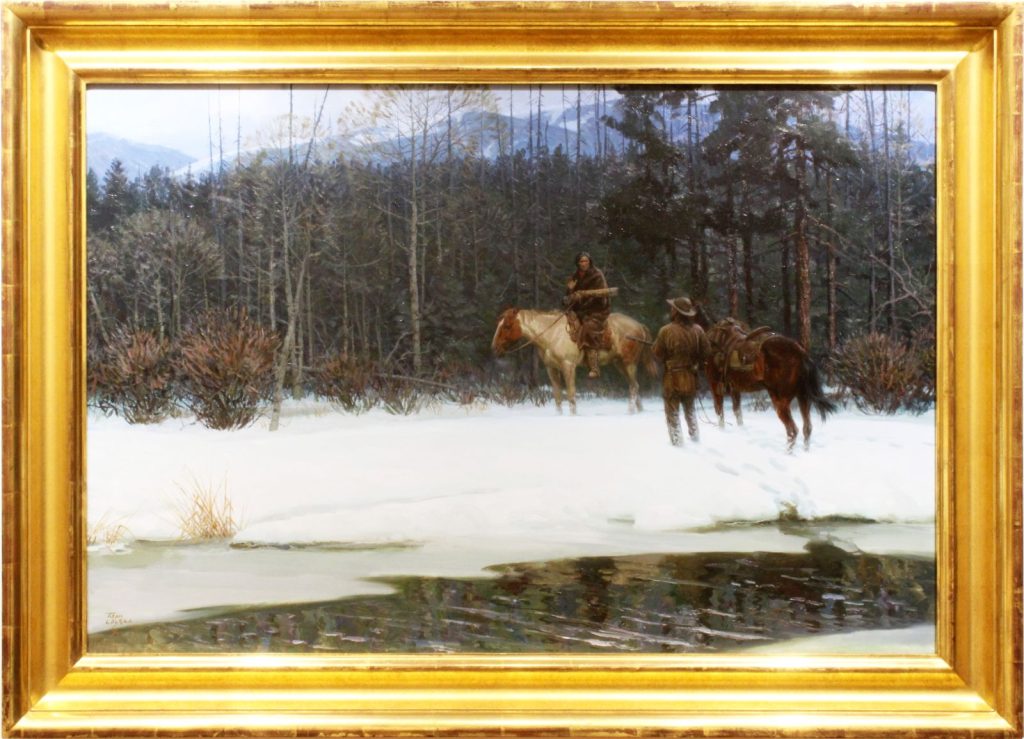
Confluence of Cultures is a spectacular exhibition exploring the meeting of Plains Indian and Mountain Man cultures in the Rocky Mountains during the 1820s and 1830s through the work of leading contemporary Western artists. On display during the 2026 and 2027 museum seasons, the exhibition features 87 original works by 45 artists from the Peterson Family Collection.

Few visual images survive from the fur trade era, which predates photography and was witnessed by only a handful of artists. Drawing on historical research and creative imagination, today’s foremost Western artists help bring this remarkable period to life through paintings, bronzes, watercolors, and mixed-media works.

The works in this exhibition are presented in their original form, allowing visitors to experience the scale, detail, and craftsmanship intended by the artists. Together, they form a visual narrative of cultural interaction—one that reflects both the differences and the connections between the peoples who shaped the early Rocky Mountain West.

Curated by Tim Peterson, the exhibition explores the relationships, exchanges, and tensions that shaped the Rocky Mountain fur trade. Featured artists include James Bama, Paul Calle, Bev Doolittle, Tom Gilleon, Michael Haynes, Frank McCarthy, David Wright, and many others.

Mountain Men & Plains Indians

In the 1820s and 1830s, small groups of Euro-American trappers and traders entered the Rocky Mountains in search of beaver pelts for the expanding fur trade. Though their numbers were never large—at any one time only a few hundred Mountain Men were active in the region—they moved through a landscape already home to dozens Indian nations made of more than 100,000 individuals.

The meeting of these two worlds marked the beginning of a complex and often fluid period of interaction in the American West. Mountain Men depended heavily on Native American knowledge to survive in unfamiliar terrain. Tribal nations, in turn, encountered new trade goods and shifting economic relationships that connected them to distant markets.

Rather than a single unified experience, these encounters varied widely across time and place. Some were cooperative and mutually beneficial, built on exchange, guidance, and shared use of the land. Others reflected misunderstanding, competition, or conflict as both groups navigated changing pressures and competing interests.

Within this dynamic environment, the Rocky Mountains became a shared space—one shaped by movement, trade, adaptation, and cultural exchange. The works in this exhibition reflect that complexity, offering contemporary interpretations of a historical moment defined not by a single narrative, but by many overlapping stories.

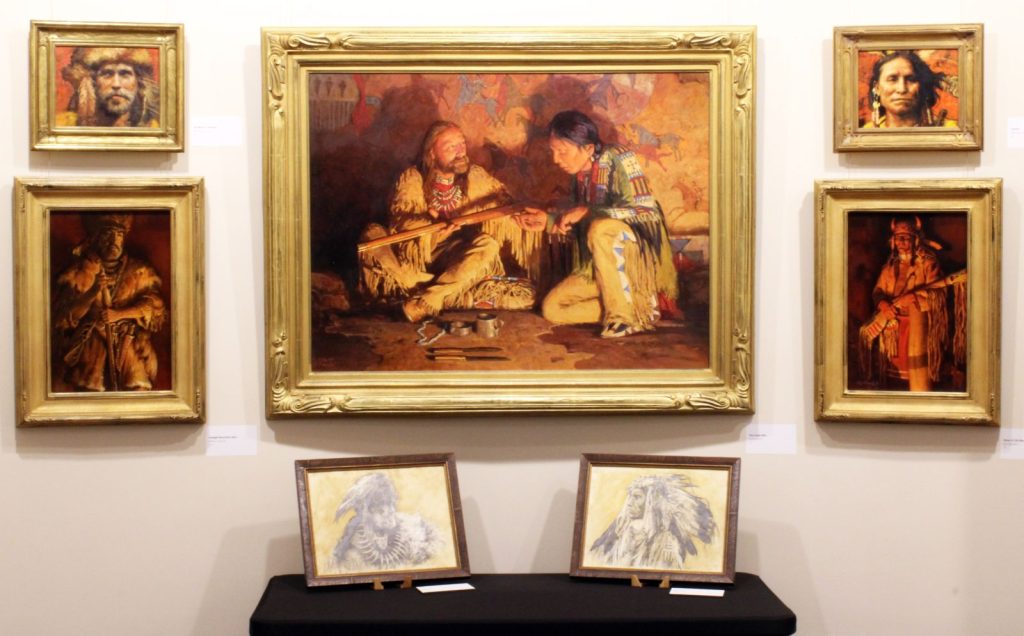
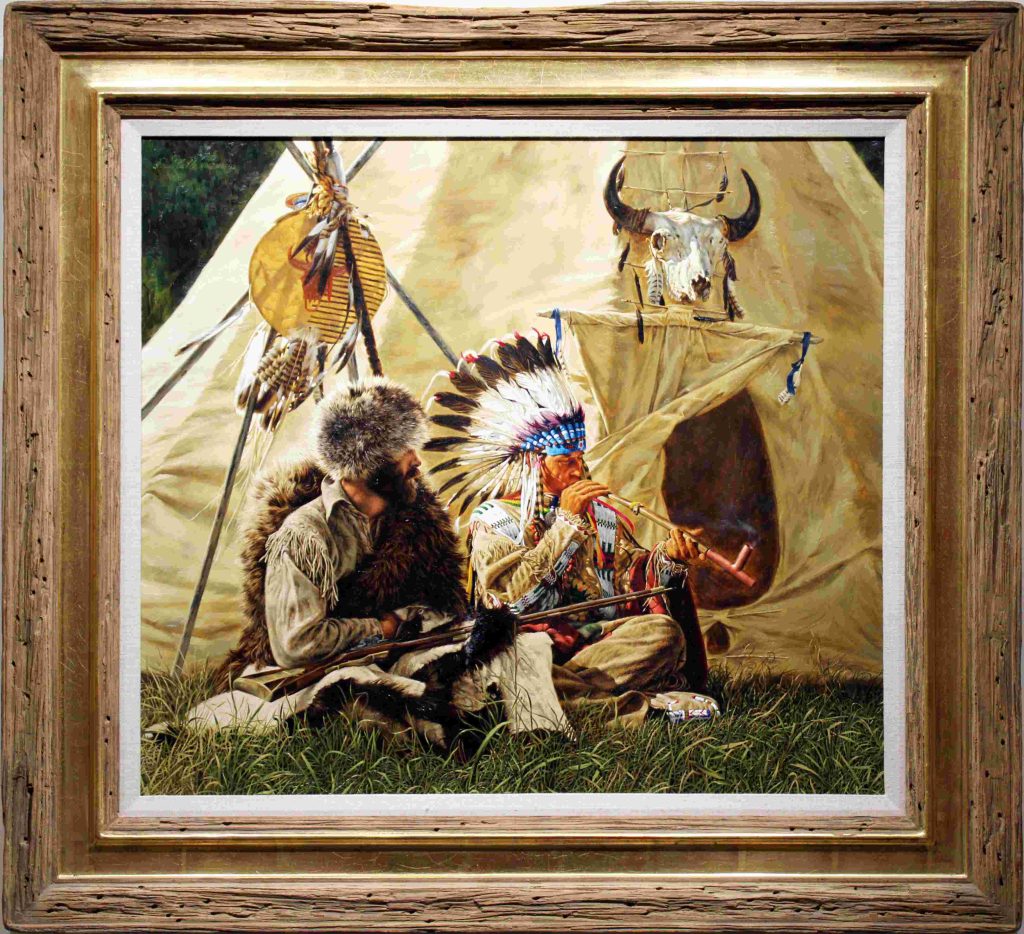
Top Left – Michael Dudash, He Wore a Feather, Oil
Top Center – David Mann, The Trade Rifle, Oil
Top Right – Michael Dudash, Lakota, Oil
Center Left – William Ahrendt, Firelight Mountain Man, Oil
Center Right – Roy Grinnell, Glow of Old Memories, Oil
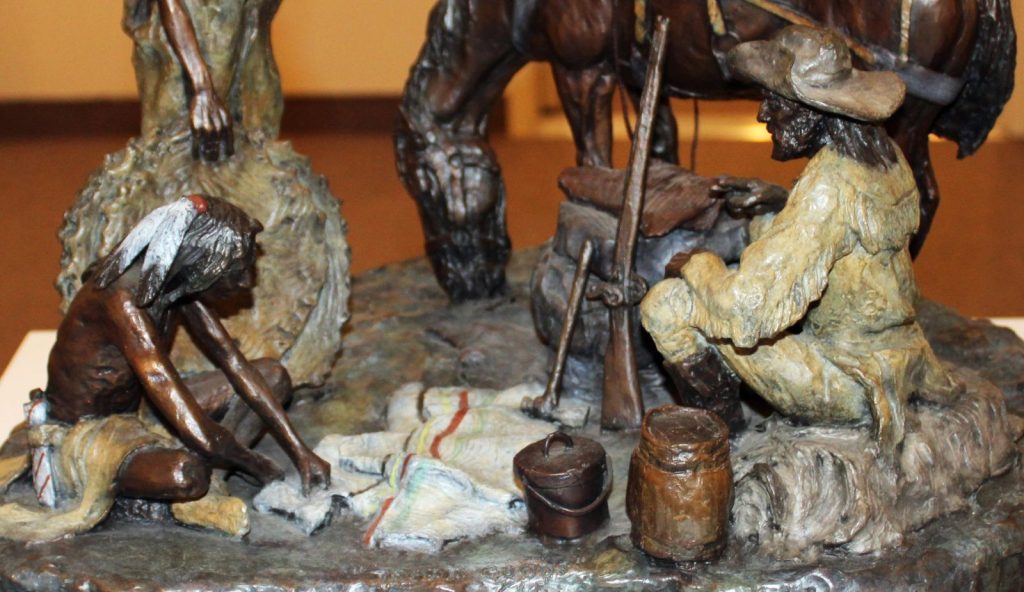
Bottom Left – Chris Calle, Friends, Mixed
Bottom Right – Chris Calle, Friends II, Mixed

Mutual Benefit

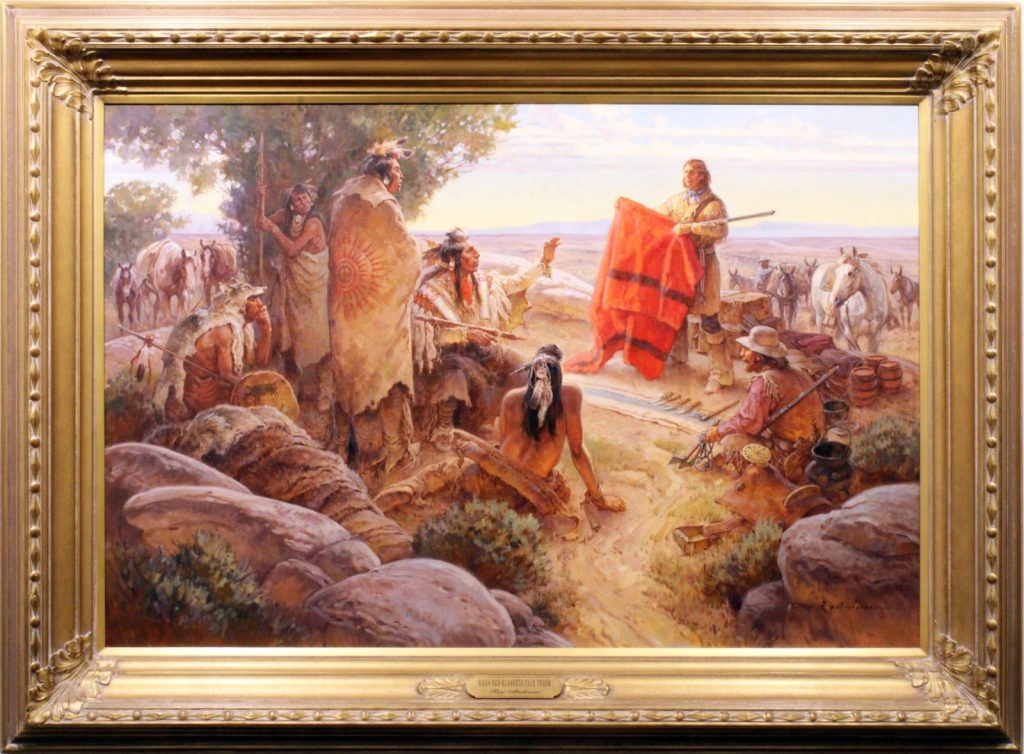
For both Mountain Men and Plains Indian nations, the early fur trade created a period of practical exchange shaped by necessity, opportunity, and mutual advantage. Each group brought resources and knowledge the other used in order to navigate the economic and environmental landscape of the Rocky Mountain West.

For Mountain Men, survival depended on access to food, shelter, horses, and guidance through unfamiliar terrain. Indigenous nations provided essential knowledge of the land, seasonal patterns, and travel routes, along with supplies such as horses, clothing, and provisions that made long-term travel in the mountains possible.

In return, Native communities gained access to a growing network of trade goods introduced by Euro-American commerce. These included metal tools, firearms, knives, kettles, cloth, beads, and other manufactured goods that became integrated into daily life and existing trade systems. Far from a one-way exchange, these relationships were shaped by negotiation and adaptation on both sides.

Trade was not only economic but also social. Exchanges often took place through personal relationships, alliances, and established trading practices that varied among tribes and individuals. In many cases, trust and reciprocity were essential to maintaining access to goods and safe passage through territory.

This period of mutual dependence helped define the early fur trade era as one of connection and adaptation—where two very different cultural systems intersected in ways that were at once practical, complex, and deeply influential to the history of the American West.

Roy Andersen
When Red Blankets Talk Trade
Oil

A Shared Way of Life

Life in the Rocky Mountain West required constant adaptation. Mountain Men, though few in number, often adopted aspects of Plains Indian lifeways in order to survive in a demanding and unfamiliar environment.

Over time, some trappers moved fluidly between cultural worlds, adopting clothing, travel methods, and survival strategies that reflected Indigenous knowledge of the land. This blending of practices created a unique frontier culture often referred to by historians as the “mountaineer” lifestyle.

Rather than fixed boundaries between cultures, this period was defined by movement, exchange, and adaptation in response to the demands of the landscape.

Friendship

Alongside trade and survival, relationships developed between individuals from different cultural backgrounds. These connections ranged from practical alliances to enduring personal friendships.

In some cases, Mountain Men formed close bonds with members of Plains Indian communities, learning languages, participating in daily life, and in some instances forming family ties through marriage.

While these relationships did not define every encounter, they represent an important dimension of the fur trade era—one shaped not only by exchange, but also by cooperation and shared human experience.

Paul Calle
A Breath of Friendship
Oil

Tension

The fur trade era was not without conflict. Competition for resources, territorial pressures, and misunderstandings sometimes led to tension between Mountain Men and Plains Indian nations, as well as between different Indigenous groups.

The Plains were already a complex political landscape shaped by alliances, rivalries, and shifting power dynamics. The arrival of foreign traders added new pressures to existing systems of trade and territorial balance.

While periods of cooperation were common, moments of conflict reflect the broader realities of a changing West—one in which multiple cultures were adapting to rapid economic and environmental transformation.

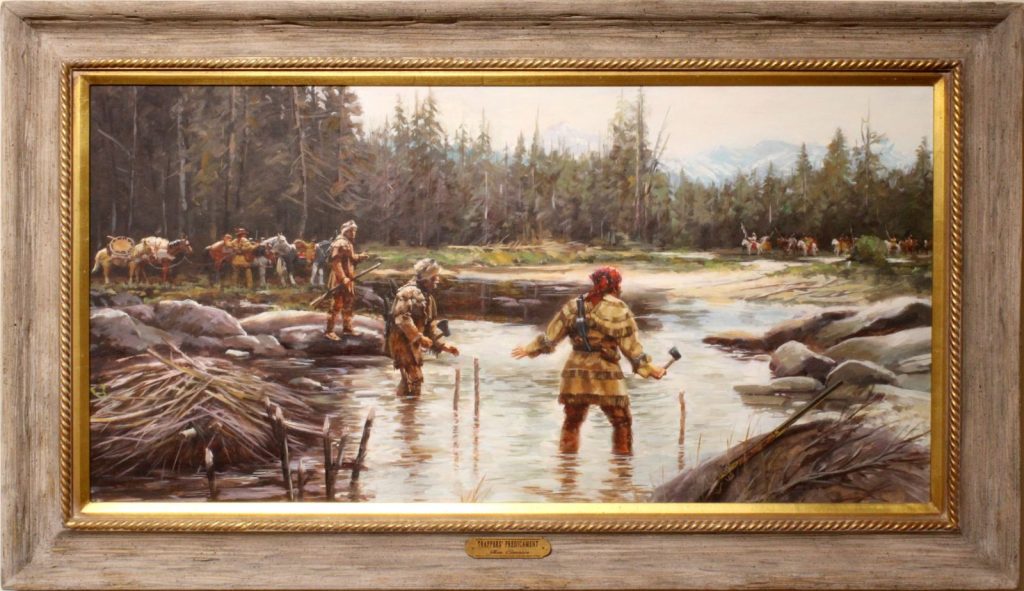
Jim Carson
Trappers Predicarment
Oil

Collection Highlights

The following selection highlights works from the exhibition that further explore the themes of cultural interaction, adaptation, and the fur trade experience. These works represent only a portion of the 87 pieces on display.

Inside the Exhibition

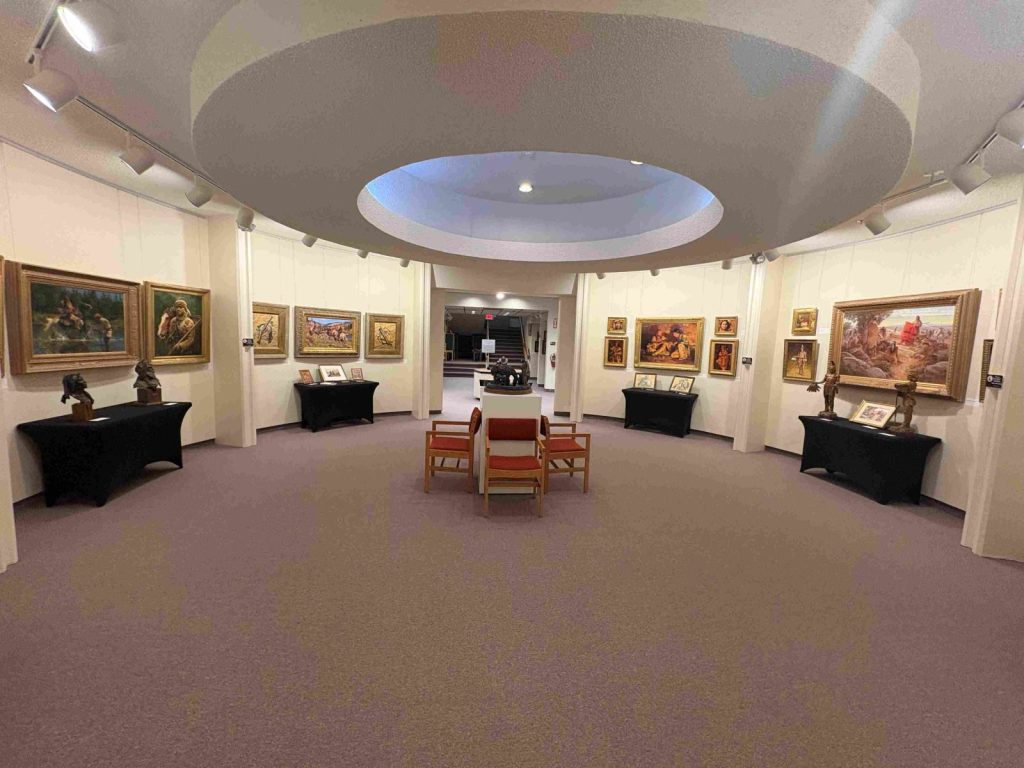
Confluence of Cultures is best experienced in person, where the scale, detail, and material presence of each work can be fully appreciated. The exhibition brings together paintings, bronzes, and works on paper in a carefully curated installation that reflects both the diversity and cohesion of the collection.

Visitors are invited to explore the ways in which contemporary artists interpret the complex history of the Rocky Mountain fur trade.

Acknowledgments

Artwork on loan from the Peterson Family Collection.
Curated by Tim Peterson.

This exhibition is supported in part by the Wyoming Arts Council, the National Endowment for the Arts, and the Wyoming State Legislature.


Artists and Works on View

William Acheff
  • The Scout — Oil
  • The Trapper — Oil
William Ahrendt
  • Firelight Mountain Man — Oil
  • Trading — Oil
  • Davey Jackson Trapper — Oil
  • Indian Brave — Oil
  • His Kind of Freedom — Oil
Roy Andersen
  • Study for “When Red Blankets Talk Trade” — Watercolor
  • When Red Blankets Talk Trade — Oil
  • Along the Gros Ventre — Oil
  • Scouting the Morning — Oil
James Bama
  • Mountain Man with Jug — Oil
  • Sepia Study, Pawnee Indian — Oil
Buckeye Blake
  • The Meeting — Pen/Ink
Dan Bodelson
  • The Shooter — Oil
Paul Calle
  • In the Beginning Friends — Giclee
  • Paul Pierre — Oil
  • A Breath of Friendship — Oil
Chris Calle
  • Friends — Mixed
  • Friends II — Mixed
Jim Carson
  • Trappers Predicament — Oil
Gary Carter
  • A Piece of the Rock — Oil on Masonite
Todd Connor
  • Untitled — Oil
Stan Davis
  • On the Alert — Oil, with Pencil Study
John DeMott
  • Mountain Man — Bronze
Bev Doolittle
  • Unknown Presence — Watercolor
Michael Dudash
  • Lakota — Oil
  • He Wore a Feather — Oil
Barry Eisenach
  • Winter Hat — Bronze
  • Bear Ghost — Bronze
  • Legacy — Oil
  • Legacy — Bronze
  • The Long Rifle — Oil
  • The Long Rifle — Bronze
Fred Fellows
  • Buffalo Hunter — Bronze
Daro Flood
  • Crow — Bronze
Charles Fritz
  • Fort Manuel – Summer 1809 — Oil
John Gawne
  • Storyteller — Oil
  • Mountain Man — Oil
Tom Gilleon
  • Vues Contradictoires (Confluence of Culture) — Oil
Roy Grinnell
  • Glow of Old Memories — Oil
David Halbach
  • Doin’ Trade — Watercolor
Michael Haynes
  • Hawken Still Life — Water Color/ Oil
  • Crow Still Life — Water Color/ Oil
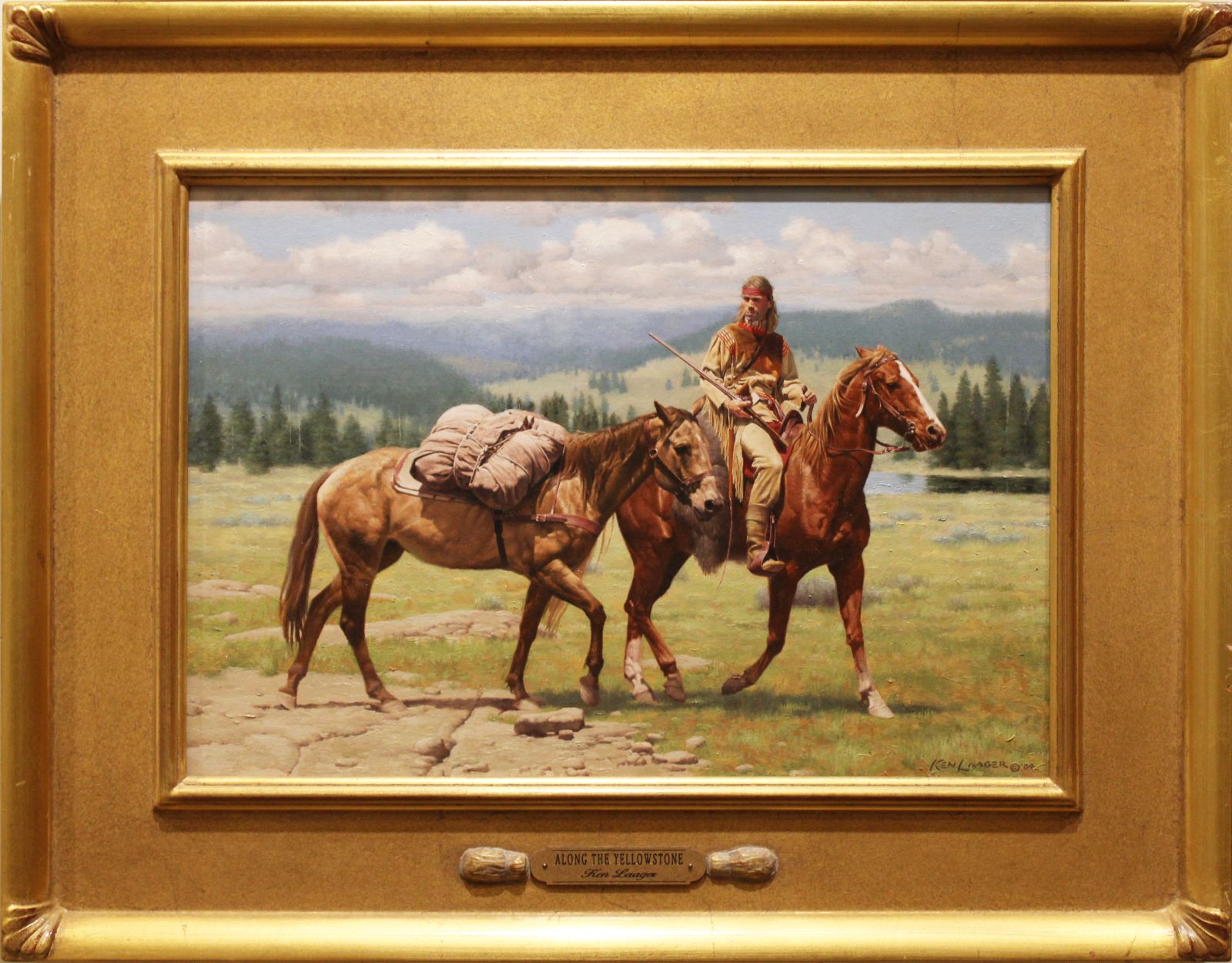
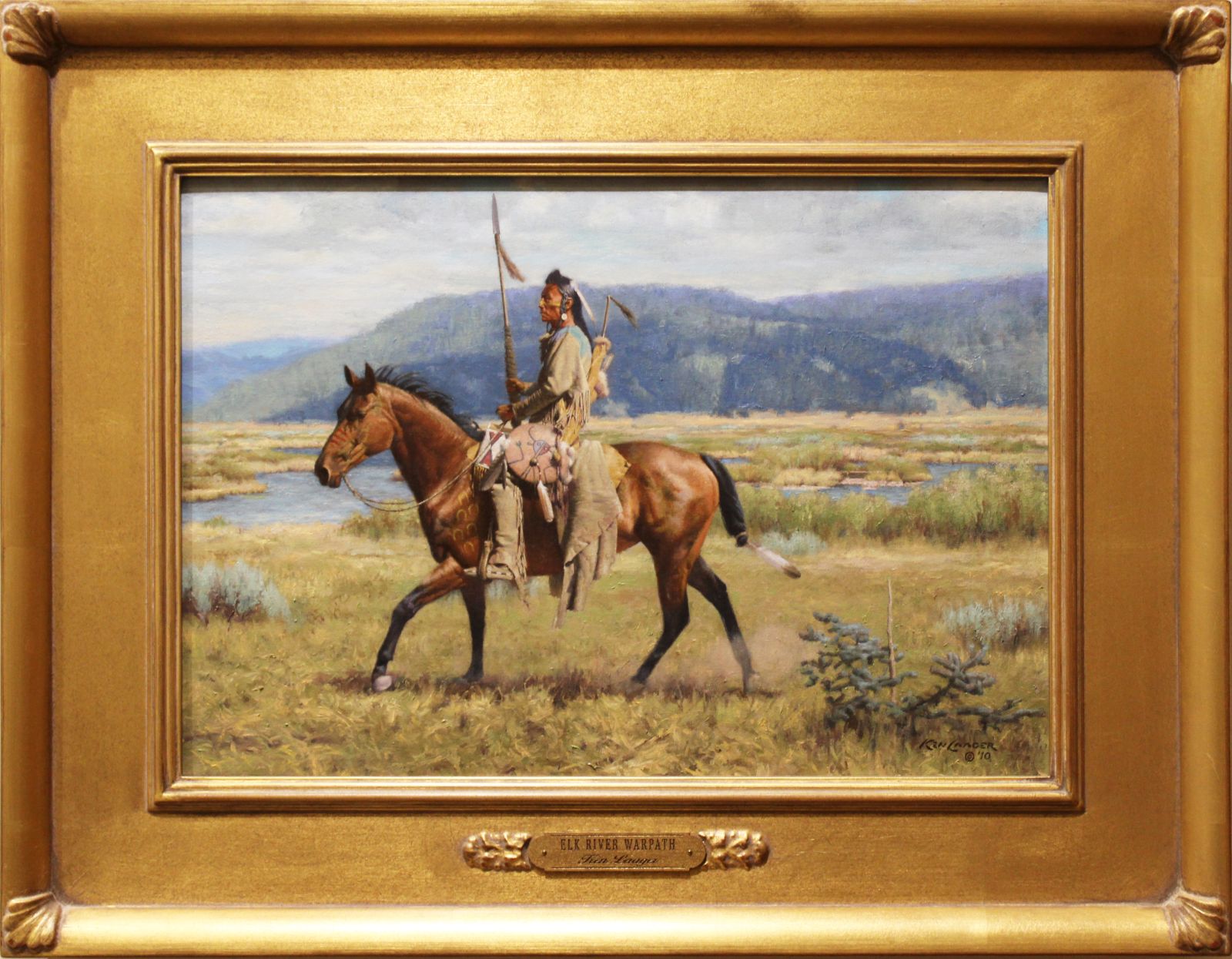
Ken Laager
  • Along the Yellowstone — Oil
  • Elk River Warpath — Oil
  • When a Fight Is a Flinch Away — Oil
  • The Beaver Trapper — Oil
  • The War Chief — Oil
  • Study for “When a Fight Is a Flinch Away” — Oil
Robert Lambdin
  • Study for “Welcome to the Cautious Mountain Man” — Pencil
Steven Lang
  • John Colter (Trapper with Pipe) — Oil
  • Indian with Fur Around Arm — Oil
Z.S. Liang
  • Trading with the Blackfeet, Montana Territory, 1860 — Oil
  • Trading with the Blackfeet 1860 — Giclee
  • Joe Kipp, Trader, Missouri River 1879 — Oil
  • Memories Past — Oil
Tom Lovell
  • The Thaw — Oil
  • The Thaw — Acrylic on Board
  • The New Trade Gun — Oil
David Mann
  • The Strategist — Oil
  • The Trade Rifle — Oil
  • Bow Maker — Oil
Frank McCarthy
  • Windswept — Oil
  • Colorado High Country — Oil
  • River Crossing — Oil
Dan Mieduch
  • A Lapse of Vigilance — Oil
Jim Norton
  • Trappers Demise on the Blacks Fork — Oil
Bob Pummill
  • Always Alert — Oil
  • War Horse — Oil
Ken Riley
  • Coming to Trade – Fort Union — Watercolor
  • Coming to Trade – Fort Union — Pen/Ink
  • Winter Haven — Oil
Scott Rogers
  • Not Even a Whisper — Bronze
Robert Scriver
  • Trade Goods — Bronze
Steve Seltzer
  • In a Friendly Camp — Oil
Don Spaulding
  • On the Safe Side — Pencil
  • On the Safe Side — Oil
  • Danger in Paradise — Oil
  • Memories of St. Louis — Oil
Grant Speed
  • The Squaw Man — Bronze
Craig Tennant
  • Painted and Proud — Oil
Richard Thomas
  • As the Wind Blows Free — Oil
Russ Vickers
  • Safety of the River — Oil
John Weaver
  • Indian Hunter — Bronze
David Wright
  • Crossing the Snow Covered Flats — Oil
  • Trapper with Quirt — Oil
  • Young Frontiersman — Oil
Unknown Artist
  • Trapper — Etching

A Triggering Event: A Fur Trade Close Call

By Vic Nathan Barkin
June 12, 2026

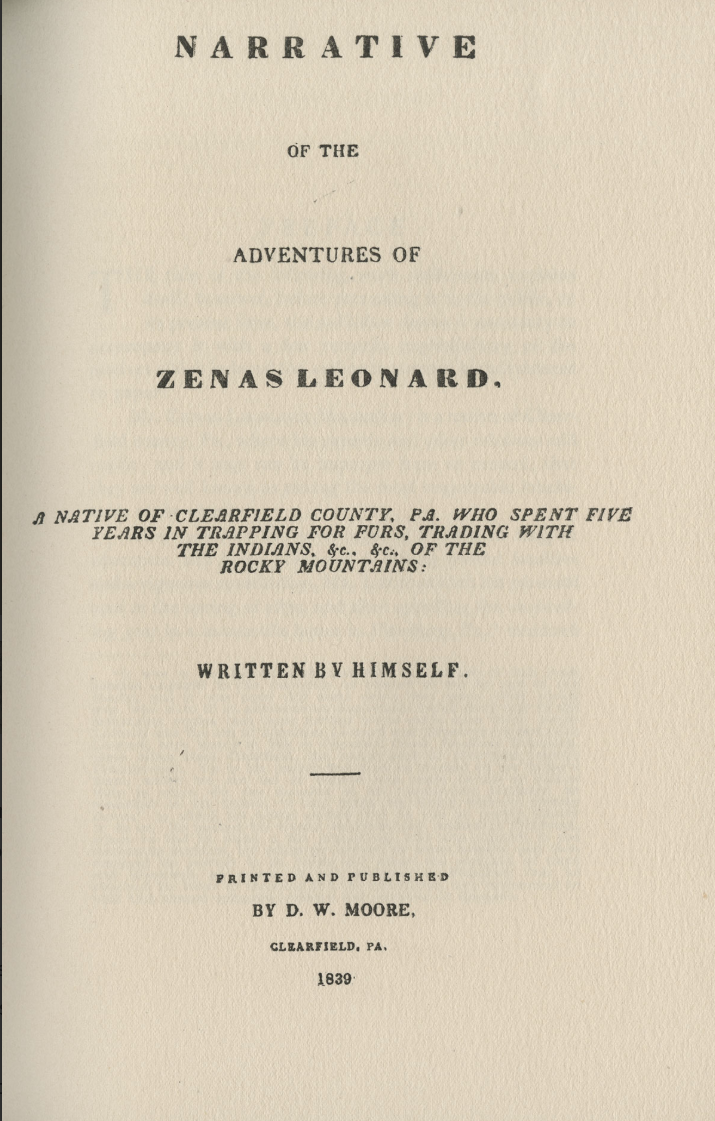
On April 24, 1831, a company of seventy men under John Gantt and Jefferson Blackwell left St. Louis on a trapping and trading venture bound for the Rocky Mountains. Twenty-two year-old Zenas Leonard was hired on as a clerk, trapper and trader, and kept a detailed record of the expedition.

According to Leonard, the brigade left St. Louis, going up the Missouri River to the mouth of the Kansas River, which they ascended. Following the Republican Fork, they then crossed overland to the Platte River, travelling up to its confluence. Heading up the North Platte, they reached the mouth of the Laramie River on August 27, 1831. While encamped there, they encountered Thomas Fitzpatrick with a small party of Rocky Mountain Fur Company men heading to St. Louis.

Fitzpatrick, viewing Gantt and Blackwell as interlopers, was most unhelpful during their meeting, but he agreed to allow Captain Blackwell with a couple of men to accompany him back to St. Louis to obtain more supplies for the following summer.

Gantt then divided his men into three companies, to better exploit the fur resources of the area. One party under Captain Gantt himself went up the Sweetwater. A second party worked the Timber Fork under Captain Washburn, and a third party under Captain A.K. Stevens, of which Leonard was a member, ascended the Laramie River.

The three parties separated on September 4th 1831 “after shaking hands all round” and 21 men, including Leonard under Stevens continued upriver until September 20th when they stopped on the bank of a small creek to rest. At this junction, signs of beaver were seen, and two men were sent out to explore and trap.

Image Courtesy of The State Historical Society of Missouri

They had meandered the creek till they came to beaver dams, where they set their traps and turned their horses out to pasture; and were busily engaged in constructing a camp to pass the night in, when they discovered, at a short distance off, a tremendous large Grizzly Bear, rushing upon them at a furious rate.- They immediately sprang to their rifles which were standing against a tree hard-by, one of which was single and the other double triggered; unfortunately in the hurry, the one that was accustomed to the single trigger, caught up the double triggered gun, and when the bear came upon him, not having set the trigger, he could not get his gun off; and the animal approaching within a few feet of him, he was obliged to commence beating it over the head with his gun. Bruin, thinking this rather rough usage, turned his attention to the man with the single triggered gun, who, in trying to set the trigger (supposing he had the double triggered gun) had fired it off, and was also obliged to fall to beating the ferocious animal with his gun; finally, it left them without doing much injury, except tearing the sleeve off one of their coats and biting him through the hand. (Full text)

These two trappers had rifles similar enough to be mistaken for one another, at least in that panic situation.

For those unfamiliar with a “double trigger” (aka: double set trigger) rifle, the rear trigger “sets” the front trigger turning it into a “hair” trigger. Neither the rear or front trigger fires the gun by its self, but once the rear trigger is “set”, the front trigger releases the rear which is held under spring pressure, thus hitting the lock’s sear, firing the rifle. There are other assemblies which do in fact allow firing using the front trigger without setting the rear trigger first, but this was obviously not the case with the rifle in this story.

A “single triggered” rifle is just that. When the trigger is depressed it releases the sear nose from the tumbler’s full-cock notch, allowing the cock (referred to today as the hammer) to fall.

A third variation referenced in the AFC orders, although not mentioned in Leonard’s tale, is called a “double-phase/single-set trigger”. This is similar in operation to a “double set trigger” except that the single trigger is pushed forward to “set” it to a hair trigger. The rifle can be adjusted to be fired either set or unset.

“Double-set” and “single-set” triggers require a “fly” in the lock’s tumbler to prevent the sear nose from catching on the half-cock notch, and use a “set screw” in the trigger plate to adjust the “hair trigger”. Single triggers do not need either a fly or a set screw.

Regarding Leonard’s journal, how and why would two similar rifles have two different trigger configurations? The American Fur Company (AFC) was already the big dog as far as purchasing power was concerned, having direct relationships with manufacturers on the east coast and overseas. Their competition did not.

A clue leading to how two trappers might have wound up with nearly identical rifles but with different trigger configurations was in a purchase order from the AFC to four Lancaster, Pennsylvania gunsmiths under a single contract in early 1831. It is excerpted here:

Christopher Gumph
24 to 30 Rifles Single Trigger @ $11.00
10 of the above Rifles are to have a set trigger and fly in the lock @ $11.25
Henry Gibbs
24-30 Rifles same as above @ $11.00
John Dreppard
24 to 30 Rifles same in all respects as those to be furnished by Henry Gibbs.
Jacob Fordney
10 Rifles double triggers @ $12.00
2 Rifles single triggers same as those above at $11

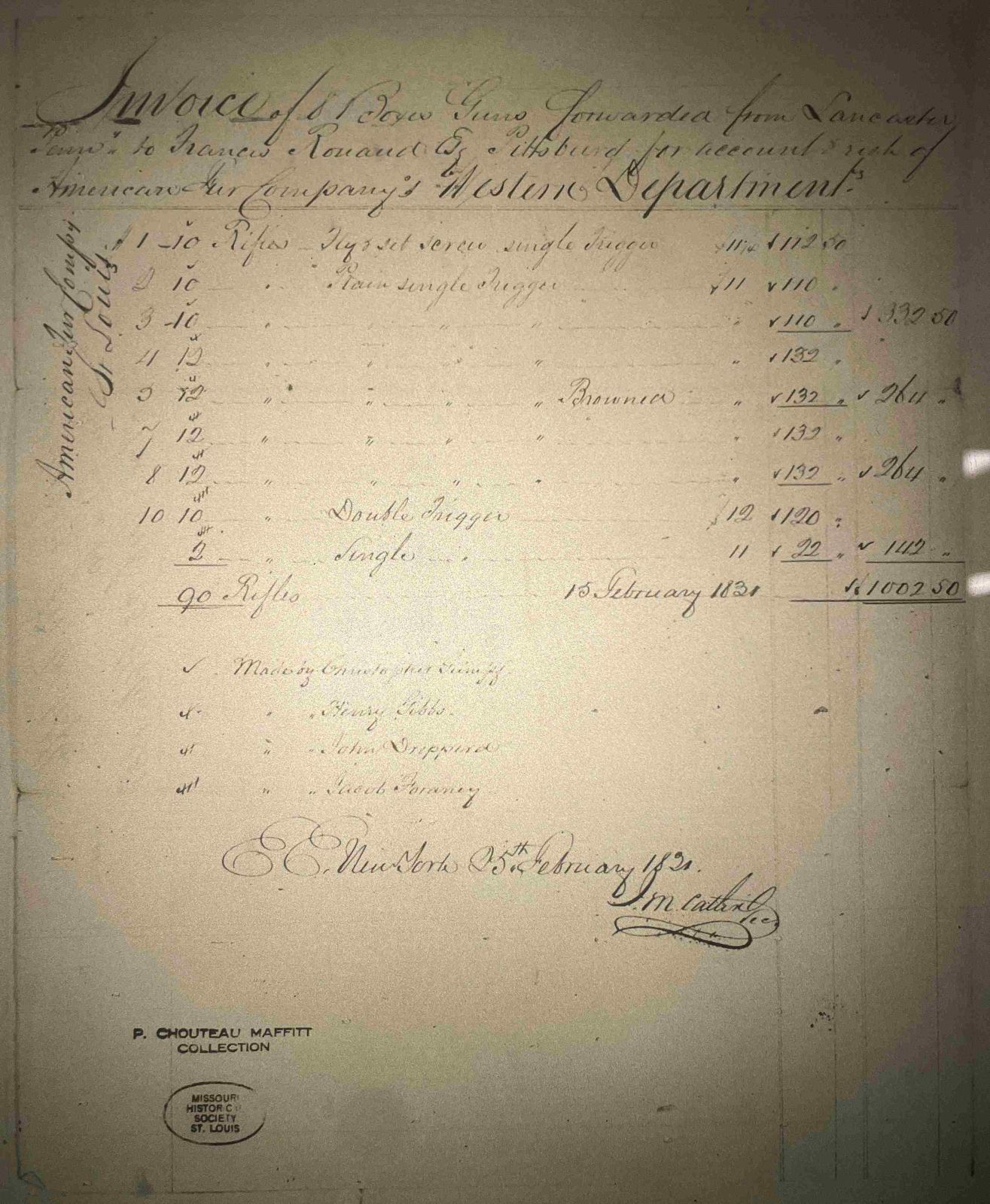
An associated “Invoice” identifying the actual quantities, prices and date shipped specifies that the order was sent to the “American Fur Company St Louis”. In it is detailed:

10 (C Gumpf)	Rifles _ Fly & set screw single trigger	$11.25	
20 (C Gumpf)	   “    _  Plain single trigger			$11.00	
24 (H Gibbs)	   “    _  Plain single trigger			$11.00		
24 (J Dreppard) “   _  Plain single trigger			$11.00	 
10 (J Fordney)	   Double trigger			$12.00
2 (J Fordney)	   “    	      Single      “			$11.00	
______________________________________________
90 Rifles			New York 25th February 1831
Image Courtesy of the Missouri Historical Society, Saint Louis, MO.

Jacob Fordney’s 10 “double trigger” rifles along with 40 single trigger rifles by Dreppard, Gibbs and Fordney were shipped to St Louis on February 25, 1831. We don’t know when they shipped from St. Louis. We do know the Christopher Gumpf rifles (20 single trigger and 10 single set trigger) were shipped from St. Louis to the “Upper Missouri Outfit” (UMO) on May 21, 1831. 

What can we ascertain out of all of this? Leonard stated, “Each man was furnished with the necessary equipments (sic) for the expedition — such as traps, guns, &c.; also horses and goods of various descriptions, to trade with the Indians for furs and Buffaloe robes.”

It is evident from Leonard that these two trappers had very similar rifles, if not by made the same gunsmith, possibly from the same group of gunsmiths. There is no objective evidence pointing to Gantt and Blackwell purchasing directly from the American Fur Company in 1831. It was, however, a general practice of the AFC to subvert their rivals such as the Rocky Mountain Fur Company financially through any means possible including selling supplies to their rival’s competitors which included Gantt and Blackwell.

Was it just a fluke that Zenas Leonard’s two trapper buddies happened to have identical or at least similar rifles with different trigger configurations at the very same time the AFC was known to have been intentionally ordering the same? Something deep down says no. For now though, this whole scenario remains an intriguing mystery, with too many coincidences not to be connected.

Bibliography

  • Kaufman, Henry J. The Pennsylvania-Kentucky Rifle. New York, NY: Bonanza Books, 1960.
  • Leonard, Zenas. Narrative of the Adventures of Zenas Leonard. Edited by Milo Milton Quaife. Chicago, IL: The Lakeside Press, 1934.
  • Gowans, Fred R. Rocky Mountain Rendezvous. Layton, UT: Peregrine Smith Books, 1985.
  • Hafen, Leroy R. Broken Hand, The Life of Thomas Fitzpatrick, Mountain Man, Guide and Indian Agent. Denver, CO: The Old West Publishing Company, 1973

Additional Resources

Track of the Wolf – Trigger Assembly Examples

Bicentennial Moments – April 1826

By Museum of the Mountain Man Staff
March 31, 2026

Two hundred years ago this month—April 1826—the Rocky Mountain fur trade was in its prime. Demand for felt hats in the eastern United States and Europe was strong, and American trapping brigades pushed ever deeper into the West. They competed fiercely not only with one another but also with the Hudson’s Bay Company (HBC).

Most trappers had spent the previous months in the relative quiet of winter camps. But across the West in April 1826, men were on the move. Spring was one of the best trapping seasons of the year, and brigades wanted to take advantage of pelts still thick from winter growth and waterways finally open enough to set traps along banks and channels. Two significant events that month would shape the season.

Ashley’s Relief Expedition Reaches Jedediah Smith

While trappers prepared for spring hunts, supply lines far to the east were struggling in the harsh winter.

In October 1825, William Ashley and his new partner, Jedediah Smith, returned to St. Louis, Missouri and immediately began organizing a new supply train.[1] Ashley remained in St. Louis to manage the partnership’s business affairs, while Smith quickly departed again for the mountains –late in the season.[2]

Accompanying him was Robert Campbell, who was starting what would become a long and profitable fur trade career. Around sixty or seventy men managed a pack string of about 160 mules.[3] Campbell later remarked, “We left St. Louis on the first of November. It was wrong to start at that season, because we had the winter to encounter.”[4]

The winter of 1825-1826 was severe on the prairie, as snow blanketed the plains and covered the grass that pack animals depended upon. Deteriorating conditions and a lack of forage and supplies forced Smith’s caravan to halt on the Republican Fork of the Kansas River. Nearly a third of the horses and mules were lost to starvation. Morale suffered, and exposed to cold and uncertainty, nearly half of Smith’s men eventually deserted. Facing the collapse of the expedition, Smith dispatched Jim Beckwourth and Moses “Black” Harris back to St. Louis with an urgent appeal for help.[5]

Ashley responded quickly. His relief expedition left in mid-March 1826 and caught up with Smith near present-day Grand Island, Nebraska, on the Platte River by the end of April.[6] Ashley noted in his diary, “Went & brought up the Party of M Smith opposite the Encampment on the 24th.”[7] The meeting came none too soon: Smith’s reduced company was in no condition to continue.[8] (For more on Smith and Campbell’s winter on the Republican Fork and Ashley’s Journal, see “William H. Ashley’s Newly-Discovered 1826 Fur Trade Journal” in The Rocky Mountain Fur Trade Journal, Volume 8, available here.)

With fresh men, horses, and mules, Ashley altered the plan. He directed Smith and Harris to press ahead to the mountains to inform the brigades that supplies were on the way.[9] Ashley then pushed the reinforced train up the Platte, toward South Pass, and on to the Bear River and the upcoming rendezvous.[10]

In April 1826, after a winter marked by hunger, desertion, and loss, the fur trade enterprise of Smith and Ashley was back on track, and the supply line—vital to the mountain men’s success—was restored just in time for the summer rendezvous in Willow Valley, modern day Cache Valley, Utah.[11].

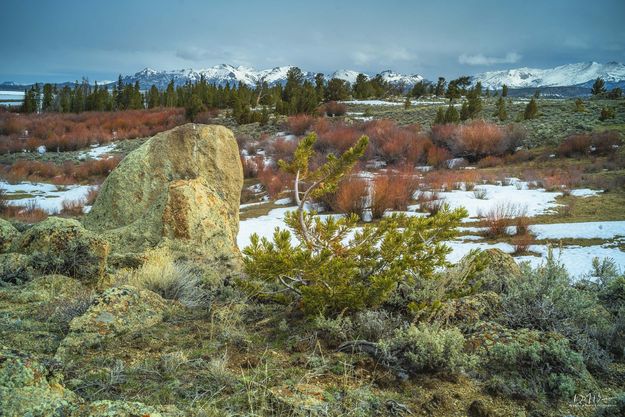
Image Courtesy of Dave Bell, Wyoming Mountain Photography

Ogden Meets the Americans–Again

Meanwhile, another April encounter was unfolding farther west.

Peter Skene Ogden of the Hudson’s Bay Company (HBC) entered the spring of 1826 with unfinished business. The previous year, he had suffered defeat and humiliation in the Snake Country at the hands of Johnson Gardner and a party of American trappers.[12] (This dramatic encounter is explored in “‘Now We Go’: Snake Country Freemen and the Desertions of May 1825” in The Rocky Mountain Fur Trade Journal, Volume 12, available here.) He had lost freemen to desertion, endured taunts, and left the region.[13] Editor E.E. Rich wrote that “after his brush with the Americans under Gardner in 1825, he seems to have become allergic to them.”[14]

Yet in 1826, Ogden once again found himself in charge of the HBC’s Snake Country Brigade.[15] Despite any personal misgivings, he was moving directly back toward the scene of the previous year’s humiliation, and toward renewed competition with the Americans.

When American winter camps broke up toward the end of February, several trapping parties were formed. One of these parties included a number of HBC deserters from the previous year.[16] It was, of course, this group that soon crossed paths with Ogden’s brigade.

In March, Ogden received reports from Native sources that a party of Americans and Iroquois was no more than three days’ march from his camp on the Portneuf River, a development he did not welcome.[17] On March 20, 1826, he wrote, “I dread meeting with the Americans.”[18]  Memories of the 1825 encounter with Johnson Gardner’s brigade were still fresh and likely came with more than a little apprehension.

By Sunday, April 9, 1826, Ogden’s fears were realized when he was “surprised by the arrival of a party of Americans and some of our deserters of last year, 28 in all.”[19]  Although Ogden never named the leader of the American party, it appears that Jim Bridger and Thomas Fitzpatrick may have been among its members.[20] Reflecting in his journal, Ogden noted, “if we were surprised they were more so from an idea that the threats of last year would have prevented us from returning to this quarter, but they find themselves mistaken.”[21]

The encounter, however, unfolded very differently from the tense confrontation of 1825. Ogden recorded:

The strangers paid me a visit and I had a busy day settling with them, and more to my satisfaction and the company’s than last year … our deserters are already tired of their new masters and from their manner will soon return to us.[22]

In fact, some of the deserters reportedly promised to return to the HBC’s Flathead Post in the fall, a development that must have been sweet vindication for Ogden.[23] Just as important, he noted with evident pride that “not one of our party appeared the least inclined to desert; so much to their credit.”[24]

For Ogden, the meeting of April 9, 1826, marked a reversal of fortune. Two hundred years ago this month, a confrontation he had dreaded instead restored his confidence.

Two Hundred Years Later: A Bicentennial Moment

Two hundred years ago this month, the Rocky Mountain fur trade reached a noteworthy moment. Ashley’s relief expedition finally caught up with Smith after a punishing winter had stalled men, animals, and determination alike, while Ogden faced American rivals in Snake Country—what could have been a bitter confrontation instead ended in satisfaction for Ogden and the HBC. These events capture the trade at its height: fierce rivalries, fragile supply lines, shifting loyalties, and endurance tested by distance and winter. In April 1826, timing, preparation, and a bit of luck mattered as much as beaver pelts themselves.


[1] LeRoy R. Hafen, ed., “A Brief History of the Fur Trade in the Far West,” in The Mountain Men and the Fur Trade of the Far West, vol. 1 (Glendale, CA: The Arthur H. Clark Company, 1965), 83–84.

[2] Dale L. Morgan, ed., The West of H. William Ashley, 1822–1835 (Denver: Fred A. Rosenstock, The Old West Publishing Company, 1964), 143.

[3] William R. Nester, From Mountain Man to Millionaire: The “Bold and Dashing Life” of Robert Campbell (Columbia, MO: University of Missouri Press, 2011), 17.

[4] Morgan, ed., West of William Ashley, 143.

[5] Nester, From Mountain Man to Millionaire, 17-18.

[6] Ibid., 18.

[7] Dr. Jay H. Buckley, “William H. Ashley’s Newly-Discovered 1826 Fur Trade Journal,” The Rocky Mountain Fur Trade Journal, 8 (2011):25.

[8] Morgan, West of William Ashley, 143-144.

[9] Ibid., 144.

[10] Ibid.

[11] Fred R. Gowans, Rocky Mountain Rendezvous: A History of the Fur Trade Rendezvous, 1825–1840 (Layton, UT: Gibbs M. Smith, Inc., 1985), 64.

[12] Thomas H. Holloway, “‘Now We Go’: Snake Country Freemen,” The Rocky Mountain Fur Trade Journal, 12 (2018): 56–59.

[13] Ibid.

[14] E. E. Rich, ed., “Peter Skene Ogden’s Snake Country Journals, 1824-26” (London: Hudson’s Bay Record Society, 1950), lvi-lix, 154-155.

[15] Peter Skene Ogden, “Journal of the Snake Country Expedition, 1825–1826,” T. C. Elliott, ed., Oregon Historical Quarterly 10, no. 4 (1909):335.

[16] Morgan, West of William Ashley, 146.

[17] Ibid.

[18] Ogden, Snake Country Journals, 1824–26, 144.

[19] Ogden, “Journal of the Snake Country Expedition,” 359.

[20] Harrison C. Dale, “The Ashley-Smith Explorations and the Discovery of a General Route to the Pacific” (Glendale, CA: Arthur H. Clark, 1941), 162-163.

[21] Ogden, “Journal of the Snake Country Expedition,” 359.

[22] Ibid., 359-60.

[23] Ibid.

[24] Ibid.

When the Elk Bugled: A Moonlit Moment in the Fur Trade

By Museum of the Mountain Man Staff
October 16, 2025

Here a circumstance occurred which furnished the subject for a good joke upon our green Irish camp keeper. … It was the commencement of the rutting season with the elk, when the bucks frequently utter a loud cry resembling a shrill whistle, especially when they see anything of a strange appearance. We had made our beds at night on a little bench between two small, dry gullies. The weather was clear and the moon shone brightly. About ten o’clock at night, when I supposed my comrades fast asleep, an elk blew his shrill whistle within about 100 yards of us. I took my gun, slipped silently into the gully and crept toward the place where I heard the sound, but I soon found he had been frightened by the horses and ran off up the mountain. On turning back I met Allen, who, hearing the elk, had started to get a shot at him in the same manner I had done without speaking a word. We went back to camp, but our camp keeper was nowhere to be found. We searched the bushes high and low ever and anon calling for “Conn,” but no “Conn” answered. At length Allen, cruising through the brush, tumbled over a pile of rubbish, when lo! Conn was beneath, nearly frightened out of his wits. “Arrah! an’ is it you, Allen?” said he trembling as if an ague fit was shaking him. “But I thought the whole world was full of the spalpeens of savages. And where are they gone?” It was near an hour before we could satisfy him of his mistake, and I dare say his slumbers were by no means soft or smooth during the remainder of the night.[1]

In this journal entry, mountain man Osborne Russell shares a rare detail from life in the fur trade era, the whistle, or bugle, of a bull elk during the rut. His account stands out not only for its humor and storytelling but also for capturing a rare and specific moment of trapper life.

The scarcity of similar observations about elk bugling in other journals does not suggest that trappers failed to notice or appreciate these sounds. Fur trappers and mountain men undoubtedly heard the bugles of elk, an unforgettable sound that marks the rutting season in the Rocky Mountains. More likely, the absence reflects differences in what individuals chose to record, or what has survived in print. Most fur trade journals focus on trade logistics, survival, mapping, or relationships with Native peoples, subjects far more relevant to daily life than the bugle of an elk on a moonlit night.

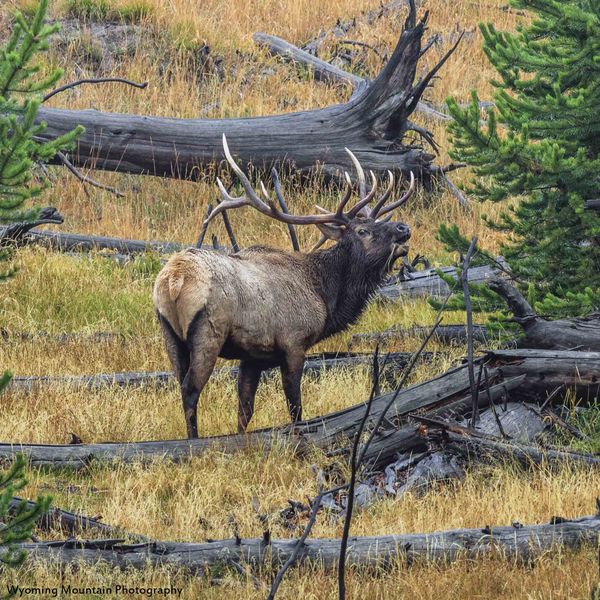
Photo by Dave Bell of Wyoming Mountain Photography of an elk bugling.

Russell, however, offers something unique: a brief account of what life in the fur trade sometimes sounded like, and a humorous glimpse into how trappers experienced those moments. Through his narrative, we can imagine the moonlit camp, the sudden stillness after the elk’s call, and the laughter of companions once fear gave way to relief.

In the Museum’s ongoing work to bring history to life, accounts like Russell’s help us understand not just what mountain men did, but what they and their comrades heard, felt, and feared, and allow us to imagine just how constant those fears must have been in the mountains. Yet Russell’s journal reminds us that even in an era of hardship and danger, there was room for curiosity and humor, moments that bring these historical figures to life for us today.


[1] Osborne Russell, Journal of a Trapper, 1834–1843, (Boise, ID: Syms-York Company, Inc., 1921) 70. “Spalpeens” is an Irish word roughly translated as “rascals.”