How Art from Our Mountains Changed America
Part Three
By Sue Sommers
August 11, 2026
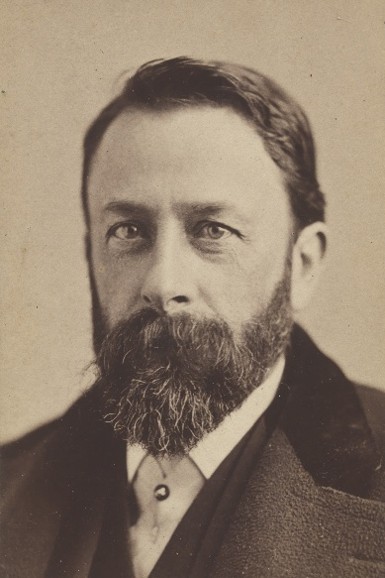
There is no doubt that Bierstadt changed the way we view our land, and through our land, ourselves.
Paul Richard, “Paean to the American Dream: At the National Gallery, Albert Bierstadt’s Beatific Landscapes,” Washington Post, Nov. 3, 1991.
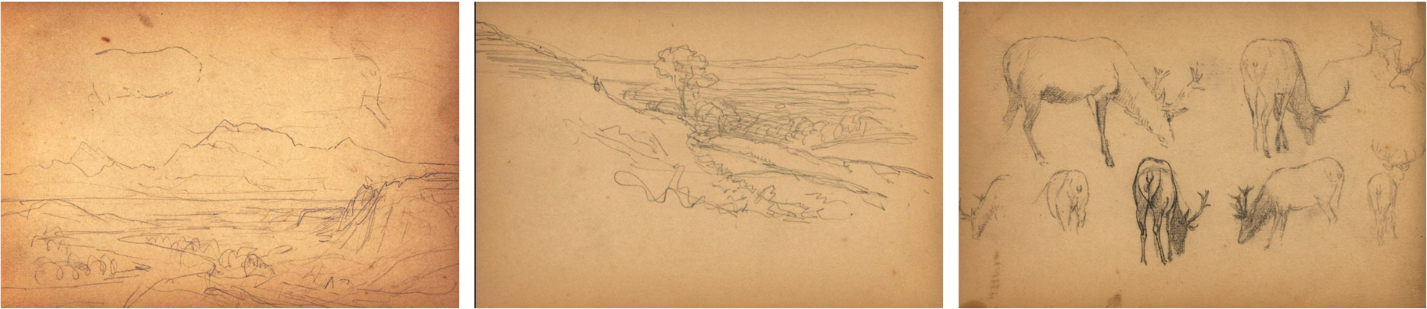
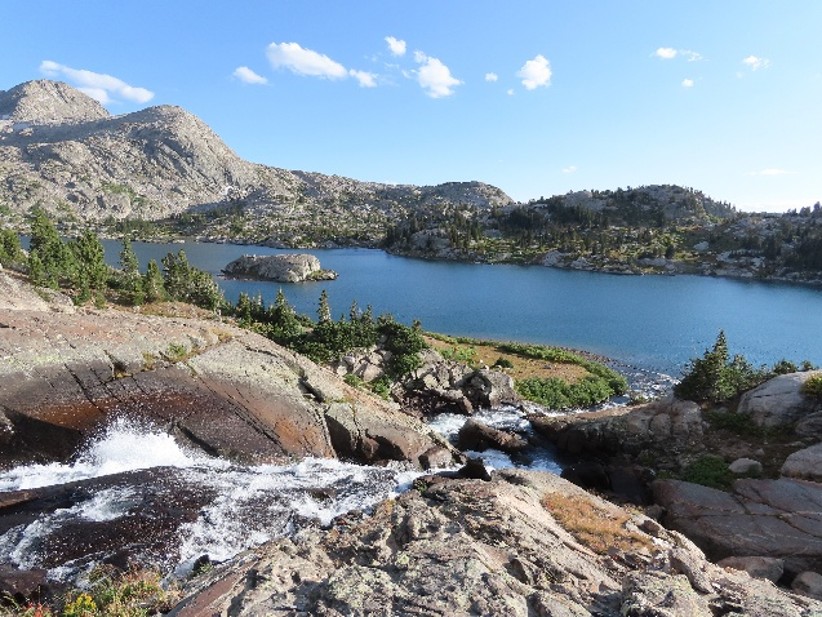
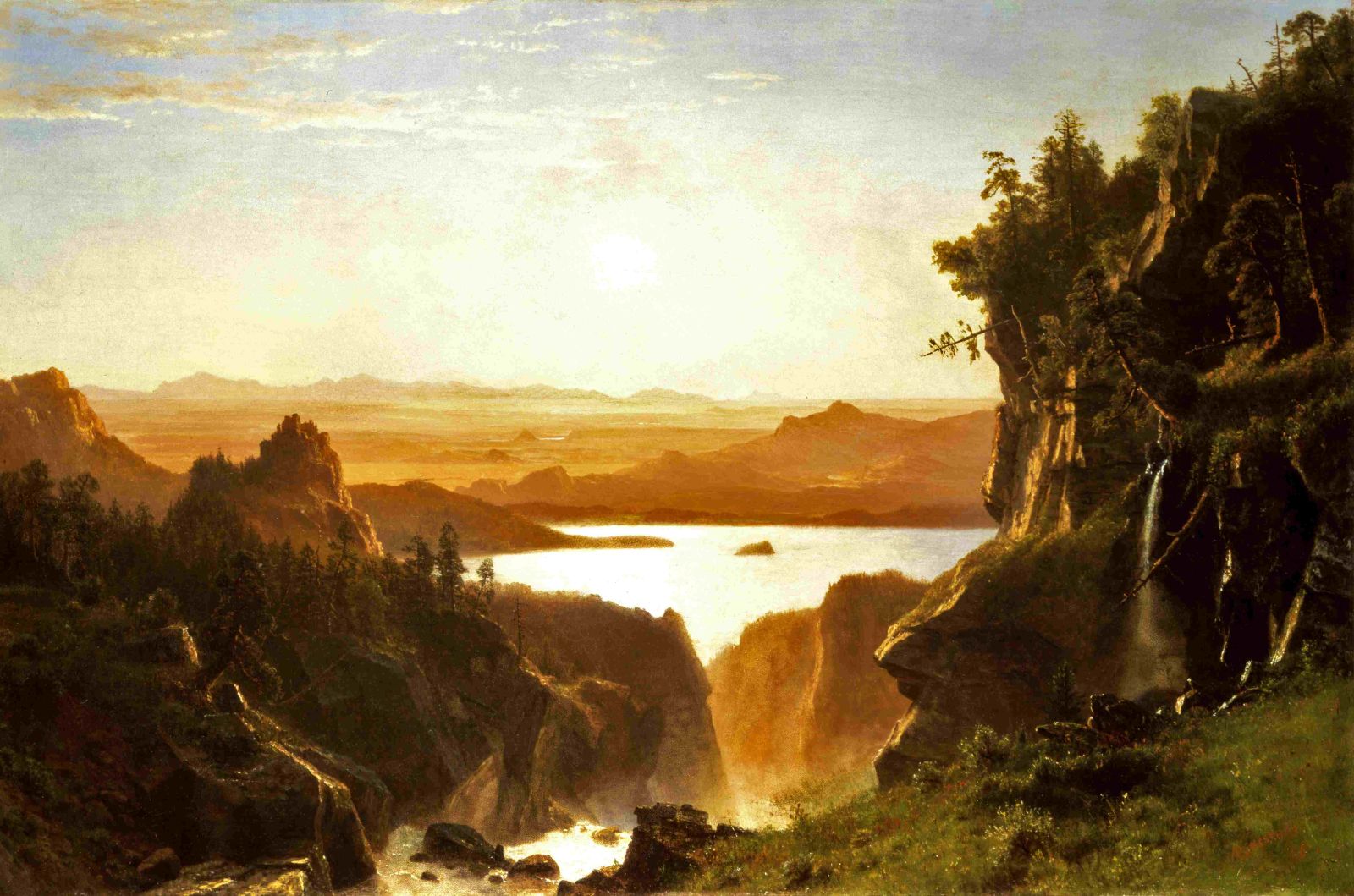
After returning from his 1859 Lander Survey adventure through today’s Wyoming, Albert Bierstadt rented a New York City art studio and began using sketches, photographs, and the artifacts he had collected to develop oil paintings on canvas. My first blog post in this series included one of those paintings: Island Lake (1862).
But the feature of our valley that may have interested him most was Temple Peak in the southern Wind River Range.
One of Bierstadt’s earliest Far West scenes was this distant view of Temple Peak.
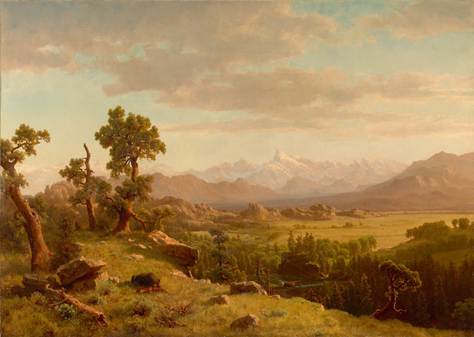
In fact, between 1860 and 1863 – before Bierstadt set off on his next western trek – he created at least three other paintings that clearly featured Temple Peak’s distinctive profile, including the massive canvas that would become his most famous work:
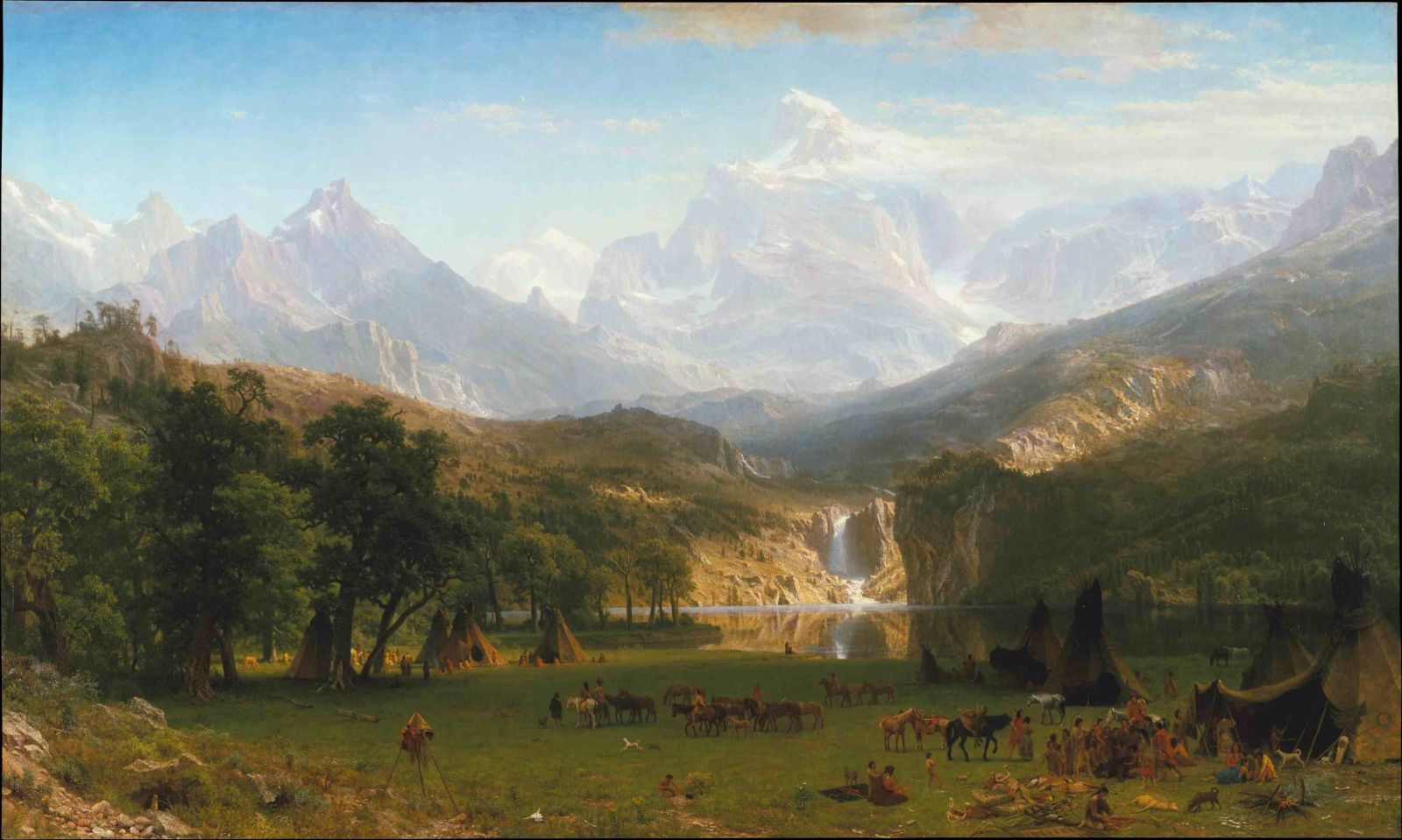
This ten-foot-wide painting is not only the portrait of a mountain and a waterfall high in the southern Wind River Range; it’s also a portrait of the Shoshone way of life at the time. The foreground is devoted to an Indian encampment, and is based on Bierstadt’s observations of Native people along the Oregon Trail, including those accompanying Chief Washakie when he visited the Survey party in today’s Sublette County.
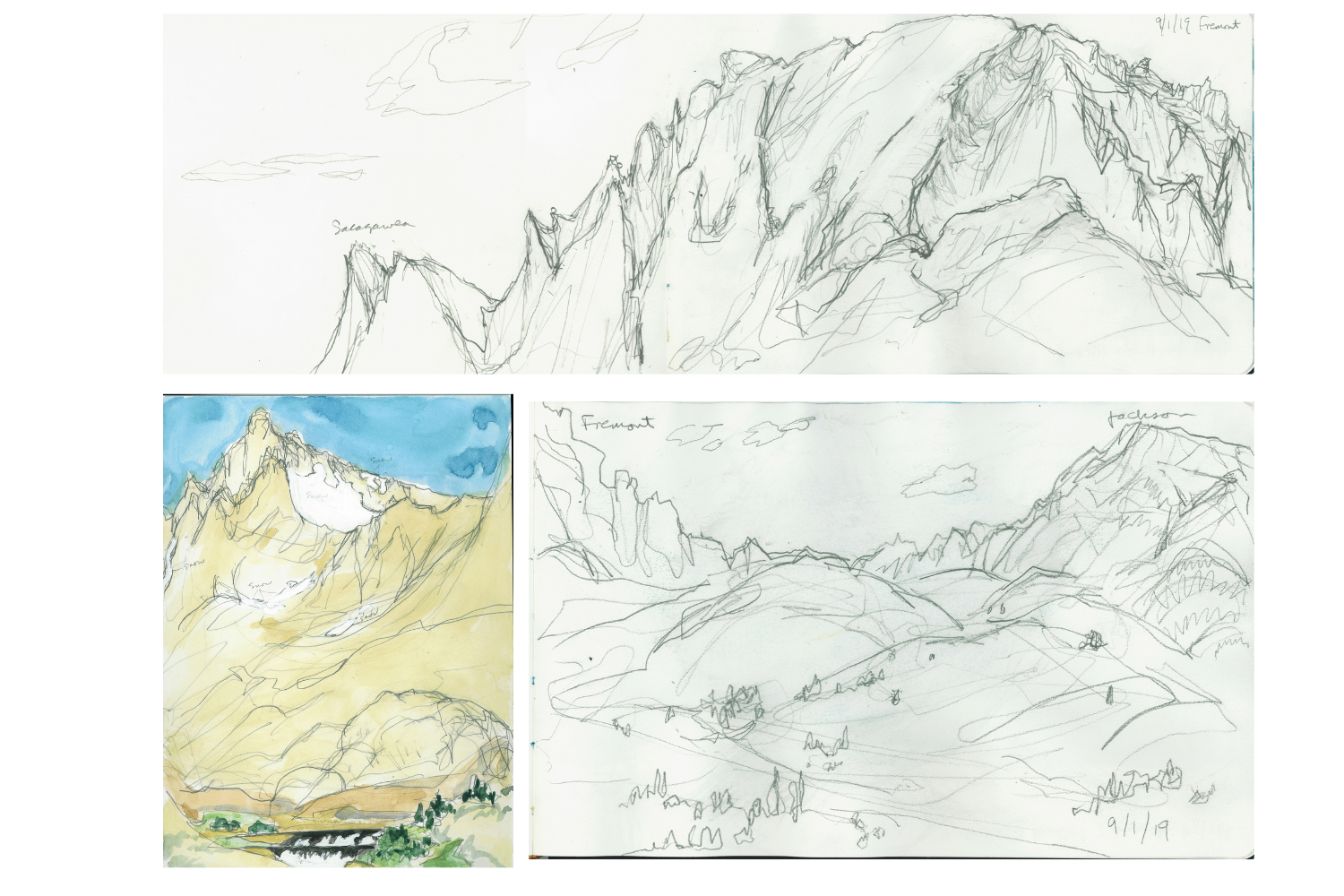
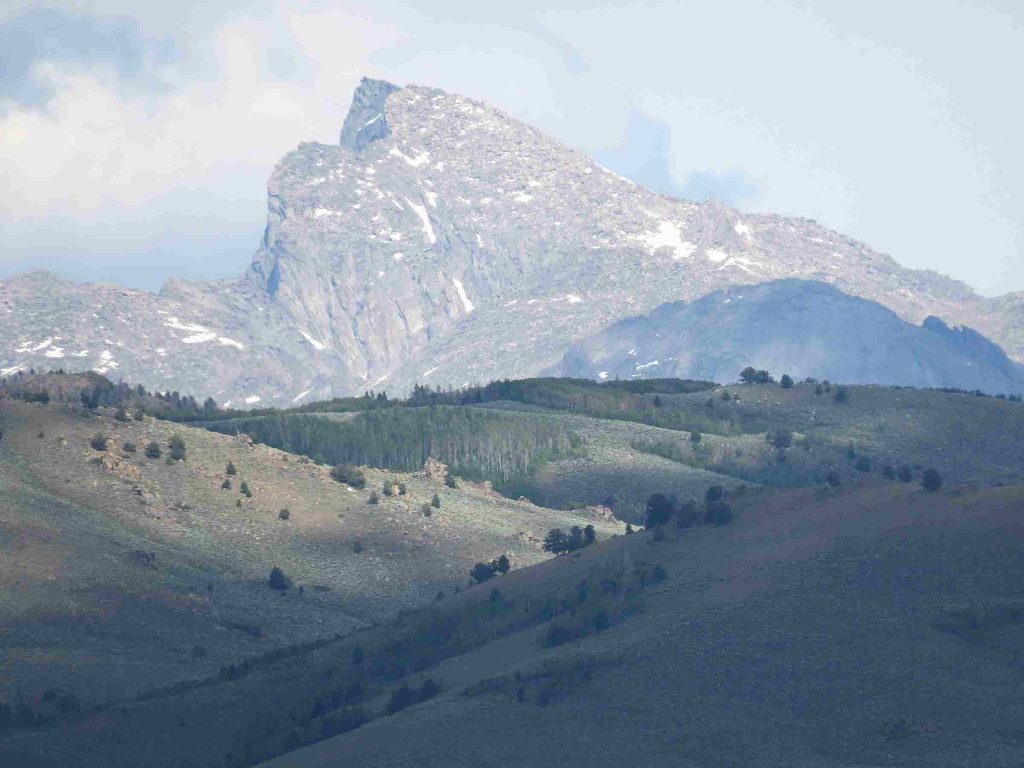
Twenty-first-century locals tend to reject the artwork’s claim to any real place, for several good reasons. To name just a few: the mountain doesn’t look like the one we see from US Highway 191; hikers who’ve approached Temple’s summit don’t recognize the meadow in the foreground or the distant peak; and everyone takes issue with cottonwood trees and a Shoshone village at what appears to be an elevation of 10,500 feet. But Bierstadt’s cloud-mantled summit does bear a resemblance to the peak’s classic silhouette, seen from the northwest:
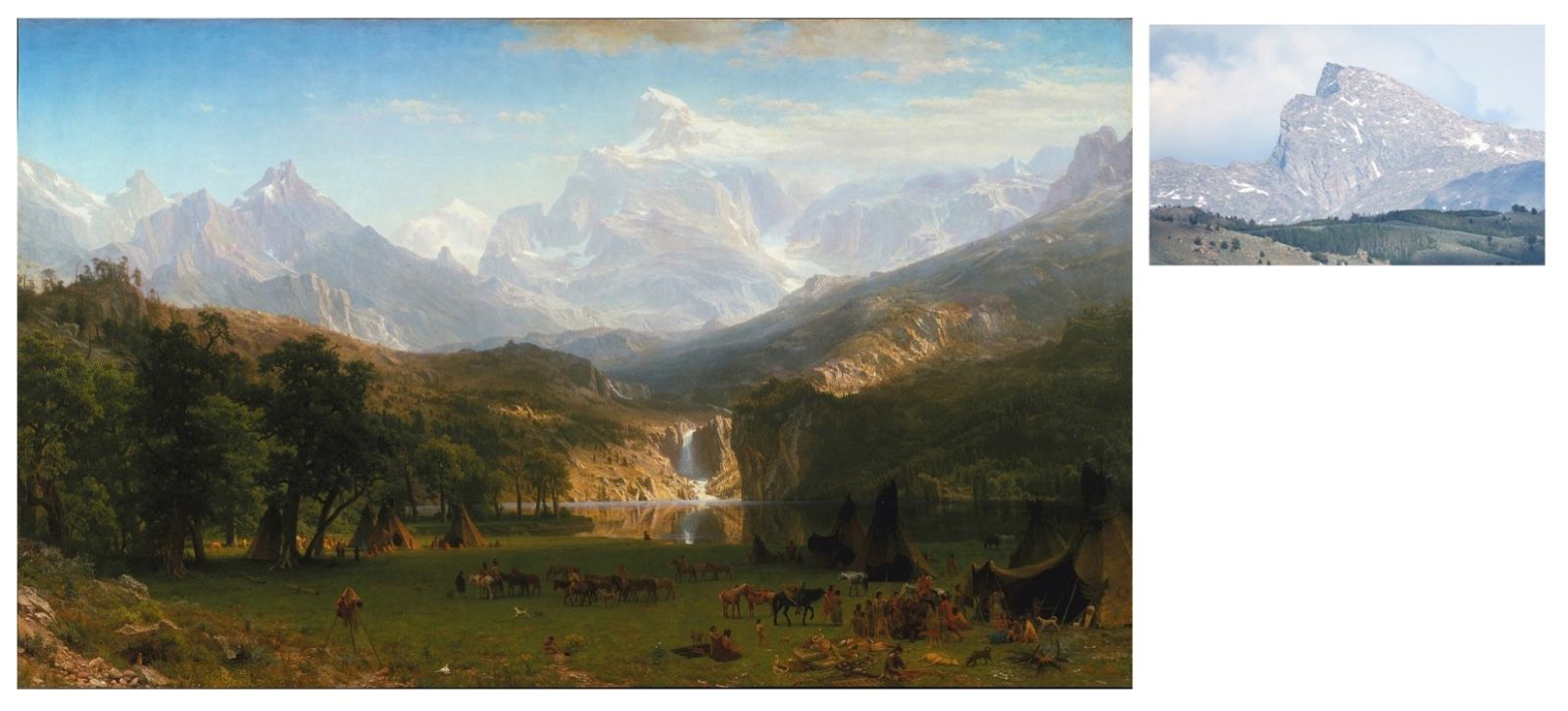
As with any mountain, what you see depends on which angle and elevation you’re viewing it from, as well as other conditions like light, season, and weather. The challenge for the traditional landscape painter, however, is translating a vast three-dimensional reality onto a flat plane.
And there was a further challenge for a well-trained Hudson River School painter of the mid-1800s. Bierstadt’s aim was to show Temple Peak to its best advantage, and also capture how if felt to witness the majesty. An art critic at the time complained that Bierstadt and his colleagues, “[compose pictures] from actual sketches … to render the general truths and spirit of the localities of their landscape … so that, though the details of the scenery are substantially correct, the scene as a whole often is false.”[1]
Put more kindly by the curators at today’s Smithsonian Museum of American Art, the goal of the Hudson River School was to “record, with pride and fidelity to nature, the unique, romantic qualities of the American scene” by incorporating plein-aire sketches into “imaginative compositions … to depict the look and feel of America’s wilderness.”[2]
None of that mattered to the American public, who fell in love with the panoramic, virtually cinematic experience of viewing The Rocky Mountains, Landers Peak in person.
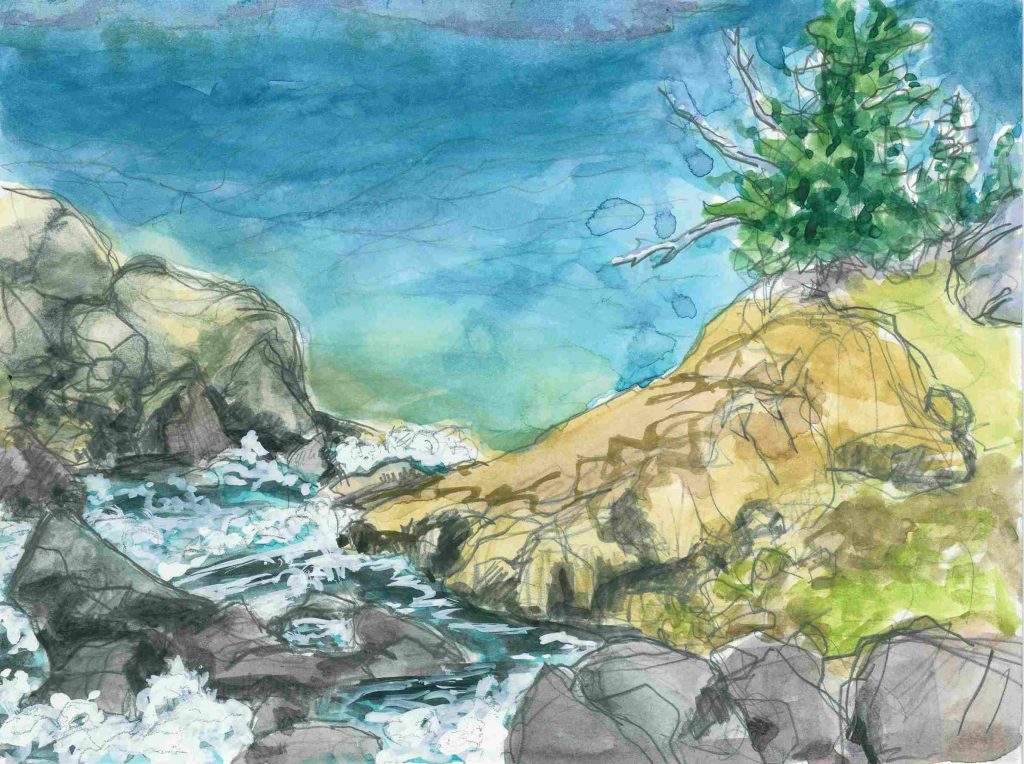
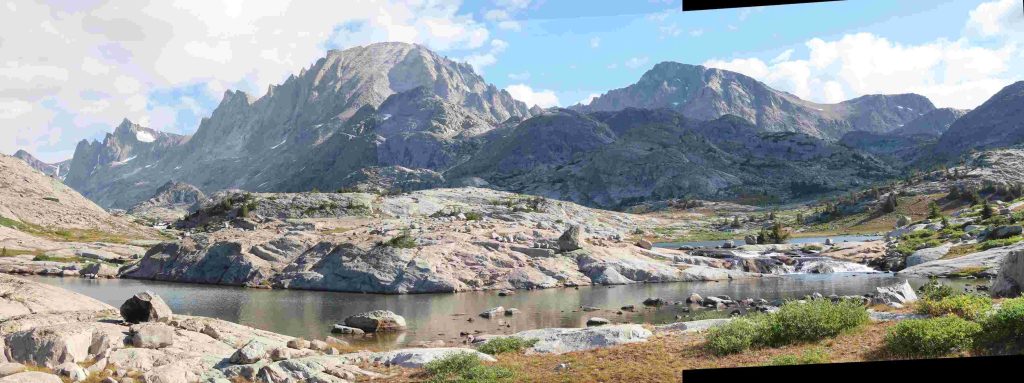
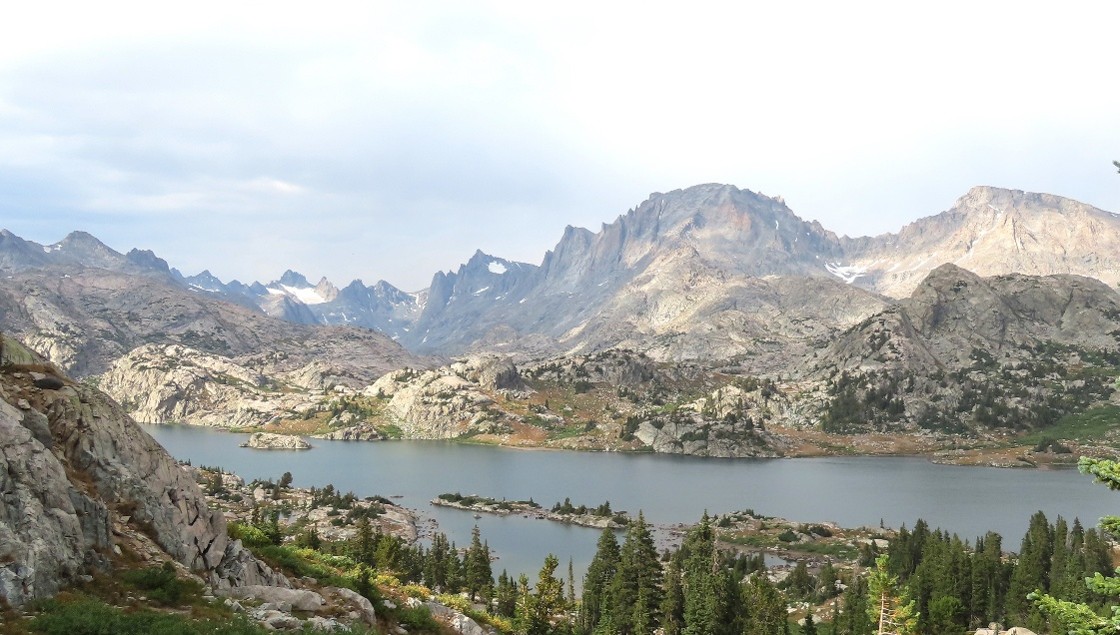
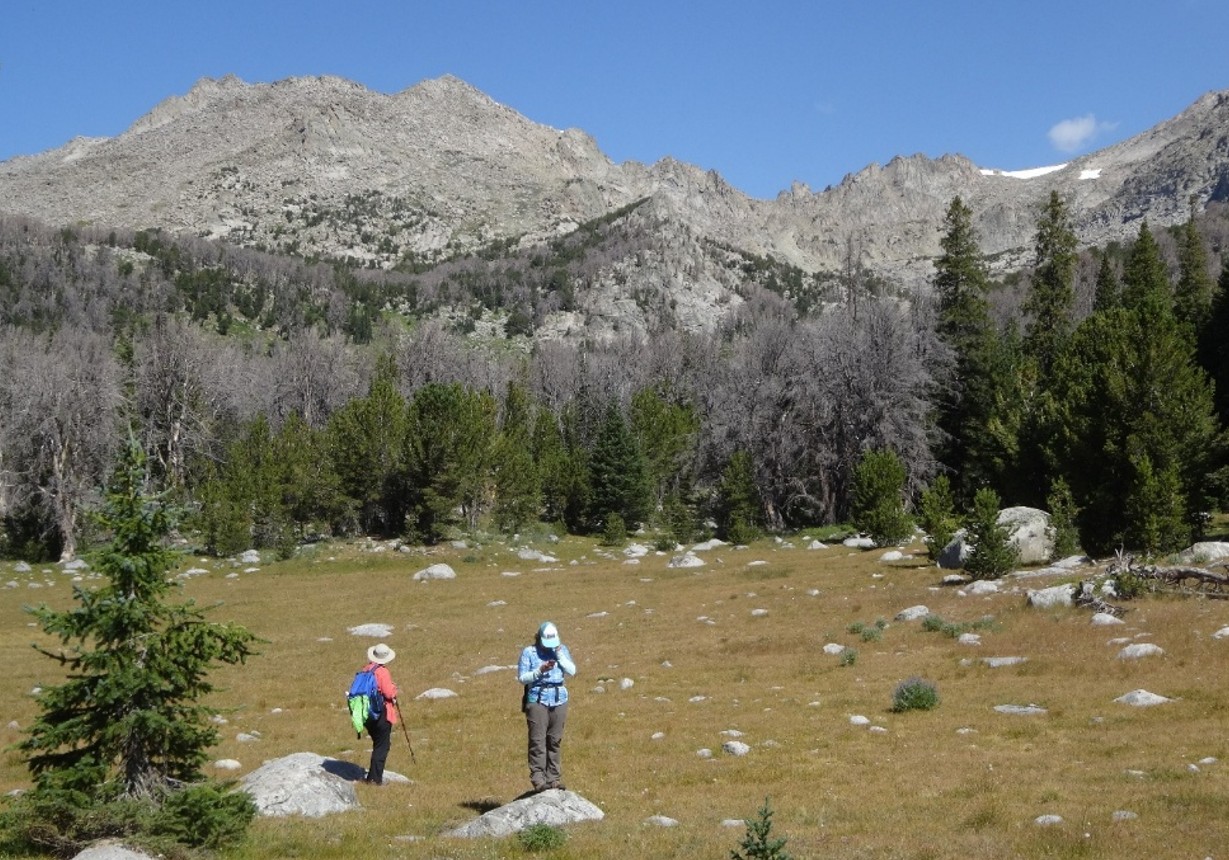
Not surprisingly, when my friends and I hiked to Temple Peak via Sedgewick Meadows about ten years ago, we saw a very different mountain as we approached from the south-southwest:
But it turned out that the summit of Temple Peak provides plenty of drama:
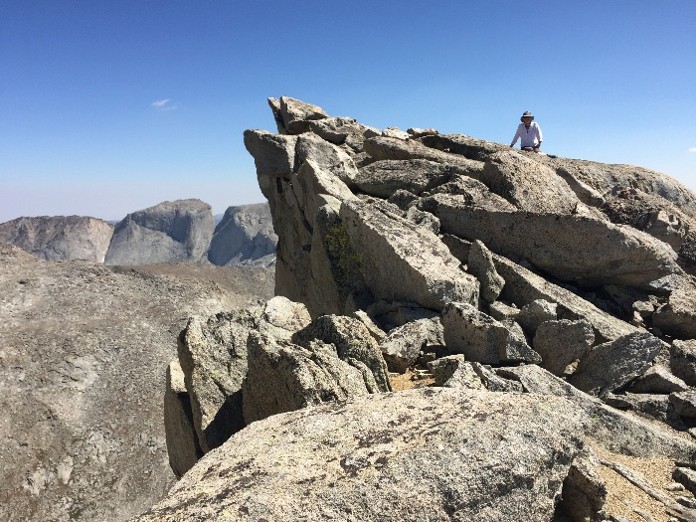
Photo courtesy of Rachel Grimes Yrsenault.
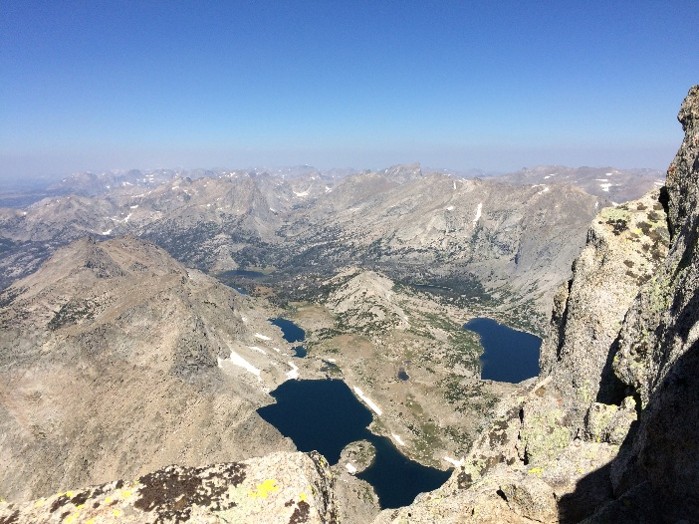
Photo courtesy of Rachel Grimes Yrsenault.
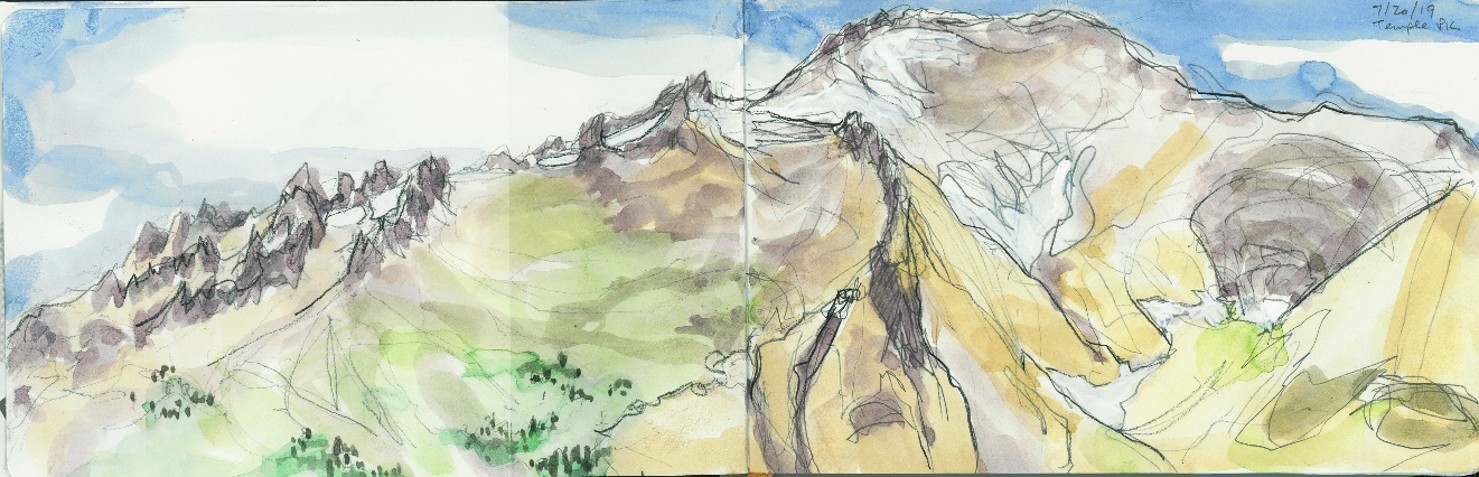
During a later trip to the peak, I visited some high ridges to the south. When the light was right, the summit revealed a different, but fascinating, personality altogether:
Reflections and Questions
Bierstadt debuted his Temple-Peak-inspired masterpiece, The Rocky Mountains, Lander’s Peak, in New York City in 1863, in the midst of the United States’ bloody Civil War. The title of the painting was Bierstadt’s tribute to Colonel Lander, the leader of the expedition to the Far West that Bierstadt had joined in 1859, and who had perished as a Union war hero.
Up to this point, no one had depicted the Rocky Mountains at such a scale, in full color, and in such a breathtaking style.
This painting would launch Bierstadt’s career; it would be exhibited from Albany, New York, to Paris, France, and be displayed before Queen Victoria. In 1865, it would sell for the highest price paid to an American artist up to that time, out-selling all of Bierstadt’s rivals. Engravings and chromolithograph reproductions distributed the image far and wide to the public by subscription.
The Rocky Mountains, Lander’s Peak not only astounded Americans with the majesty and potential of the Far West. It also signaled to other American artists that a new frontier for art was beckoning, and there would be interested buyers.
During my presentation at the Museum of the Mountain Man on August 20, I’ll say more about Albert Bierstadt’s Island Lake and The Rocky Mountains, Lander’s Peak, and why I believe that Bierstadt traveled high in the Wind River Range to collect images for these paintings from actual sites. If Bierstadt “changed the way we view our land, and through our land, ourselves,” then it all started in the Wind River Range.
[1] James Jackson Jarves, quoted in Barbara Novak, American Painting of the Nineteenth Century: Realism, Idealism, and the American Experience (New York: Oxford University Press, 2007), p.60.
[2] https://americanart.si.edu/artist/thomas-cole-943
Explore the Complete Series
Part One: Albert Bierstadt in the Wind River Range: 1859
Part Two: Albert Bierstadt in the Wind River Range: 1859
Watch the Presentation
Albert Bierstadt in the Wind River Range: 1859
Sue Sommers explores Albert Bierstadt’s 1859 journey through the Wind River Range and his experiences in the region.