Tag Archives: Wyoming

Albert Bierstadt in the Wind River Range: 1856

How Art from Our Mountains Changed America

Part Three

By Sue Sommers
August 11, 2026

There is no doubt that Bierstadt changed the way we view our land, and through our land, ourselves.

Paul Richard, “Paean to the American Dream: At the National Gallery, Albert Bierstadt’s Beatific Landscapes,” Washington Post, Nov. 3, 1991.

After returning from his 1859 Lander Survey adventure through today’s Wyoming, Albert Bierstadt rented a New York City art studio and began using sketches, photographs, and the artifacts he had collected to develop oil paintings on canvas. My first blog post in this series included one of those paintings: Island Lake (1862).

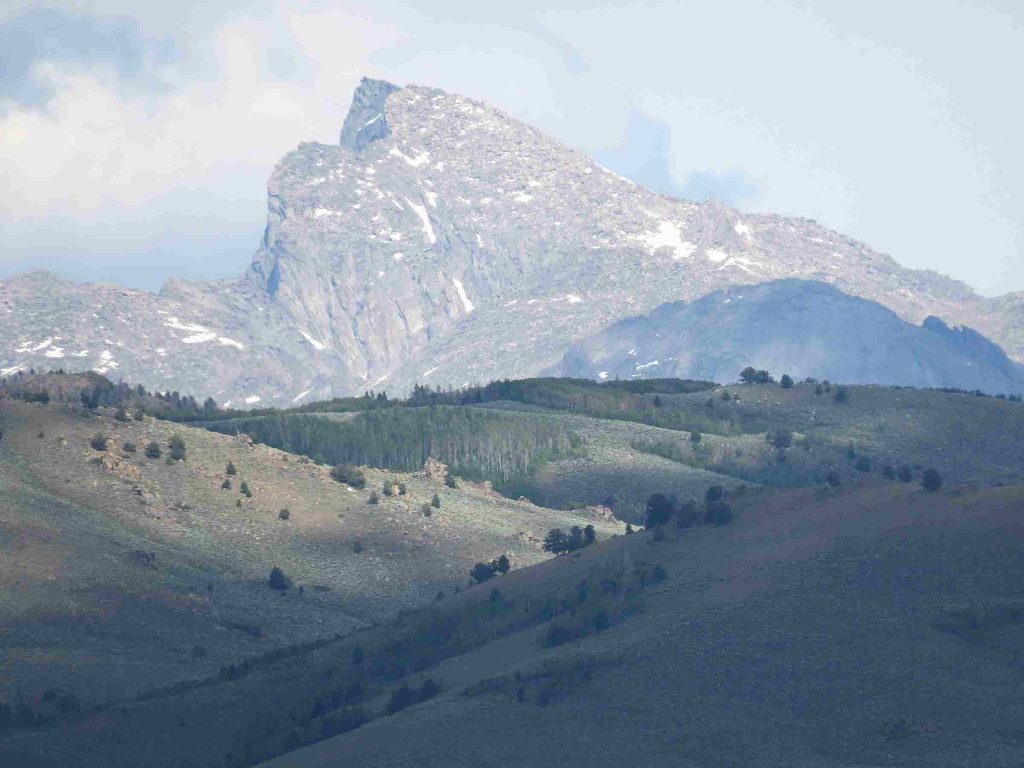
But the feature of our valley that may have interested him most was Temple Peak in the southern Wind River Range.

One of Bierstadt’s earliest Far West scenes was this distant view of Temple Peak.
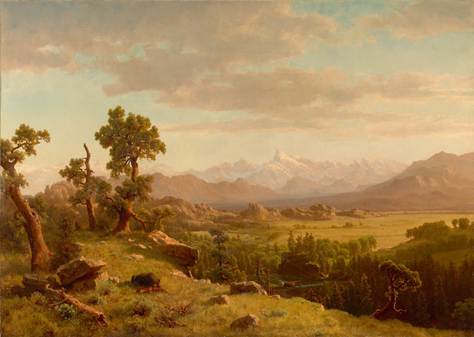
Wind River Country, 1860. Oil on canvas, 29.625 × 43.75 inches. The Charles H. Bayly Collection at the Denver Art Museum, 1987.47.

In fact, between 1860 and 1863 – before Bierstadt set off on his next western trek – he created at least three other paintings that clearly featured Temple Peak’s distinctive profile, including the massive canvas that would become his most famous work:
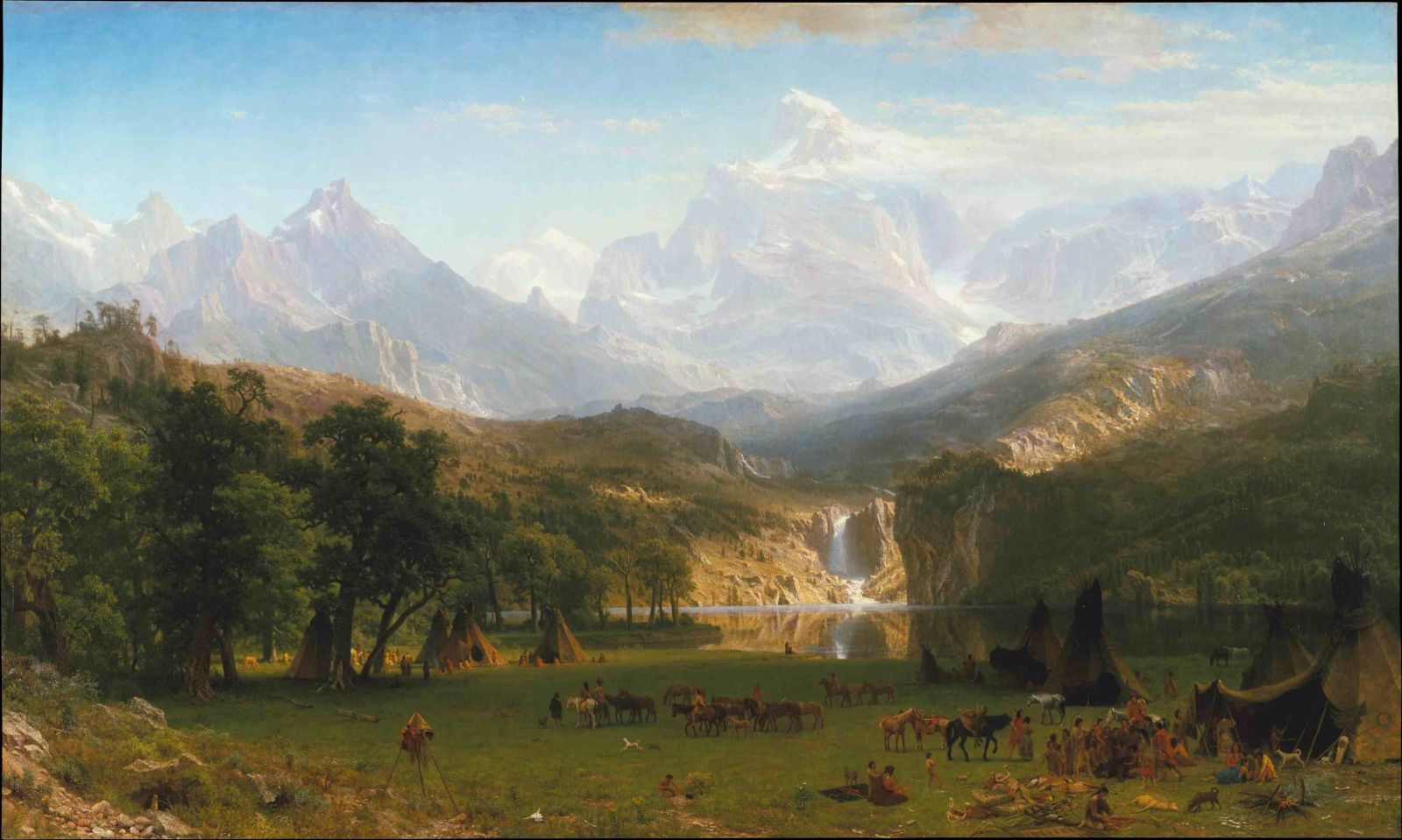
The Rocky Mountains, Lander’s Peak, 1863. Oil on canvas, 73.5 × 120.75 inches. Metropolitan Museum of Art, New York. Image credit: ART RESOURCE, INC.


This ten-foot-wide painting is not only the portrait of a mountain and a waterfall high in the southern Wind River Range; it’s also a portrait of the Shoshone way of life at the time. The foreground is devoted to an Indian encampment, and is based on Bierstadt’s observations of Native people along the Oregon Trail, including those accompanying Chief Washakie when he visited the Survey party in today’s Sublette County.

Twenty-first-century locals tend to reject the artwork’s claim to any real place, for several good reasons. To name just a few: the mountain doesn’t look like the one we see from US Highway 191; hikers who’ve approached Temple’s summit don’t recognize the meadow in the foreground or the distant peak; and everyone takes issue with cottonwood trees and a Shoshone village at what appears to be an elevation of 10,500 feet. But Bierstadt’s cloud-mantled summit does bear a resemblance to the peak’s classic silhouette, seen from the northwest:
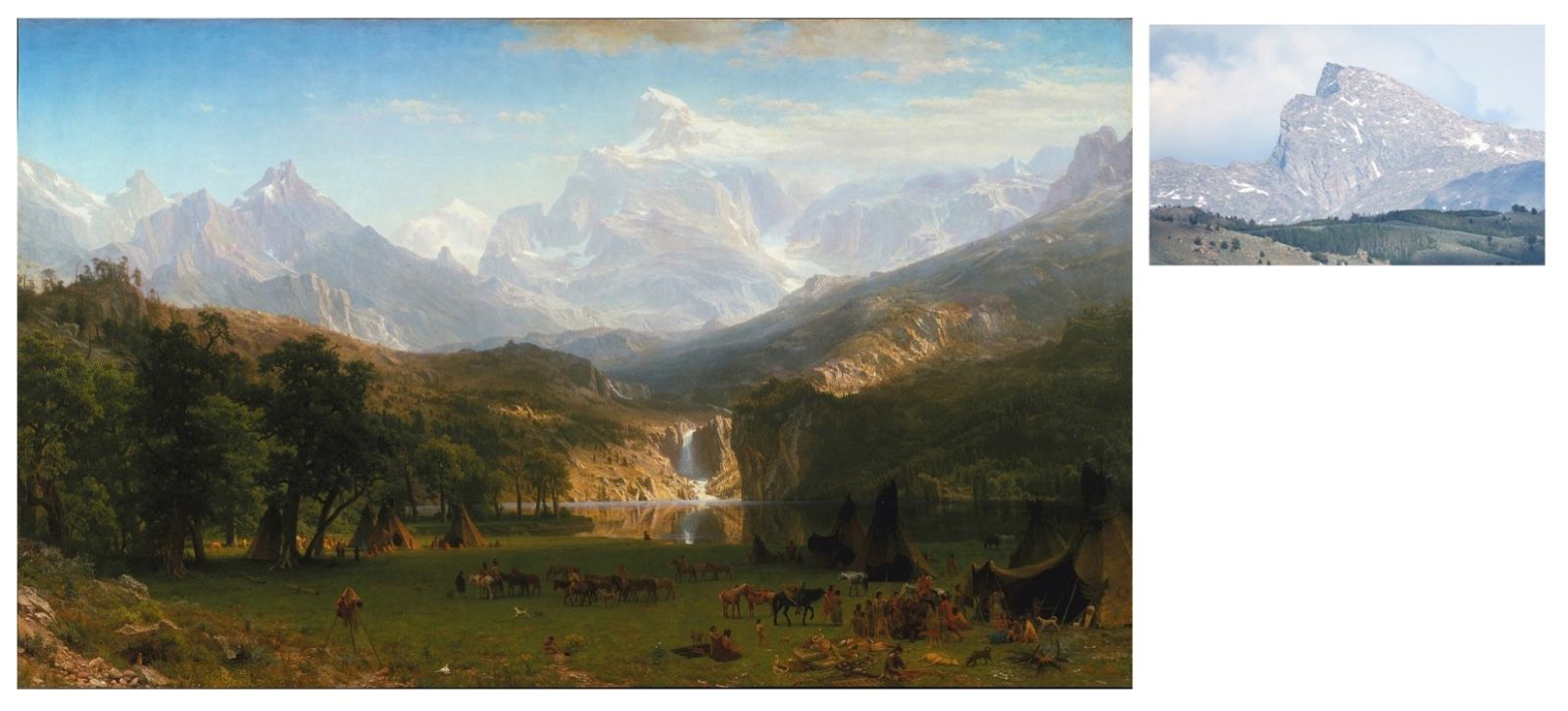
ART RESOURCE, INC.; Temple Peak photograph by Sue Sommers

As with any mountain, what you see depends on which angle and elevation you’re viewing it from, as well as other conditions like light, season, and weather. The challenge for the traditional landscape painter, however, is translating a vast three-dimensional reality onto a flat plane.

And there was a further challenge for a well-trained Hudson River School painter of the mid-1800s. Bierstadt’s aim was to show Temple Peak to its best advantage, and also capture how if felt to witness the majesty. An art critic at the time complained that Bierstadt and his colleagues, “[compose pictures] from actual sketches … to render the general truths and spirit of the localities of their landscape … so that, though the details of the scenery are substantially correct, the scene as a whole often is false.”[1]

Put more kindly by the curators at today’s Smithsonian Museum of American Art, the goal of the Hudson River School was to “record, with pride and fidelity to nature, the unique, romantic qualities of the American scene” by incorporating plein-aire sketches into “imaginative compositions … to depict the look and feel of America’s wilderness.”[2]

None of that mattered to the American public, who fell in love with the panoramic, virtually cinematic experience of viewing The Rocky Mountains, Landers Peak in person.

Not surprisingly, when my friends and I hiked to Temple Peak via Sedgewick Meadows about ten years ago, we saw a very different mountain as we approached from the south-southwest:
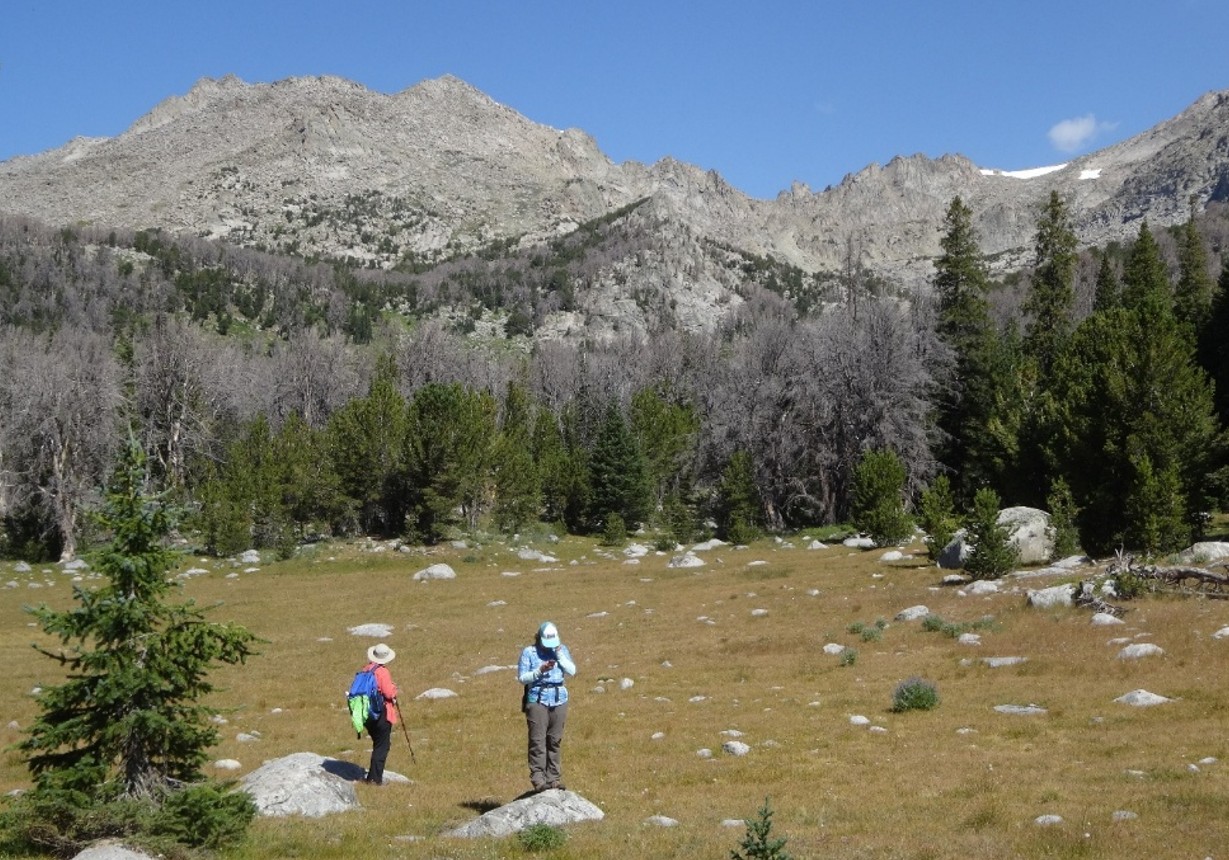
I asked my friends: “Are you sure we’re on the right mountain?” Photograph by Sue Sommers.

But it turned out that the summit of Temple Peak provides plenty of drama:
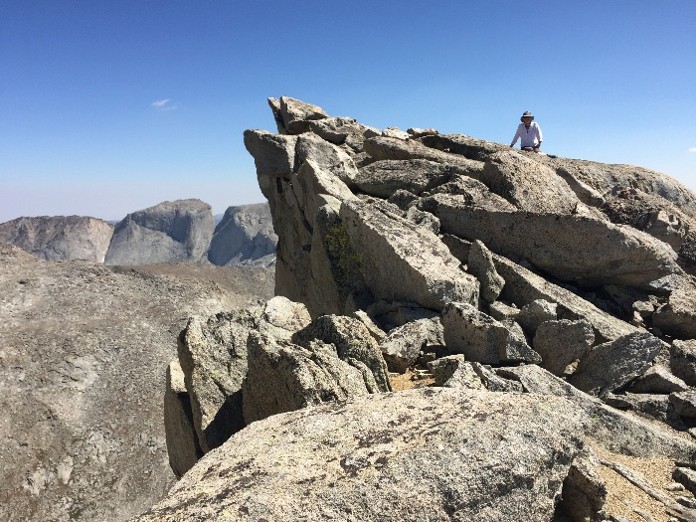
During a later trip to the peak, I visited some high ridges to the south. When the light was right, the summit revealed a different, but fascinating, personality altogether:
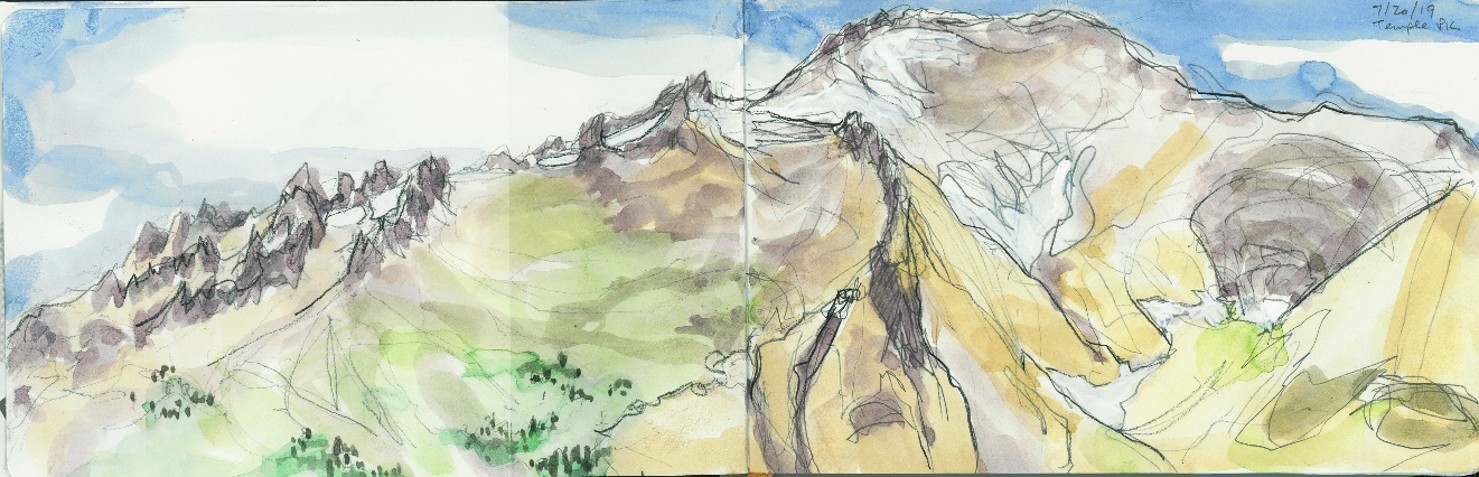
Watercolor by Sue Sommers.

Reflections and Questions

Bierstadt debuted his Temple-Peak-inspired masterpiece, The Rocky Mountains, Lander’s Peak, in New York City in 1863, in the midst of the United States’ bloody Civil War. The title of the painting was Bierstadt’s tribute to Colonel Lander, the leader of the expedition to the Far West that Bierstadt had joined in 1859, and who had perished as a Union war hero.

Up to this point, no one had depicted the Rocky Mountains at such a scale, in full color, and in such a breathtaking style.

This painting would launch Bierstadt’s career; it would be exhibited from Albany, New York, to Paris, France, and be displayed before Queen Victoria. In 1865, it would sell for the highest price paid to an American artist up to that time, out-selling all of Bierstadt’s rivals. Engravings and chromolithograph reproductions distributed the image far and wide to the public by subscription.

The Rocky Mountains, Lander’s Peak not only astounded Americans with the majesty and potential of the Far West. It also signaled to other American artists that a new frontier for art was beckoning, and there would be interested buyers.

During my presentation at the Museum of the Mountain Man on August 20, I’ll say more about Albert Bierstadt’s Island Lake and The Rocky Mountains, Lander’s Peak, and why I believe that Bierstadt traveled high in the Wind River Range to collect images for these paintings from actual sites. If Bierstadt “changed the way we view our land, and through our land, ourselves,” then it all started in the Wind River Range.


[1] James Jackson Jarves, quoted in Barbara Novak, American Painting of the Nineteenth Century: Realism, Idealism, and the American Experience (New York: Oxford University Press, 2007), p.60.

[2] https://americanart.si.edu/artist/thomas-cole-943

Explore the Complete Series

Part One: Albert Bierstadt in the Wind River Range: 1859
Part Two: Albert Bierstadt in the Wind River Range: 1859


Interested in learning more about Albert Bierstadt and the Wind River Range? Join us August 20, 2026 at 6 PM for a presentation on Albert Bierstadt and his time in the Wind River Range by Sue Sommers at the Museum of the Mountain Man.

Albert Bierstadt in the Wind River Range: 1859

How Art from Our Mountains Changed America

Part Two

By Sue Sommers
July 20, 2026

How Art from Our Mountains Changed America
Part One Part Two | Part Three

As an artist myself, and someone who has photographed, sketched and painted the Wind River Mountains, I think I understand some of the challenges Albert Bierstadt faced during his summer here in 1859.

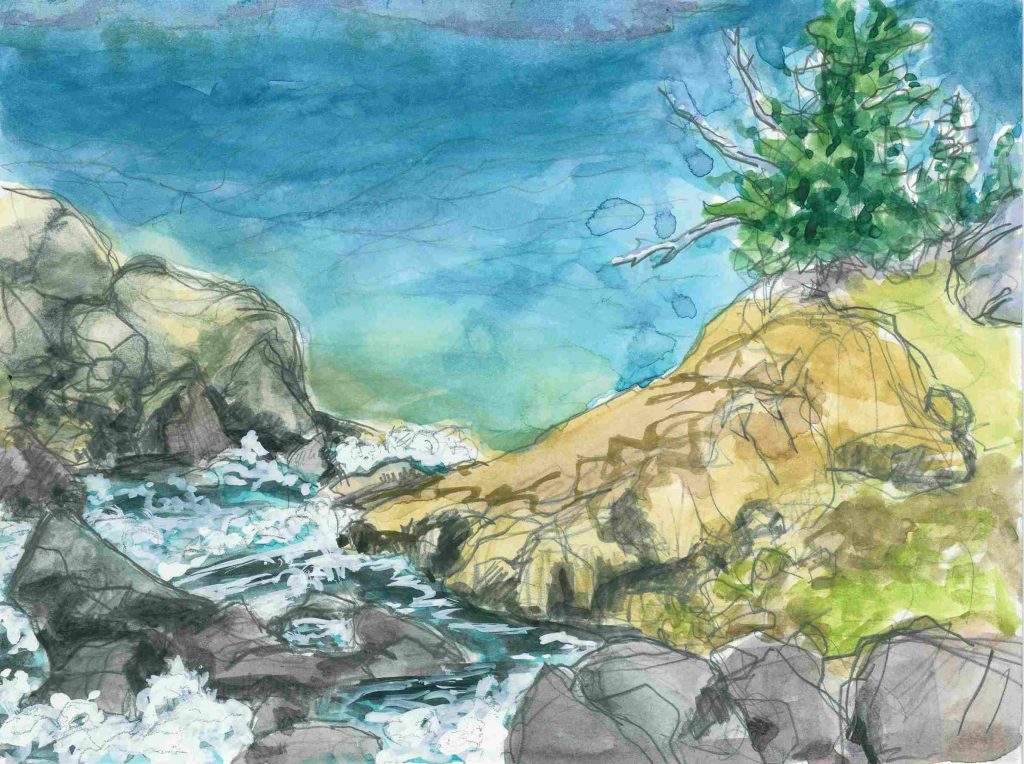
In 2019, I sketched the waterfall dropping into Island Lake from the same viewpoint as my photograph in the previous blog post:

Island Lake Waterfall. Sketch by Sue Sommers.

I wanted to see – and feel – how this location compared to the waterfall in Bierstadt’s painting of Island Lake.

Practically speaking, a multitude of conditions hamper careful, patient artmaking at altitude. There can be low clouds obscuring the views, hordes of biting insects, wind, frightening storms, wildfire smoke fading all colors, and sunlight as harsh and searing as a brass gong, to name just a few. Frustrations may include scattered tools, constantly shifting light, intense physical discomfort, and a lot of wasted paper. I never did make the waterfall appear to drop a great distance into the lake, because I was trying to paint what I saw. As Bierstadt knew well, sometimes you have to paint what isn’t there in order to give the viewer the actual sensations of space and depth.

Just as we share the same challenging conditions Bierstadt likely did while sketching in 1859, we travel into the Winds in much the same way he did: with pack animals and a guide, riding or on foot. Space, weight, and time are at a premium today, just as they were for Bierstadt 167 years ago. Except when he left the mountains, Bierstadt would keep riding and walking all the way to St. Louis, and beyond.

But in my opinion, the biggest challenge for artists among the peaks is scale. Everything up high in the Wind River Range is very close, and unbelievably massive.

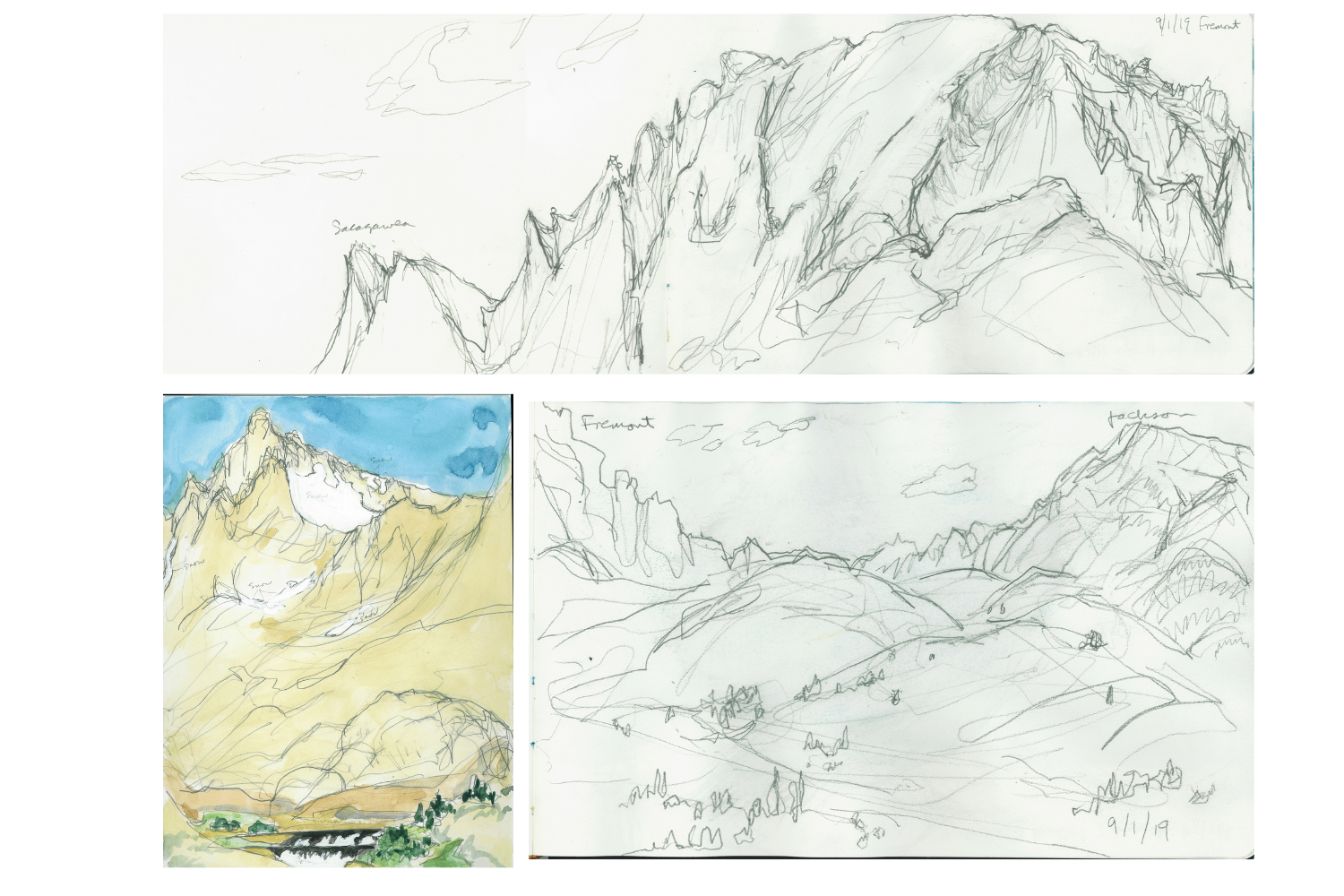
Seven years ago, when I turned away from Island Lake and faced the opposite direction, I saw and photographed part of the spine of the Winds. First, I drew and painted studies of what I saw. I felt the sketches were successful, but my hand and the paper weren’t compatible with the scale of the actual place:

Clockwise from top: Fremont and Sacagawea peaks; Fremont and Jackson peaks; Mount Helen. Sketches by Sue Sommers.

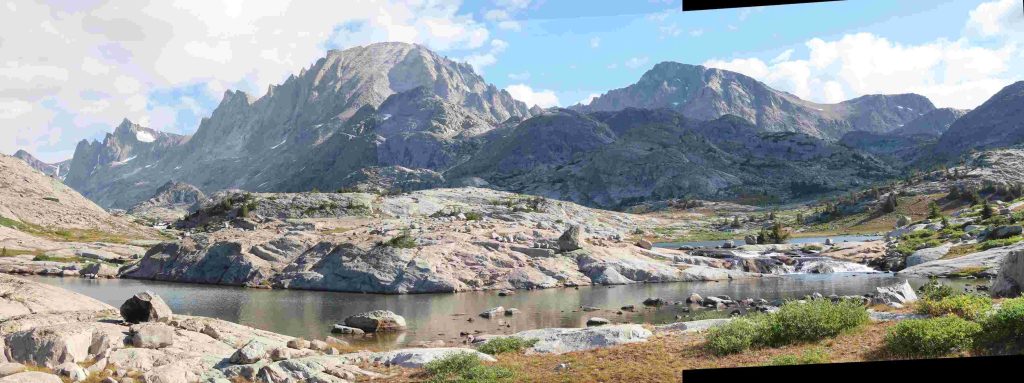
Much later, I was able to make a collage of two photographs to successfully bring the scene together, but this pushed the mountains farther away. Everything got smaller than I felt it to be. Collage by Sue Sommers

In fact, it’s nearly impossible to fit the three-dimensional reality (and our five senses) of the Rocky Mountains into a single painting or photograph. Bierstadt’s awe and amazement is apparent in a lengthy July 10 letter (The Crayon 1859, p.287) in which he describes “the mighty perpendicular cliffs that rise hundreds of feet aloft, all capped with snow … we are among a different class of mountains.” Although Bierstadt wrote that the Rocky Mountains compared with the Swiss Alps he had visited, up to that point on the Oregon Trail, he would have experienced nothing quite like the Wind River Range.

In the same letter, Bierstadt mentioned difficulty with his photographic equipment: “We have taken many stereoscopic views, but not so many of mountain scenery as I could wish, owing to various obstacles attached to the process.” While he succeeded in photographing people, animals, and middle-distance scenes, the Rocky Mountains themselves defied his camera.

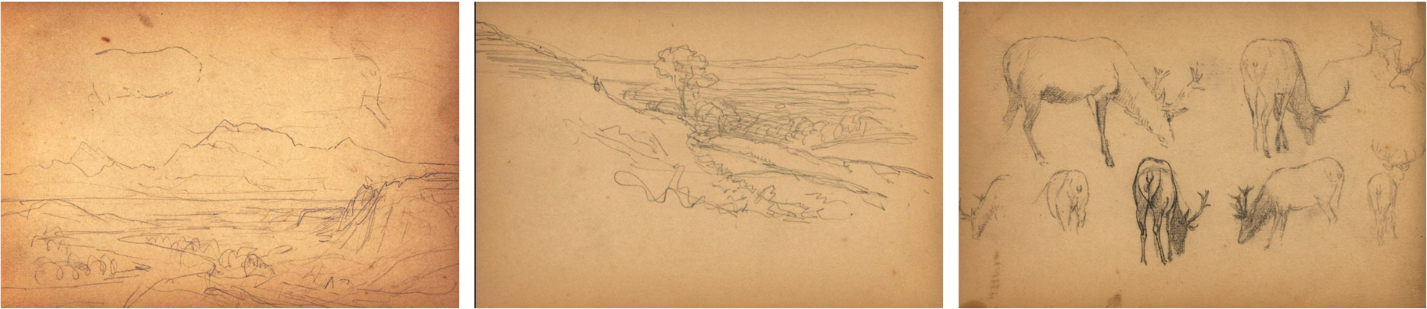
This suggests that Bierstadt, like many of us with cameras or brushes, would have relied on the details he captured in smaller scenes to concentrate beauty and spark memory: perhaps sunlight on part of a peak, an animal in a meadow, or wildflowers after a summer storm.

Sketches from an 1859 sketchbook belonging to Bierstadt. Images Courtesy of Special Collections and University Archives, Rutgers University Libraries, New Brunswick, NJ

In the next blog post, we’ll consider Bierstadt’s version of another iconic Wind River peak.

Temple Peak from the Boulder Highway, looking east-southeast. Sublette County, Wyoming. Photo by Sue Sommers

Continue Reading the Series

Part One: Albert Bierstadt in the Wind River Range: 1859
Part Three: Albert Bierstadt in the Wind River Range: 1859


Interested in learning more about Albert Bierstadt and the Wind River Range? Join us August 20, 2026 for a presentation on
Albert Bierstadt and his time in the Wind River Range by Sue Sommers at the Museum of the Mountain Man.
More details coming soon.

Albert Bierstadt in the Wind River Range: 1859

How Art from Our Mountains Changed America

Part One

By Sue Sommers
June 18, 2026

How Art from Our Mountains Changed America
Part One | Part Two | Part Three

If you’ve spent much time in the northern Wind River Mountains of Wyoming, you might have visited Island Lake. The area is very popular with backpackers and climbers, providing access to Titcomb Basin, Fremont Peak, Indian Pass, and countless high elevation lakes.

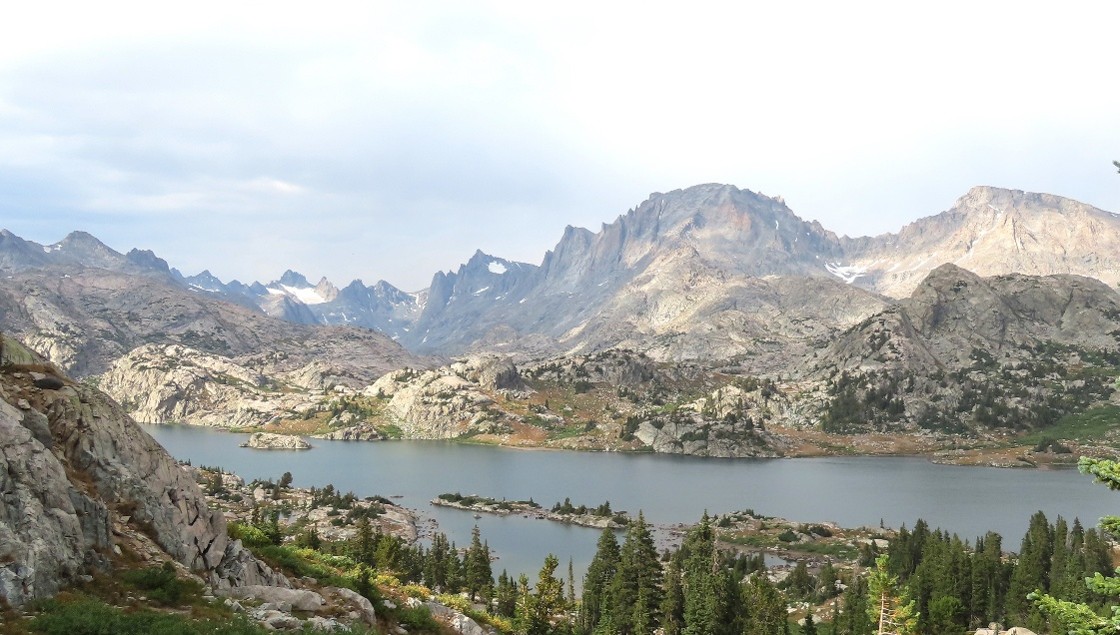
Photo by Sue Sommers

This is the view of Island Lake from the main trail leading from Seneca Lake. On the other side of Island Lake, at the extreme left end of the lake, is the rocky island that gives the lake its name. And nearly hidden by the rocky island is a dramatic waterfall.

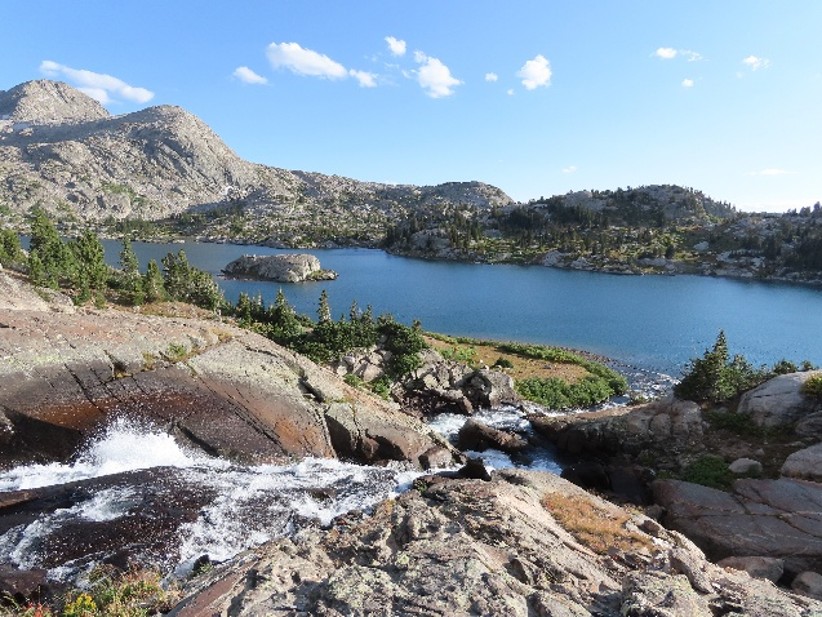
Photo by Sue Sommers

This is the view from the top of the waterfall on the opposite side of the lake, looking back at the trail.

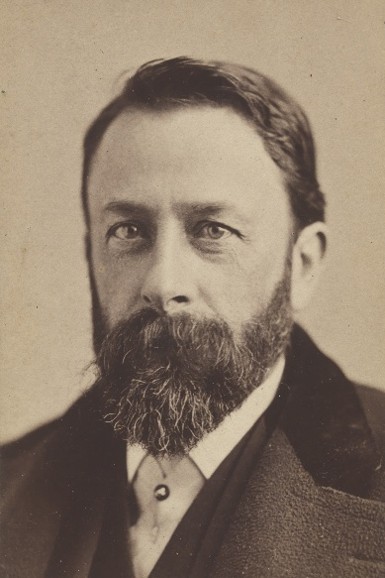
Who was Albert Bierstadt, and what was his connection to the Wind River Mountains?

National Portrait Gallery, Smithsonian Institution

In 1859, German-American painter Albert Bierstadt (1830-1902) had returned from artistic training in Europe and was rising to prominence among the Hudson River School of painters. He decided to join a few other artists tasked with documenting a US Army expedition to the Far West led by Col. Frederick Lander. The purpose of the expedition was to survey and improve the Oregon Trail for the many thousands of people – and their wagons and livestock – heading west. Bierstadt made many sketches and photographs along the trail. His surviving oil and pencil sketches and glass plate negatives capture Native and Euro-American people, encampments, wildlife, and landscapes from the journey.

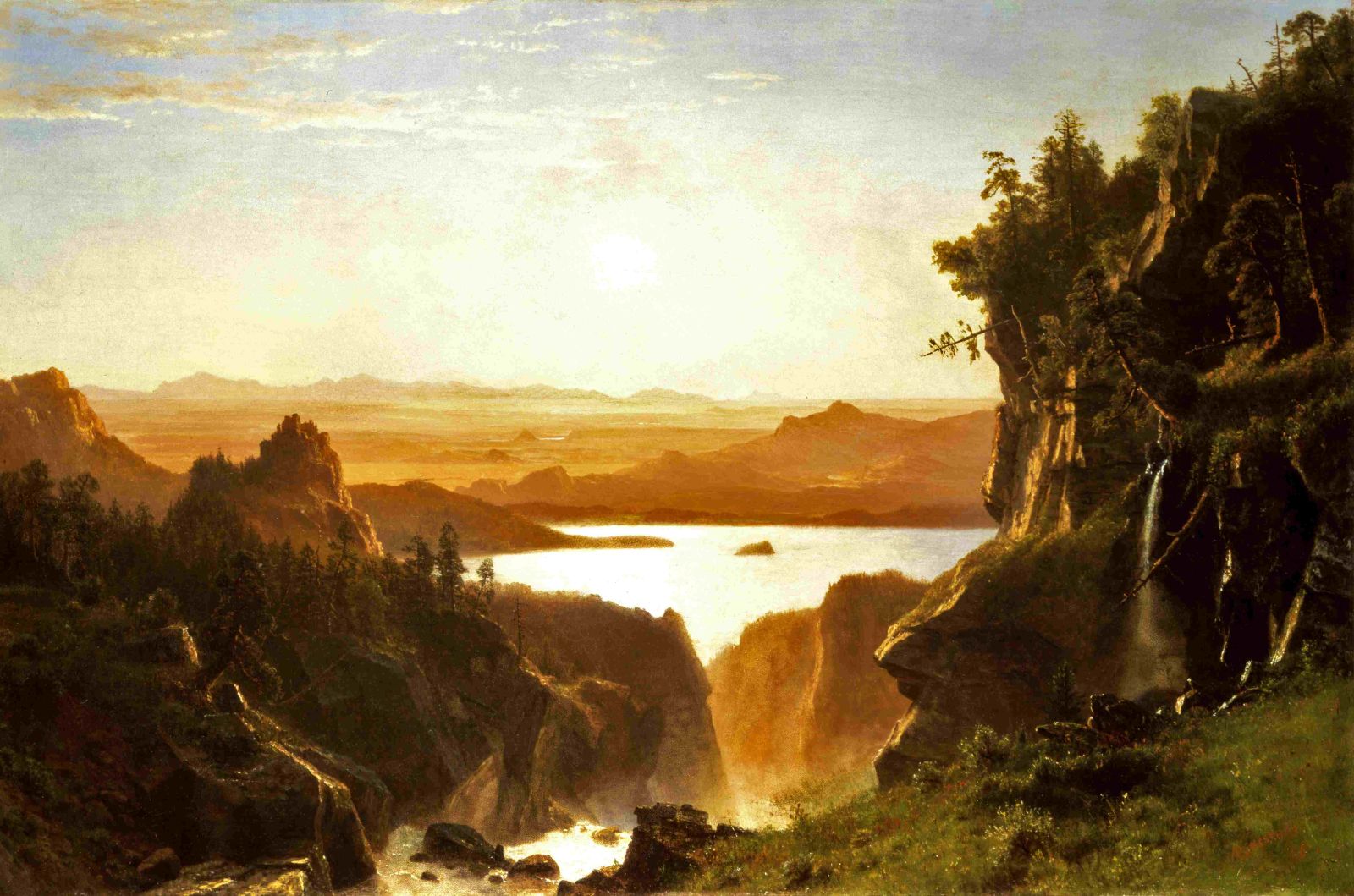
After he returned to his studio in New York, Bierstadt made this painting of a view high in the Wind River Mountains:

Island Lake, Wind River Range, Wyoming, 1861. Oil on canvas, 27.1875 x 41.25 inches. Buffalo Bill Center of the West. Museum Purchase. 5.79

No one knows for sure how, with whom, or at what point in the expedition Bierstadt might have trekked from the valley floor to this site above 10,000 feet. Some don’t believe that he ever saw Island Lake, and suspect the scene in the painting is a complete invention.

Nor do any of Bierstadt’s existing Lander Survey photographs appear to be from high-elevation sites like Island Lake.  One reason for this could have been the fragile and complex photographic process available to him at that time. By contrast, Bierstadt’s sketching materials, including pencils, paints, and small panels, would have been durable and easy for him to carry or pack on a mule. In any case,  over the months and years that followed, Bierstadt would use his sketches and photographs to help him compose many paintings. Island Lake could have been one of them.

It’s also crucial to keep in mind that artistic conventions during Bierstadt’s time dictated that composition and drama were more important than exact replication.  What similarities and differences do you notice compared to the recent photographs? How do the differences change your experience of the scene?  

Sources and Further Reading

This blog post relies heavily on a landmark article on this subject:

Houston, Jourdan, and Fraser Houston. “The 1859 Lander Expedition Revisited: ‘Worthy Relics’ Tell New Tales of a Wind River Wagon Road.” Montana: The Magazine of Western History 49, no. 2 (Summer 1999): 50–72.

Additional sources consulted include:

  • Anderson, Nancy K., and Linda S. Ferber. Albert Bierstadt: Art & Enterprise. New York: Hudson Hills Press in association with the Brooklyn Museum, 1990.
  • Fischer, Diane P., ed. Primal Visions: Albert Bierstadt “Discovers” America. Montclair, NJ: Montclair Art Museum, 2001.
  • Hassrick, Peter H., et al. Albert Bierstadt: Witness to a Changing West. Norman, OK: University of Oklahoma Press in cooperation with the Buffalo Bill Center of the West, 2018.
  • Hendricks, Gordon. Albert Bierstadt: Painter of the American West. New York: Harry N. Abrams and the Amon Carter Museum of Art, Fort Worth, 1974.
  • Houston, Jourdan Moore, and Alan Fraser Houston. “Henry Hitchings: Educator and ‘Early Devotee of Landscape Art.'” Imprint: Journal of the American Historical Print Collectors Society 26, no. 2 (Autumn 2001).
  • Lindquist-Cock, Elizabeth. “Stereoscopic Photography and the Western Paintings of Albert Bierstadt.” Art Quarterly 33, no. 4 (1970): 363–64, note 55.
  • Novak, Barbara. American Painting of the Nineteenth Century: Realism, Idealism, and the American Experience. Oxford: Oxford University Press, 2007.
  • Novak, Barbara. Nature and Culture: American Landscape Painting, 1825–1875. Oxford: Oxford University Press, 2007.
  • Trenton, Patricia, and Peter H. Hassrick. The Rocky Mountains: A Vision for Artists in the Nineteenth Century. Norman: University of Oklahoma Press, 1983.
  • The Crayon (1859): 26, 161, 287.
  • University of Texas Rio Grande Valley Libraries, “Stereographs.” https://utrgv.libguides.com/earlyphotographs/stereograph
  • University of Texas Rio Grande Valley Libraries, “Glass Plate Photography.” https://utrgv.libguides.com/earlyphotographs/glassplate

Continue Reading the Series
Part Two: Albert Bierstadt in the Wind River Range: 1859
How Art from Our Mountains Changed America

Part Three: Albert Bierstadt in the Wind River Range: 1859
How Art from Our Mountains Changed America


Interested in learning more about Albert Bierstadt and the Wind River Range? Join us August 20, 2026 for a presentation on Albert Bierstadt and his time in the Wind River Range by Sue Sommers at the Museum of the Mountain Man.
More details coming soon.

Bicentennial Moments – April 1826

By Museum of the Mountain Man Staff
March 31, 2026

Two hundred years ago this month—April 1826—the Rocky Mountain fur trade was in its prime. Demand for felt hats in the eastern United States and Europe was strong, and American trapping brigades pushed ever deeper into the West. They competed fiercely not only with one another but also with the Hudson’s Bay Company (HBC).

Most trappers had spent the previous months in the relative quiet of winter camps. But across the West in April 1826, men were on the move. Spring was one of the best trapping seasons of the year, and brigades wanted to take advantage of pelts still thick from winter growth and waterways finally open enough to set traps along banks and channels. Two significant events that month would shape the season.

Ashley’s Relief Expedition Reaches Jedediah Smith

While trappers prepared for spring hunts, supply lines far to the east were struggling in the harsh winter.

In October 1825, William Ashley and his new partner, Jedediah Smith, returned to St. Louis, Missouri and immediately began organizing a new supply train.[1] Ashley remained in St. Louis to manage the partnership’s business affairs, while Smith quickly departed again for the mountains –late in the season.[2]

Accompanying him was Robert Campbell, who was starting what would become a long and profitable fur trade career. Around sixty or seventy men managed a pack string of about 160 mules.[3] Campbell later remarked, “We left St. Louis on the first of November. It was wrong to start at that season, because we had the winter to encounter.”[4]

The winter of 1825-1826 was severe on the prairie, as snow blanketed the plains and covered the grass that pack animals depended upon. Deteriorating conditions and a lack of forage and supplies forced Smith’s caravan to halt on the Republican Fork of the Kansas River. Nearly a third of the horses and mules were lost to starvation. Morale suffered, and exposed to cold and uncertainty, nearly half of Smith’s men eventually deserted. Facing the collapse of the expedition, Smith dispatched Jim Beckwourth and Moses “Black” Harris back to St. Louis with an urgent appeal for help.[5]

Ashley responded quickly. His relief expedition left in mid-March 1826 and caught up with Smith near present-day Grand Island, Nebraska, on the Platte River by the end of April.[6] Ashley noted in his diary, “Went & brought up the Party of M Smith opposite the Encampment on the 24th.”[7] The meeting came none too soon: Smith’s reduced company was in no condition to continue.[8] (For more on Smith and Campbell’s winter on the Republican Fork and Ashley’s Journal, see “William H. Ashley’s Newly-Discovered 1826 Fur Trade Journal” in The Rocky Mountain Fur Trade Journal, Volume 8, available here.)

With fresh men, horses, and mules, Ashley altered the plan. He directed Smith and Harris to press ahead to the mountains to inform the brigades that supplies were on the way.[9] Ashley then pushed the reinforced train up the Platte, toward South Pass, and on to the Bear River and the upcoming rendezvous.[10]

In April 1826, after a winter marked by hunger, desertion, and loss, the fur trade enterprise of Smith and Ashley was back on track, and the supply line—vital to the mountain men’s success—was restored just in time for the summer rendezvous in Willow Valley, modern day Cache Valley, Utah.[11].

Image Courtesy of Dave Bell, Wyoming Mountain Photography

Ogden Meets the Americans–Again

Meanwhile, another April encounter was unfolding farther west.

Peter Skene Ogden of the Hudson’s Bay Company (HBC) entered the spring of 1826 with unfinished business. The previous year, he had suffered defeat and humiliation in the Snake Country at the hands of Johnson Gardner and a party of American trappers.[12] (This dramatic encounter is explored in “‘Now We Go’: Snake Country Freemen and the Desertions of May 1825” in The Rocky Mountain Fur Trade Journal, Volume 12, available here.) He had lost freemen to desertion, endured taunts, and left the region.[13] Editor E.E. Rich wrote that “after his brush with the Americans under Gardner in 1825, he seems to have become allergic to them.”[14]

Yet in 1826, Ogden once again found himself in charge of the HBC’s Snake Country Brigade.[15] Despite any personal misgivings, he was moving directly back toward the scene of the previous year’s humiliation, and toward renewed competition with the Americans.

When American winter camps broke up toward the end of February, several trapping parties were formed. One of these parties included a number of HBC deserters from the previous year.[16] It was, of course, this group that soon crossed paths with Ogden’s brigade.

In March, Ogden received reports from Native sources that a party of Americans and Iroquois was no more than three days’ march from his camp on the Portneuf River, a development he did not welcome.[17] On March 20, 1826, he wrote, “I dread meeting with the Americans.”[18]  Memories of the 1825 encounter with Johnson Gardner’s brigade were still fresh and likely came with more than a little apprehension.

By Sunday, April 9, 1826, Ogden’s fears were realized when he was “surprised by the arrival of a party of Americans and some of our deserters of last year, 28 in all.”[19]  Although Ogden never named the leader of the American party, it appears that Jim Bridger and Thomas Fitzpatrick may have been among its members.[20] Reflecting in his journal, Ogden noted, “if we were surprised they were more so from an idea that the threats of last year would have prevented us from returning to this quarter, but they find themselves mistaken.”[21]

The encounter, however, unfolded very differently from the tense confrontation of 1825. Ogden recorded:

The strangers paid me a visit and I had a busy day settling with them, and more to my satisfaction and the company’s than last year … our deserters are already tired of their new masters and from their manner will soon return to us.[22]

In fact, some of the deserters reportedly promised to return to the HBC’s Flathead Post in the fall, a development that must have been sweet vindication for Ogden.[23] Just as important, he noted with evident pride that “not one of our party appeared the least inclined to desert; so much to their credit.”[24]

For Ogden, the meeting of April 9, 1826, marked a reversal of fortune. Two hundred years ago this month, a confrontation he had dreaded instead restored his confidence.

Two Hundred Years Later: A Bicentennial Moment

Two hundred years ago this month, the Rocky Mountain fur trade reached a noteworthy moment. Ashley’s relief expedition finally caught up with Smith after a punishing winter had stalled men, animals, and determination alike, while Ogden faced American rivals in Snake Country—what could have been a bitter confrontation instead ended in satisfaction for Ogden and the HBC. These events capture the trade at its height: fierce rivalries, fragile supply lines, shifting loyalties, and endurance tested by distance and winter. In April 1826, timing, preparation, and a bit of luck mattered as much as beaver pelts themselves.


[1] LeRoy R. Hafen, ed., “A Brief History of the Fur Trade in the Far West,” in The Mountain Men and the Fur Trade of the Far West, vol. 1 (Glendale, CA: The Arthur H. Clark Company, 1965), 83–84.

[2] Dale L. Morgan, ed., The West of H. William Ashley, 1822–1835 (Denver: Fred A. Rosenstock, The Old West Publishing Company, 1964), 143.

[3] William R. Nester, From Mountain Man to Millionaire: The “Bold and Dashing Life” of Robert Campbell (Columbia, MO: University of Missouri Press, 2011), 17.

[4] Morgan, ed., West of William Ashley, 143.

[5] Nester, From Mountain Man to Millionaire, 17-18.

[6] Ibid., 18.

[7] Dr. Jay H. Buckley, “William H. Ashley’s Newly-Discovered 1826 Fur Trade Journal,” The Rocky Mountain Fur Trade Journal, 8 (2011):25.

[8] Morgan, West of William Ashley, 143-144.

[9] Ibid., 144.

[10] Ibid.

[11] Fred R. Gowans, Rocky Mountain Rendezvous: A History of the Fur Trade Rendezvous, 1825–1840 (Layton, UT: Gibbs M. Smith, Inc., 1985), 64.

[12] Thomas H. Holloway, “‘Now We Go’: Snake Country Freemen,” The Rocky Mountain Fur Trade Journal, 12 (2018): 56–59.

[13] Ibid.

[14] E. E. Rich, ed., “Peter Skene Ogden’s Snake Country Journals, 1824-26” (London: Hudson’s Bay Record Society, 1950), lvi-lix, 154-155.

[15] Peter Skene Ogden, “Journal of the Snake Country Expedition, 1825–1826,” T. C. Elliott, ed., Oregon Historical Quarterly 10, no. 4 (1909):335.

[16] Morgan, West of William Ashley, 146.

[17] Ibid.

[18] Ogden, Snake Country Journals, 1824–26, 144.

[19] Ogden, “Journal of the Snake Country Expedition,” 359.

[20] Harrison C. Dale, “The Ashley-Smith Explorations and the Discovery of a General Route to the Pacific” (Glendale, CA: Arthur H. Clark, 1941), 162-163.

[21] Ogden, “Journal of the Snake Country Expedition,” 359.

[22] Ibid., 359-60.

[23] Ibid.

[24] Ibid.