
By Rick Williams
July 24, 2026
The 1826 Rocky Mountain Rendezvous marked a turning point in the western fur trade. During this gathering, William H. Ashley began withdrawing from the mountain trade, the partnership of Smith, Jackson & Sublette emerged, and the organizational structure of the Rocky Mountain trapping enterprise underwent significant change. Although contemporary accounts differ on the exact location and duration of the rendezvous, historians generally agree that it occurred in present-day Cache Valley, Utah.
Historical Summary
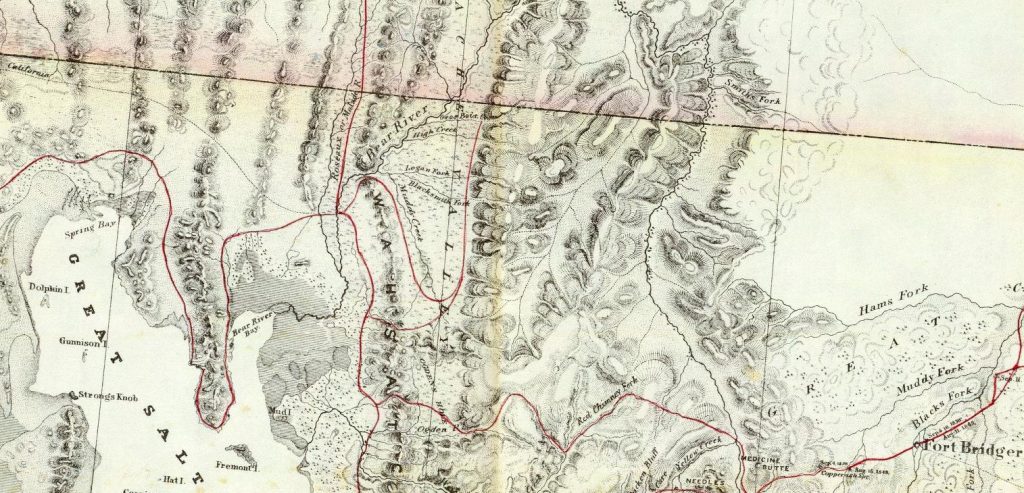
Location: Willow/Cache Valley (known historically by both names). Either on Cub Creek (near present-day Cove, Utah, as described in a letter by Daniel Potts to his brother and also the site of John H. Weber’s winter camp of 1824-1825) or on the Blacksmith Fork River (near present-day Hyrum, Utah, as proposed by Dale L. Morgan in The West of William H. Ashley).
Duration: William H. Ashley wrote that he “arrived May 25” and remained on the Bear River until at least July 18. Jedediah Smith, however, suggested they “arrived sometime in June.” Robert Campbell’s journal indicates a duration of only two weeks, while Daniel Potts’s letter states the celebration of Independence Day (July 4) at the rendezvous.
Significant events
Supplying Expedition from St. Louis
Less than four weeks after the arrival of Ashley and Smith in St. Louis on October 4, 1825 with the furs from the 1825 rendezvous, Ashley’s partner Jedediah Smith set out on October 29 to resupply the men who had remained in the Rockies. It is interesting to note that he starts out on the route that will become the great Fur Trade Road, also known as the Oregon, Mormon, and California Trail. He is accompanied by approximately 60 new men, 160 horses and mules and $20,000 worth of supplies. (See Bicentennial Moments – April 1826)
Wintering in Cache Valley
It appears that Bill Sublette is left in charge of at least a party of men, if not all the men remaining in the mountains. His party initially wintered near the confluence of Cub Creek and the Bear River (near present day Cove, Utah). They later moved to the Great Salt Lake Valley near the mouths of the Bear and Weber Rivers (near present day Brigham City and Ogden, Utah). Whether this move was prompted by a colder winter or diminishing resources such as firewood, buffalo, or cottonwood bark to feed their horses is unknown.
Approximately 200 Snake Indians wintered with the group at the mouth of Bear River and are believed to have joined the men at rendezvous that summer.
Exploration of the Great Salt Lake
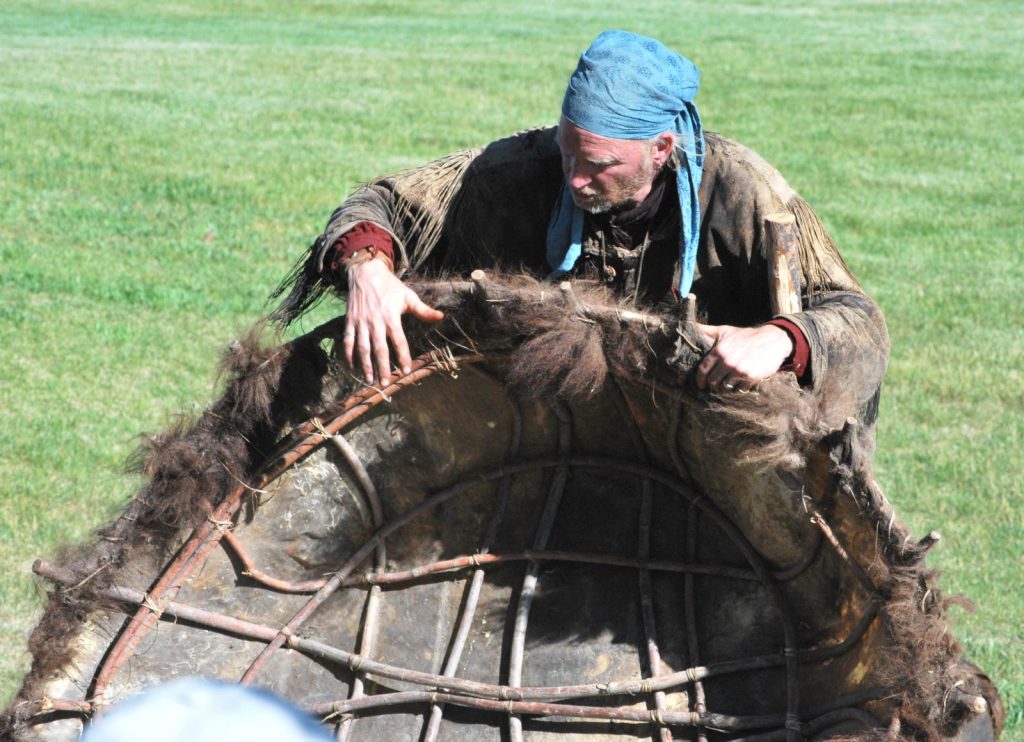
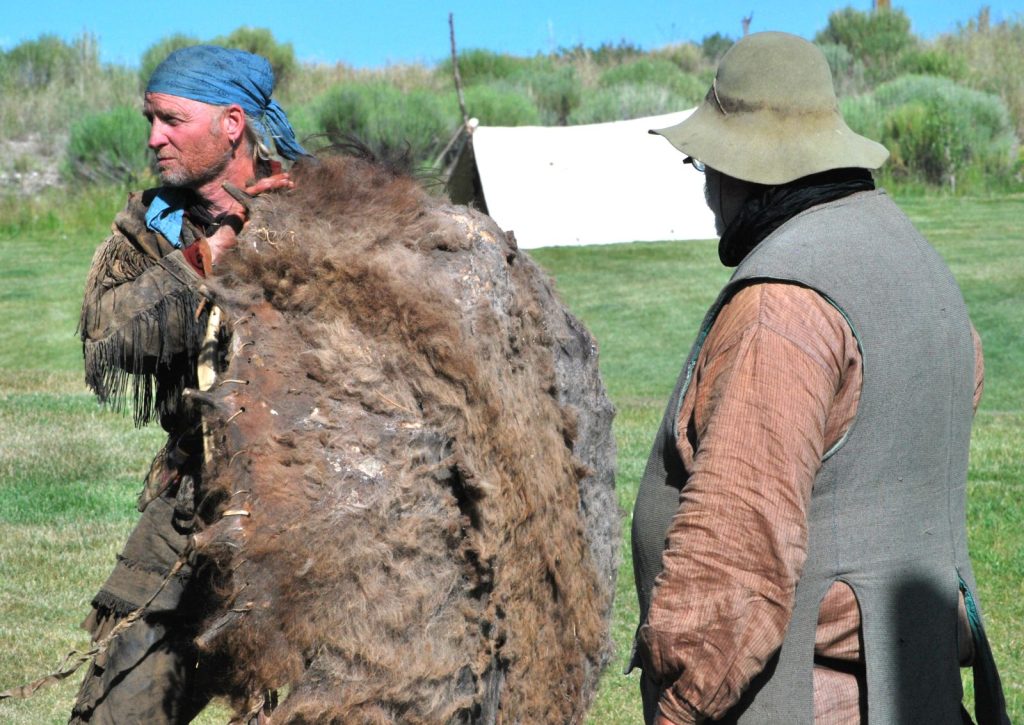
During the following spring, four of the mountaineers constructed bullboats (a boat fashioned of a framework of willow and covered by one or two hides of a bull buffalo – thus the name) they then endeavored to circumnavigate the Great Salt Lake and discover the purported headwaters of the Columbia. This notion had long been held by both British and Americans alike. Although they did not discover such a place, they speculated on a few places it might exist. Almost all other great lakes we thought to have one or more inlets as well as an outlet. A major exception is the Great Salt Lake, which has no outlet.
The 1825-1826 Beaver Hunt
The Fall ‘25 and Spring ‘26 hunts resulted in 123 packs of beaver which Ashley returned upon the pack mules that had brought out the supplies to rendezvous. The predominant drainages trapped were the Green, Bear, Snake and Weber. It is also probable that Davey Jackson had led a trapping brigade into the Jackson Hole region thus giving it its name and making us aware, for the first time, of his presence and acute leadership in the mountains.
Formation of Smith, Jackson & Sublette
Smith, Jackson and Sublette (SJS) formed their partnership sometime during or shortly after rendezvous to buy out Ashley’s interests in the mountains. A note was issued to Ashley of $7,821, suggesting that Ashley received approximately $11,000 for his share of the business. Ashley pays Smith approximately $5,000 for Smith’s portion, leaving Ashley with control of the goods needed to supply the following year’s rendezvous. The new partnership paid Ashley $3,000 from the proceeds of some of that year’s hunt, with the remaining balance to be from the proceeds of the 1827 season.
Competition Emerges
Upon his return to St. Louis, Ashley attempts to engage B. Pratte and Co. (an alliance of the old French families of Berthold, Pratte and Chouteau of St. Louis) in the creation of a new company. Under this proposed agreement, the company would deliver goods to the 1827 rendezvous, and the men of the supply train would then form a trapping brigade in direct competition to SJ&S.
However the company of B. Pratte and Co. was negotiating something completely different. The company instead formed an alliance with John Jacob Astor to create the American Fur Company (AFCo), which would become the competition that Ashley was trying to establish. In the years that followed, AFCo would become the predominant competition to Ashley’s men, who eventually form the Rocky Mountain Fur Company.
Looking Ahead
Of note, it was from this rendezvous that Jedediah Smith begins his two year odyssey to find new trapping grounds the first year and then rescue his men who remained in California during the second. It is near the end of the second year that Smith loses most of his men to an Indian attack and returns without furs, thus leaving him dependent upon Jackson and Sublette’s hunts to provide payment on their obligation to Ashley.
Jackson and Sublette each lead their parties to trap that fall and return to winter in Willow/Cache valley the next winter.
Another important result of the 1826 rendezvous was Bill Sublette’s emergence as a leader on the business side of the fur trade. Although still an active trapper, this marked the beginning of a decade in which Sublette would play a central role in shaping the Rocky Mountain Rendezvous into the commercial institution that sustained the fur trade throughout the hear of the heart of the mountains
Although the exact location and duration of the 1826 Rocky Mountain Rendezvous remain subjects of historical debate, its importance is unquestioned. The gathering marked a pivotal transition in the Rocky Mountain fur trade as William H. Ashley began withdrawing from the mountain trade and the partnership of Smith, Jackson & Sublette emerged. At the same time, continued exploration, successful trapping expeditions, and new business alliances shaped the future of the rendezvous system and the western fur trade. The events of 1826 laid the groundwork for the years that followed, making this rendezvous one of the most consequential in Rocky Mountain fur trade history.
Selected References
- Berry, Don. A Majority of Scoundrels. 1961.
- Dale, Harrison Clifford, ed. The Explorations of William H. Ashley and Jedediah Smith, 1822–1829. 1941.
- Gowans, Fred R. Rocky Mountain Rendezvous. 1985.
- Morgan, Dale L. Jedediah Smith and the Opening of the West. 1953.
- Morgan, Dale L. The West of William H. Ashley. 1964.