Archives

Proceedings of the 2024 National Fur Trade Symposium

Proceedings of the 2024 National Fur Trade Symposium – The Eve of Rendezvous
Museum of the Mountain Man Pinedale, Wyoming. A Bicentennial Event September 12-15, 2024

A Swirling Mass of Humanity: Migration, Exploration, and Trade before the Rendezvous
by James A. Hanson

The 1823-1824 Enterprise of Jedediah Smith’s Fur Brigade: Arikara Resistance, Crow Friendship, and the Rediscovery of South Pass
by Jay Buckley & Steve Banks
This presentation analyses the changes in the 1820s that enabled Andrew Henry and William Ashley to form a fur company partnership. They chronicle Henry-Ashley’s attempts to trade for furs along the Missouri River but face disaster and Arikara warriors. Ashley sends Jedediah Smith to the Crows on the Wind River while he returned to St. Louis. They trace Smith’s route from his winter encampment at Dubois to his rediscovery of South Pass in 1824. Meanwhile, Thomas Fitzpatrick conveyed the news to Ashley while Smith and his men crossed into the Green River Valley to trap. These developments combined to make the Rendezvous era
possible.

Who Led the First Trappers Across South Pass in 1824: Jedediah Smith or Thomas Fitzpatrick?
by Clay Landry
Historians Hiram Chittenden and Harrison Dale published that the Henry/Ashley party that first crossed South Pass into the Green River Valley in 1824 was led by Thomas Fitzpatrick. However, Charles Camp editing James Clyman’s journals states Jedediah Smith was the leader. South Pass’s re-discovery issue originates via the scholarly endeavors of three esteemed fur trade historians. Consequently, this essay will apply a historiography approach to determine the accurate facts of this debate.

John Henry Weber and his Trappers Explore Green River and Beyond
by Jerry Enzler
Jedediah Smith’s party gets much of the glory, but John Henry Weber and his men, including Jim Bridger, were integral in the discoveries of 1824-25. They explored Bear River & viewed Great Salt Lake, were involved in the defection of Iroquois trappers from HBC, brought the largest number of beaver pelts to the 1825 rendezvous, and navigated Bad Pass.

The Evolution of Rendezvous System
by  Jim Hardee
William H. Ashley is generally given credit for establishing the concept of annual gatherings of trappers to trade their beaver harvest for supplies needed for future hunts. This paper examines how that idea grew out of trade fairs from the past, present and future of Ashley’s initial Rocky Mountain rendezvous.

The Use and Distribution of Elk Hide Lodges
by Bradley C. Bailey
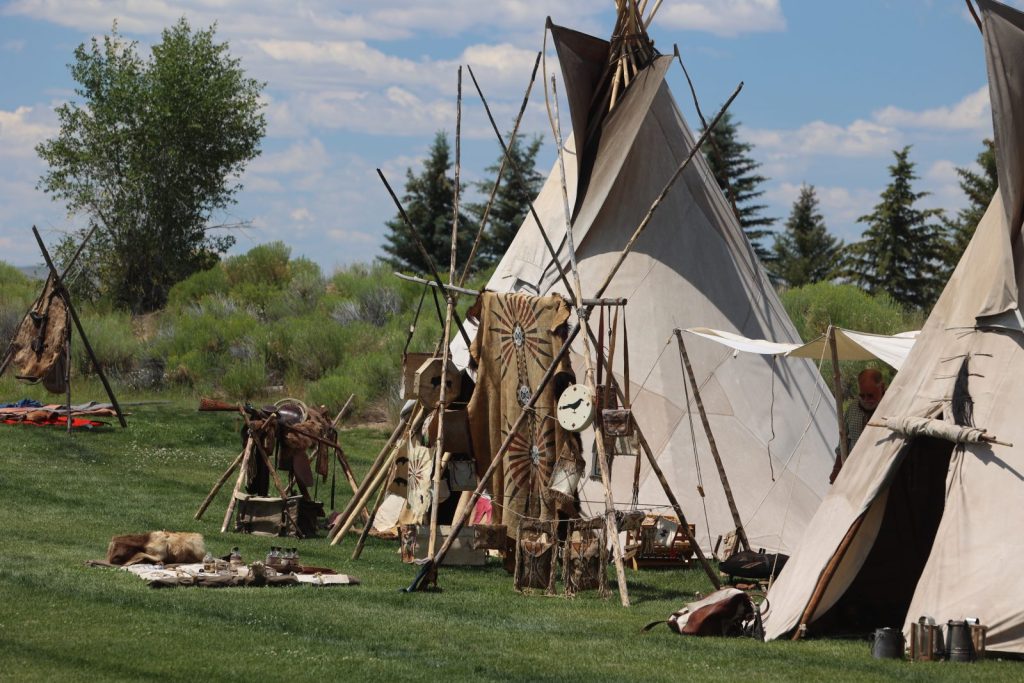
In Laubin’s classic and often cited guide to Indian Tipis he states “In the early days all tipis were made of buffalo hides.” The image of the buffalo covered plains and Rocky Mountains belies the use of any other material for Native American skin lodges. This presentation will examine the evidence for the use of elk hides for lodges among Native American tribes in the Rocky Mountains as well as the Plains. It builds upon research collected over the last decade, using more than three dozen sources showing evidence more than 14 tribes used elk hides for tipis. It is entirely new research on a topic that has never been thoroughly examined before.

‘Bust Head’ and ‘Tangle Foot’: A Modern Field Guide to the Alcohol of the Fur Trade Era
by Bill Gwaltney
For reasons normal and nefarious, during the Fur Trade, commerce involving Alcohol was damned and praised, subject to law, smuggling, and illicit manufacture. Going by a variety of “pet names,” the raw alcohol common in the Fur Trade was often called “Bust Head,” “Tangle Foot” or “Oh, Be Joyful!” During this period, alcohol use was quite common among many Americans. Journalist Jim Vorel, suggests that by 1830, alcohol consumption in the United States reached its peak at an amazing 7 gallons of distilled liquor per person. This study will explore the commerce of alcohol during the fur trade and detail specific types available to the Mountain Men and American Indians.

Feast and Famine: Dining with the Mountaineers
by Doyle Reid
An introduction to the demands of the Mountaineer’s vigorous lifestyle, and the challenge of providing required nutrition. Using their own words to describe food procurement, preparation, cooking and eating shine a light on this often overlooked but vital subject.

Andrew Henry: Icon of the American West
by Mark William Kelly
Andrew Henry is no less than an iconic figure in the annals of the American West. His name is rarely, if ever, omitted from the innumerable discourses touting the exploits of those early day Mountain Men, whose wilderness paths would soon be transformed into the crowded freeways of Manifest Destiny. Henry, however, is somewhat of an enigma. Multiple biographical sketches of the man exist, but it is rare to find any two possessing consistency as to the facts pertaining to the man. If not for the record of his exploits up the Missouri River and beyond, across the continental divide, Andrew Henry, quite likely, would have been lost to us all. It is my sincere desire that this newly published biographical book might serve to augment our appreciation
for the man. He certainly deserves to have his story truthfully told.

William Clark: Tripod Stool Geographer Or, How John Colter Found the Headwaters of the
Green River and Clark Lost Them
by Sheri Wysong
In 1912, Historian Hiram Chittenden wrote: “[Colter was] the first to cross the passes at the head of Wind River and see the headwaters of the Colorado of the West” Of course, Chittenden meant that Colter was the first European to do so; he likely used well established Indian trails in dropping down into the Upper Green River Valley. Since Chittenden, the only historian/biographer known to the presenter/author that indicated a possibility that Colter had been on the headwaters of the Green River was David Lavender. But analysis of William Clark’s 1810 manuscript and 1814 published maps indicates that Colter did indeed “cross the passes at the head of Wind River” and, if he was not actually the first European to cross South Pass, he definitely saw it. But Clark’s “Error of the Southwest” as called by Historian Bernard DeVoto, obscured the identity of the Green River and South Pass. The presentation uses both historical and Geographical Information System (GIS) maps that illustrate the Error of the Southwest, and how it lost Colter’s path through the Upper Green River Valley.

Horseless on Horse Creek: The Story Behind the Painting Depicting The Naming of Horse Creek
by Tim Tanner
Artist Tim Tanner has created an original painting depicting the story of Thomas Fitzpatrick and his small band of trappers having their horses stolen in the spring of 1824 on what has since been known as Horse Creek. It will be unveiled during the opening Symposium session, on display throughout the Symposium and will be a permanent part of the Museum of the Mountain Man collection. “Horseless on Horse Creek” is a 32”x60” oil painting depicting an important incident in the Spring of 1824, during one of the first occurrences of American Trappers methodically harvesting furs in the Green River Valley. In late Winter (1823-24), famed trapper Jedediah Smith led a party of about a dozen trappers westward through South Pass. He divided the party roughly in half at the Sweetwater River. Smith took half the men toward the south, and sent the remainder north. Around May, the northern party encountered a band of Shoshone, whom they befriended and gave beaver meat to eat. But when the Natives left the area, James Clyman, recounted that “our horses running (sic) loose on night they all disapeared (sic) and we were unable to find them or in what direction they had gone.” The mountain men continued trapping on foot – perhaps hoping their mounts would return. But after a time they must have surmised that their missing horses had either followed or were taken by the Shoshone. Having pre-arranged to meet up with Jed Smith and the southern party on June 10th at the Sweetwater River, Clyman informs us “accordingly we cashed (sic) traps & furs hung our saddle & horse equipments on trees & set out for Sweet water,” in an effort to retrieve the lost stock and meet up with Smith. Thus, a previously un-named beaver-filled stream—near its confluence with the Green River— gained a new, significant name. The location where they cached their furs and “hung saddles and horse equipments on trees” became known as “Horse Creek.”

Provisions of the Fur Trade

The Encyclopedia of Trade Goods – Volume 6, Provisions of the Fur Trade

Provisions of the Fur Trade is nearly 500 pages long with over 600 illustrations, most in color. Subjects covered include fur trade rations, feasts, and famines; bread and biscuits, grain including wild rice; fruits; sugars including maple; condiments, soaps, spices, fur trade gardening and husbandry, the Indian trade in meat, corn and other foods; fish; preservation of foods, including pemmican, canning drying etc. Other major chapters are devoted to the trade in liquor, beer, and wine; tobacco and beverages such as tea, chocolate and coffee. The text and illustrations also deal with government rations intended to divert the Indians from their old lifestyles and into subsidized reservation existences. The entire North American Continent is covered from the earliest voyages to the end of the fur trade.  – Museum of the Fur Trade

ISBN – 978-0-912611-23-5
458 Pages
Hardback
11 1/4″ x 11 1/4″

Museum of the Fur Trade, 2017

Raccoon 8″ Stuffed Animal

The raccoon is nocturnal and forages for fruits, nuts, fish and rodents.  Raccoons gorge themselves in the spring and summer to store up body fat. Much of the winter is spent asleep.

Range Riders Cookin’

Range Riders Cookin’

We all enjoy good DOWN HOME cookin’ and Range Riders Cookin’ features a special and unique collection of mouthwaterin recipes providing you with enjoyable moments of fun and ease in preparing and feasting on a wide variety of delicious dishes! From the old-time favorites Grandma whipped up to the exquisite dishes prepared by today’s top professional chefs, Range Riders Cookin’ is a pleasurable experience in cooking.

You will also treasure the breathtaking western artwork featured throughout this publication by nationally recognized artist Robert E. Kerby. Kerby captures in painstaking detail the true spirit of the American West.

ISBN – 978-0-9660523-0-5
138 Pages
Bounded Softback
8 1/2″ x 6″

Bob Kerby’s Longhorn Studio, 1989

Reading, Writing & Riding Along the Oregon-California Trails

Reading, Writing, & Riding Along the Oregon-California Trails – An Educational Activity Book

One of the largest migrations of mankind happened only a century and a half ago. Within two decades hundreds of thousands of people moved westward. Not only did their journey change their own lives and those of the Indians who already lived in the territory they entered, but it also changed the face of the nation itself. The publication of the stories of those who took the journey has rekindled a spark that has resultedin a renewed interest in the trails west. The emigrants’ adventures have been kept alive in the hearts and minds of people today. You, too, can experience their adventures.

ISBN – 0-963590-10-3
63 Pages
Softback
8 1/2″ x 11″

Oregon-California Trails Association, 1993

Recreating The American Longrifle

Recreating The American Longrifle

The American muzzle-loading rifle, when regarded simply as a shooting device or gun, became obsolete at the close of the Civil War more than 130 years ago. Today, however, tens of thousands of people are interested in these rifles. They study them, read about them, collect them, shoot them, go hunting with them, and they make them.

This book will help with the steps of building a rifle.

ISBN: 1-929572-31-X
168 Pages
Softback
8 1/2″ x 10 7/8″


George Shumway Publisher, 1970

Rendezvous Reader

A Rendezvous Reader – Tall, Tangled, and True Tales of the Mountain Man 1805 – 1850

The accounts of the mountain men are spun form the experiences of a nation moving westward: a trapper returns from the dead; hunters feast on buffalo intestines served on a dirty blanket; a missionary woman is astounded by the violence and vulgarity of the trappers’ rendezvous. These are just  a few of the narratives, tall tales, and lies that make up A Rendezvous Reader.

The writers represented in this book include dyed-in-the-wool trappers, adventuring European nobles, upward-gazing Eastern missionaries, and just plain hacks who never unsheathed a Green River knife or traveled farther west than the Ohio River. What these writers have in common is that all helped create a uniquely American icon–the mountain man.

ISBN: 978-0-87480-539-0
348 Pages
Softback
6″ x 9″

The University of Utah Press, 1997

Reshaw

Reshaw – The Life and Times of John Baptiste Richard

John Baptiste Richard, known by the French pronunciation of his last name- Reshaw– , was an opportunist. The early America West was changing fast, and Richard jumped on opportunities before most men even realized they existed.

He was a fearless adrenaline junkie, always on the edge of danger in his many personifications: frontiersman, trapper, Indian trader, whiskey smuggler, toll bridge builder and operator, rancher, Colorado gold rush merchant, military interpreter and scout, reliable friend, ruthless barterer. Though considered a scoundrel by some, he lived by his own code of ethics and helped shape the early West.

ISBN: 978-1-937147-04-4
287 Pages
Softback
6″ x 9″

High Plains Press, 2014

Roadside Geology of Wyoming

Roadside Geology of Wyoming

Wyoming is grandeur: endless plains that sweep beyond the farthest horizon, mountains that challenge the sky, badlands as colorful as any painting. And it all depends on the rocks. Here are Wyoming’s rocks and landscapes in all their richness and variety. Here is the story of how it came to be.

ISBN – 978-0-87842-216-6
271 Pages
Softback
6″ x 9″

Mountain Press Publishing Company, 1988

Roadside History of Wyoming

Roadside History of Wyoming

The vast expanses of Wyoming’s seemingly empty landscapes belie the turbulent events and colorful characters that make up the state’s rich past. Roadside History of Wyoming explores the people who made history and what they did to merit remembrance. Well-researched, well-told stories are set against the dramatic backdrop of the land itself to reveal how Wyoming’s natural environment affected human activity  through time.

To know Wyoming is to experience its physical presence, and there’s no better way to do that than by driving its roads and learning its history. This telling of Wyoming history goes beyond typical episodes of male-dominated politics and economics. Here the social fabric of the state is exposed in an array of intricate colors and patterns — women, Native Americans, and a surprising assortment of minorities figure prominently is this history of the Cowboy State.

ISBN – 978-0-87842-316-3
416 Pages
Softback
6″ x 9″

Mountain Press Publishing Company, 1995

Robert Campbell: Mountain Man DVD

Robert Campbell – Mountain Man DVD

An Ulsterman’s remarkable ‘rags to riches’ tale of adventure, excitement, love and loss in the American West of the 1800’s.

A film by Michael Beattie.

Thin black case with title sleeve.
5 1/4″ x 7 1/2″

Rocky Mountain Babies!

Rocky Mountain Babies!

A useful book to introduce the little ones to the wild babies of the Rocky Mountains.

Meet the Rocky Mountain Babies!

  • Big Horn Sheep
  • Mountain Lion
  • Pika
  • Owl
  • Fox
  • Mouse
  • Mule Deer
  • Bobcat
  • Coyote
  • Raccoon
  • Porcupine
  • Elk
  • Black Bear

ISBN – 978-1-56037-499-2
26 Pages
Hardback
5 1/2″ x 5 1/2″

Farcountry Press, 2009

Rocky Mountain Rendezvous

Rocky Mountain Rendezvous – A History of the Fur Trade Rendezvous 1825 – 1840

An all-new redesigned edition of the original classic on the fur-trading rendezvous that took place from 1825 to 1840 in the Central Rockies. These rendezvous were originally commercial gatherings where furs were traded for necessities such as traps, guns, horses, and other supplies. But more and more they became rich social events at which all kinds of human emotion were on display.

ISBN: 1-58685-756-8
240 Pages
Softback
5 1/2″ x 8 1/2″

Gibbs Smith, 2005

Rocky Mountains Plants and Animals – CB

Rocky Mountains Plants and Animals – Coloring Book

Rugged mountain peaks, alpine streams, and heavily forested areas are home to the many plants and animals that inhabit the Rocky Mountain region in North America. Illustrator Dot Barlow captures the area’s beautiful vistas and wildlife in 27 accurately rendered, ready-to-color illustrations.

ISBN: 978-0-486-43045-4
30 Pages
Softback
8 1/4″ x 10 7/8″

Dover Publications, 2004

Sacagawea’s Son

Sacagawea’s Son – The Life of Jean Baptiste Charbonneau

Sacagawea’s Son: The Life of Jean Baptiste Charbonneau is the exciting, surprising, and sometimes poignant story of a boy born to adventure. At the age of two months, Baptiste experienced the first of many exploits when his parents, the Shoshoni woman Sacagawea and French Canadian trapper Toussaint Charbonneau, took him along on Lewis and Clark’s Corps of Discovery expedition. Captain Clark called him Pomp, “my little dancing boy.” Many people have heard of baby Pomp and his famous journey, but the rest of his life story has been largely untold — until now.

Educated in St. Louis by Captain Clark, Baptiste went on to live in a royal palace in Europe and to speak many languages. Returning to the United States, he headed west to become a mountain man and scout alongside Jim Beckwourth, Thomas Fitzpatrick, Jim Bridger, and Kit Carson. During America’s war with Mexico, he helped lead the Mormon Battalion to California, where he later became a prospector during the gold rush.

ISBN – 978-0-87842-432-0
125 pages
Softback
6″ x 9″

Mountain Press Publishing Company, 2001


Sacajawea

Sacajawea – Guide and Interpreter of Lewis and Clark

Known to schoolchildren as the woman who guided Lewis and Clark through the wilderness to the American Northwest, Sacajawea is a figure of fascinating historical interest. The sister of a Shoshone chief kidnapped by enemy tribesmen, she married a French trader, became a mother, and joined the Lewis and Clark expedition all while she was still a teenager. This book tells the story of this remarkable woman who attempts to assess her rightful place in the history of American Exploration.

ISBN: 978-0-486-42149-0
336 Pages
Softback
5 1/2″ x 8 1/2″

Dover Publications, 2002